By: Fatou Dahaba
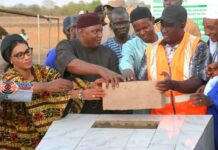
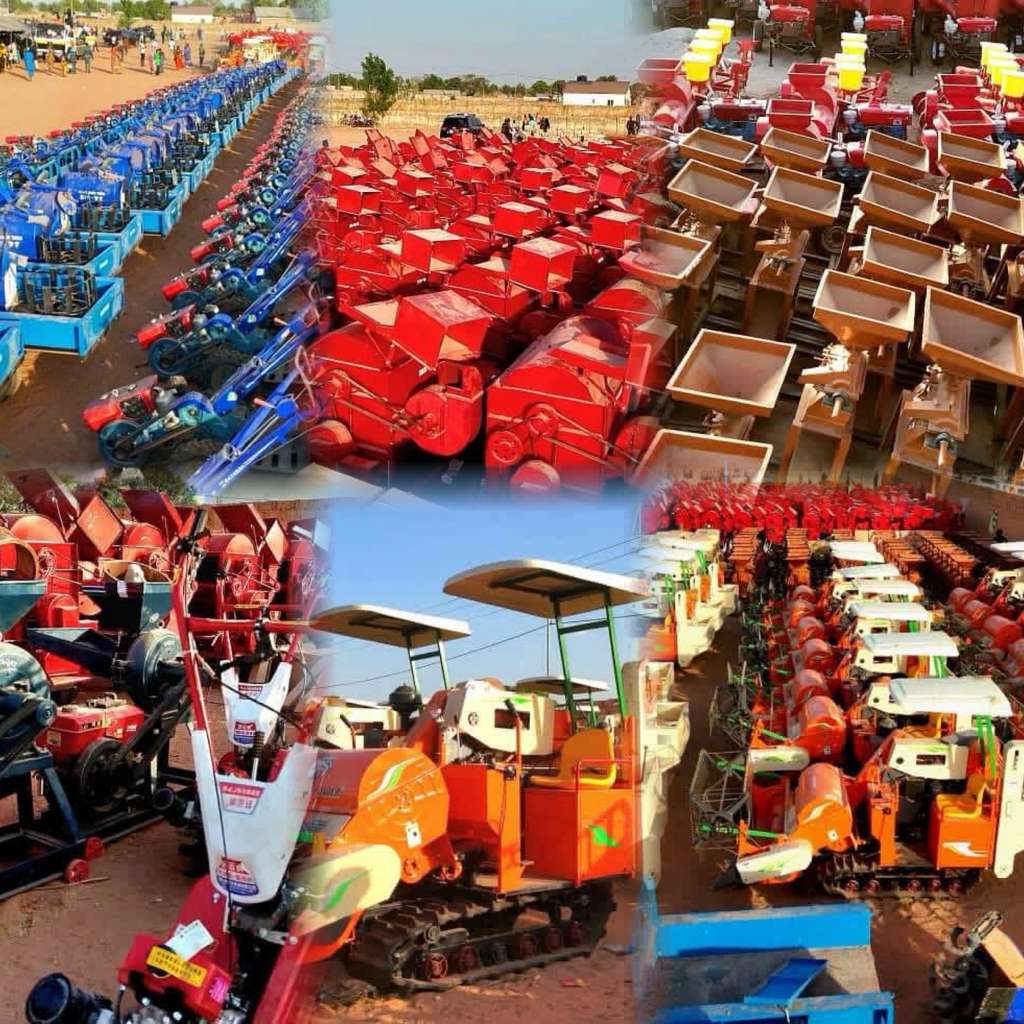
President Adama Barrow on Tuesday distributed more than 400 pieces of vital farming equipment to farmers at Brikama Ba in the Central River Region (CRR/South). The initiative forms part of the government’s broader strategy to boost productivity, reduce post-harvest losses, enhance food security, and drive economic growth through mechanization.
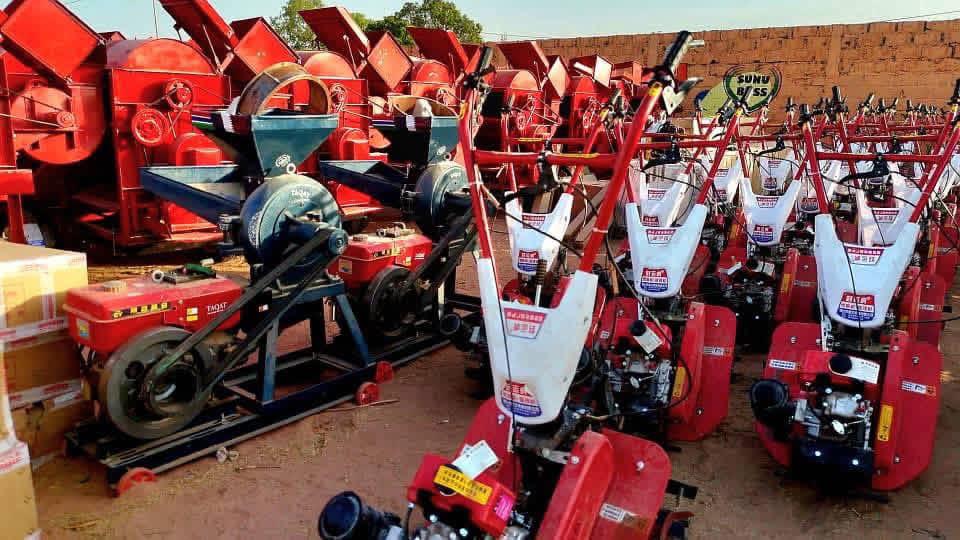
The consignment includes 56 power tillers, 20 mini rice combine harvesters, 60 coarse-grain/maize milling machines, 10 manual drum seeders, 25 garden tillers, 7 steaming kits (rice parboilers), 5 bush cutters, 100 rice threshers, 10 four-row tractor-drawn seed drills, 12 maize shellers, 60 rice milling machines, 19 tricycles, and 5 bush cutters (rotary weeders). The equipment will be distributed across the country to support farmers in various regions.
Speaking at the event, President Barrow reaffirmed his administration’s commitment to transforming subsistence farming into a modern, commercially viable sector. He highlighted the Government’s Inclusive and Resilient Agricultural Value Chain Development Project (GIRAV), supported by the World Bank and other partners, as a key vehicle for strengthening agricultural systems.
“Mechanization is essential if we are to achieve national food self-sufficiency and reduce our dependence on imports,” President Barrow said. He urged beneficiaries to take full ownership of the machines, properly maintain them, and adopt cooperative approaches so that the benefits reach entire communities. “This equipment must be shared, scaled, and sustained to maximize impact,” he added.
The President thanked international partners for their support and stressed that continued investment in mechanization and value addition remains a top priority for his government. He noted that these efforts aim to create jobs, particularly for young people, while building long-term economic resilience.
Mamud Alieu Jagne, Project Coordinator of the Central Projects Coordination Unit, explained the transformative potential of the equipment. He said modern tools could enable farmers to cultivate up to 10 hectares instead of the traditional 1 hectare, dramatically increasing efficiency and output. Jagne called on recipients to manage the machinery responsibly, emphasizing that proper maintenance is crucial to sustained national development and achieving food self-sufficiency.
Isatou Ceesay, speaking on behalf of the Female Farmers’ Association, commended President Barrow for his consistent support. She said access to modern equipment had removed a major barrier for women farmers, enabling them to scale up production and contribute more effectively to the sector. Ceesay also noted that the initiatives are creating employment opportunities for youths.
Alagie Ceesay, President of the Farmers Union, described President Barrow as a leader who listens to farmers’ concerns. He recalled a recent meeting at the Sir Dawda International Conference Center, where farmers raised the urgent need for equipment, fertilizer subsidies, and better markets. “The President responded positively by delivering these tools to boost production,” he said.
Honorable Gibbi Mballow, National Assembly Member for Lower Fulladu West, praised the President’s agricultural projects for empowering local farmers in the region. He highlighted the provision of equipment and subsidized fertilizers as critical interventions. Mballow also used the occasion to appeal for the installation of street lights in Brikama Ba and improved water supply to address infrastructure challenges facing communities in CRR South.
The distribution comes amid ongoing government efforts to revitalize agriculture, which contributes significantly to The Gambia’s economy. Officials say the new machines will help reduce drudgery, minimize labor shortages, reduce post-harvest losses, and increase overall output of rice, maize, and other key crops.
Beneficiaries expressed optimism that the equipment will enable them to expand cultivation areas, improve product quality and generate higher incomes. Government officials reiterated that responsible use and community-level sharing arrangements will be essential to ensure the long-term success of the mechanization drive.
This latest intervention, according to the Barrow administration, underscores President Barrow’s determination to position agriculture as the engine of inclusive economic growth and food security in The Gambia.