By: Sainabou Sambou
The Ministry of Tourism, Arts and Culture has launched a new National Tourism Policy and Strategy, together with a marketing, branding and investment promotion strategy, as The Gambia seeks to diversify its tourism sector, attract private capital and expand employment.
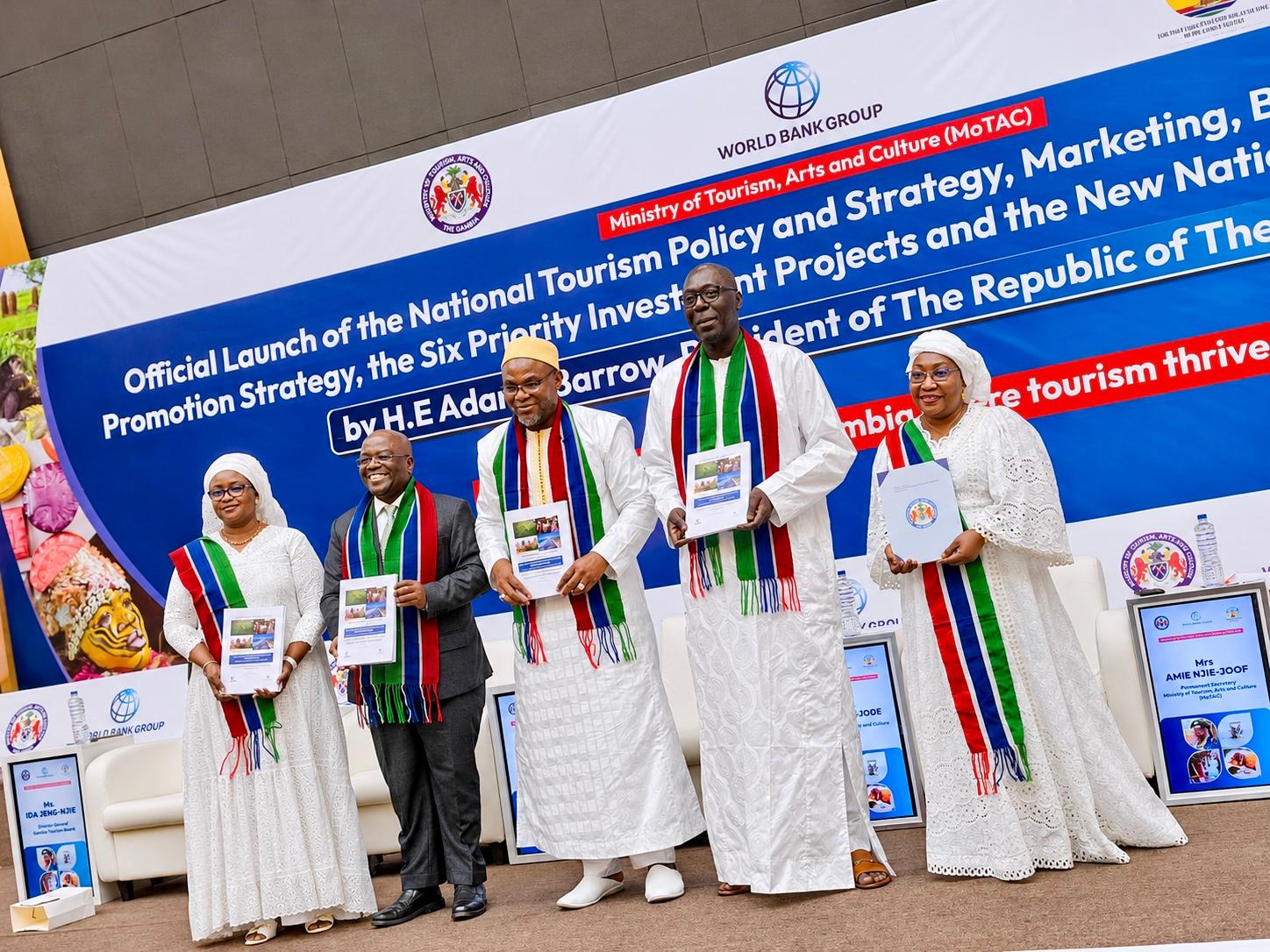
Vice President Muhammed B.S. Jallow, speaking on behalf of President Adama Barrow, formally unveiled the initiatives, which include a refreshed Destination Gambia brand identity and six priority investment projects.
Permanent Secretary Amie Njie Joof described the launch as a milestone in repositioning the sector. She said the National Tourism Policy and Strategy offers an updated framework for sustainable governance and development, while the marketing and branding strategy aims to strengthen The Gambia’s appeal in regional and international markets. The new brand identity will highlight cultural heritage, distinctive experiences and hospitality, and the priority projects are designed to draw private investment and create jobs.
World Bank representative Franklin Mutahakana noted that tourism already accounts for 8.5 percent of GDP and roughly 6.5 percent of employment; with indirect effects, those figures rise to about 15.5 percent of GDP and 17.1 percent of jobs. A World Bank Group diagnostic study nearing completion has identified private-investment opportunities that could unlock up to US$300 million over the next five years and generate approximately 30,000 jobs, including 4,000 direct positions.
Priority areas include refurbishing coastal hotels and attracting international brands; developing river cruises, eco-lodges, and cultural sites; and expanding medium- to upscale accommodation for the growing West African visitor market. The International Finance Corporation is already supporting the expansion of two hotels that will add 214 rooms and create roughly 600 direct and 1,300 indirect jobs.
Mutahakana acknowledged persistent challenges: strong seasonality, reliance on a narrow set of source markets, and heavy dependence on the traditional sun-sea-sand model. Greater investment in nature, culture, historical heritage and river-based experiences, he said, would help attract new visitors, lengthen the season and spread benefits more widely. Ongoing infrastructure work under the Tourism Diversification and Resilience Project, including rehabilitation of Denton Bridge and coastal nourishment, forms part of the supporting package.
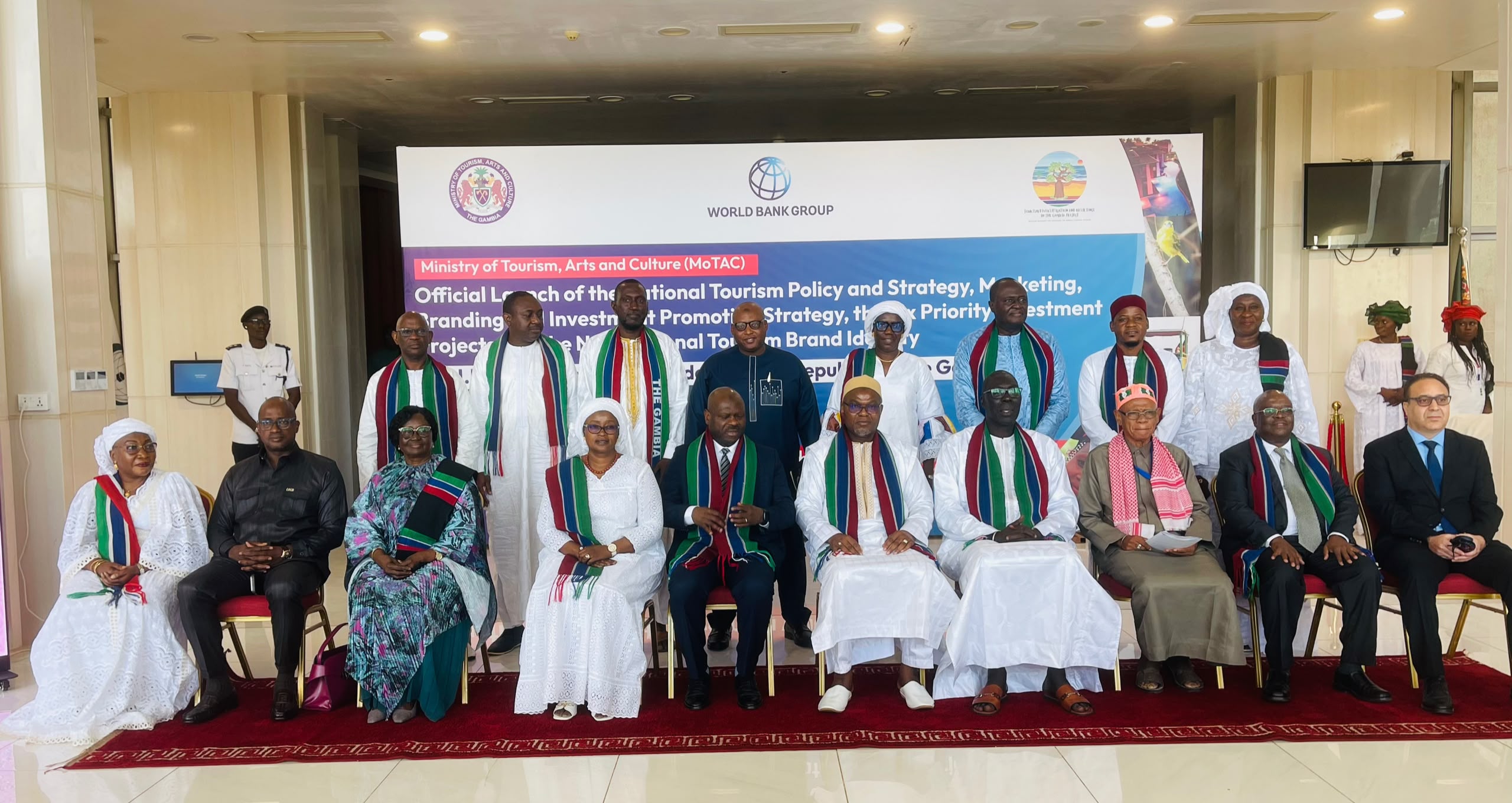
Minister of Tourism, Arts and Culture Abdoulie Jobe stressed that the private sector remains the main driver of growth, with government playing a facilitative role. He urged greater private investment in hotels and other products and pointed to the Gambia Partnership Initiative as a vehicle for closer collaboration. “The responsibility does not rest with the Gambia Tourism Board alone,” he said. “It rests with all of us if we want tourist arrivals to continue increasing.”
Vice President Jallow reaffirmed tourism as a strategic priority aligned with the recovery-focused National Development Plan, Yiriwa. The government’s 2030 vision is to position The Gambia as a destination known for quality, value, coastal experiences, rich cultural heritage and nature-based attractions along the River Gambia.
The government has committed more than US$1 million toward implementing the tourism marketing strategy under the World Bank-supported project.
Jallow called on the ministry, the Gambia Tourism Board, private stakeholders, development partners and communities to ensure effective implementation, measured ultimately by investments secured, jobs created, and livelihoods improved. He urged Gambians to promote Destination Gambia and uphold the country’s identity as the Smiling Coast of Africa.