By: Fatou Dahaba
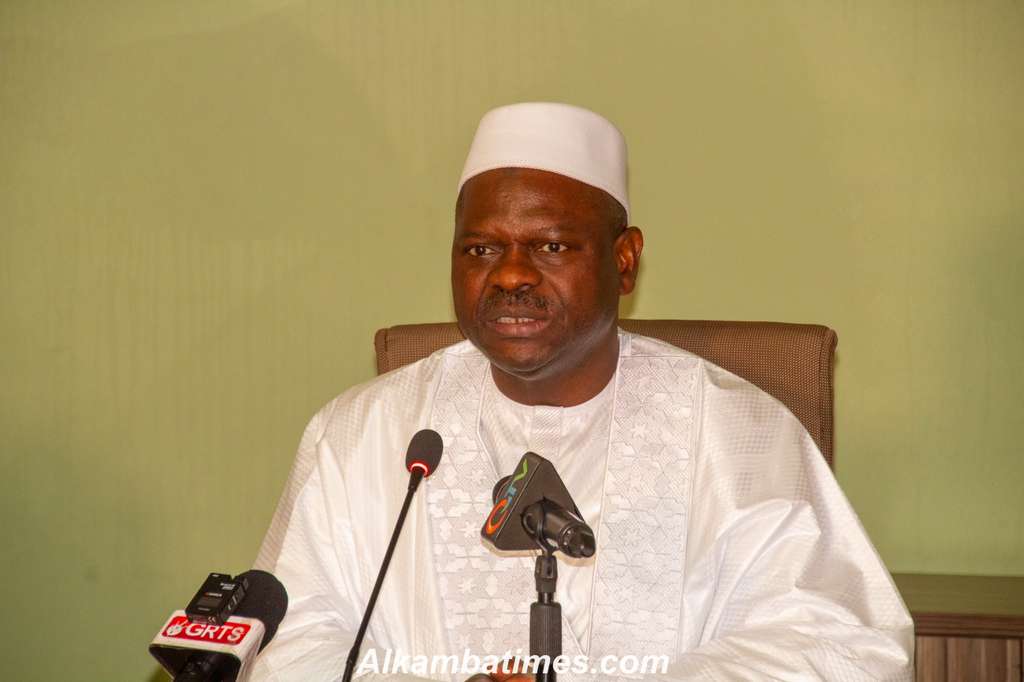
Finance and Economic Affairs Minister Seedy Keita on Friday presented a D52.4 billion national budget for 2026, marking a 12% nominal increase over the 2025 allocation and the largest expenditure plan in the country’s history.
Delivering the budget speech before the National Assembly, Minister Keita said recurrent spending will rise to D31.3 billion while capital expenditure and net lending are pegged at D19.5 billion. The sharp growth in recurrent costs is driven by election-related activities ahead of the 2026 local government and presidential polls, clearance of domestic arrears, and full provisioning of fuel and electricity subsidies.
Personnel emoluments will consume D10.29 billion, a 16.4% increase from 2025, reflecting promotions, housing allowances, new recruitment, and the lingering effects of last year’s civil service salary increase, which brought cumulative pay rises under the current administration to 110%.
“These salary adjustments continue to improve the well-being of Gambian civil servants and their families,” Keita told lawmakers.
Subsidies and transfers are budgeted at D8.01 billion, up 24%, with the bulk of the allocations going to energy, agriculture, infrastructure, and subvented institutions.
On the capital side, the minister noted a deliberate shift away from direct Treasury funding of projects. Most road infrastructure will now be financed through the National Road Fund under the Ministry of Transport, Works and Infrastructure, keeping centrally-funded capital spending relatively contained.
Revenue Outlook and Fiscal Reforms
Total revenue and grants are projected at D50.3 billion, leaving a modest overall deficit of D2.1 billion (approximately 1% of GDP).
Domestic revenue is expected to reach D32.2 billion, with tax revenue rising 13% to D27 billion, driven by aggressive digitalisation and compliance measures. Key initiatives include the full rollout of the Integrated Tax Administration System (ITAS), the ASYCUDA customs platform, a new electronic invoicing system for VAT, and a revenue assurance solution targeting telecom excise duties.
Personal income tax, corporate tax, and VAT collections are forecast to rise sharply, while an ongoing audit of major public works contractors aims to close long-standing compliance gaps.
Non-tax revenue, however, will drop significantly from D7.96 billion in 2025 to D5.19 billion in 2026, mainly due to one-off receipts recorded this year.
External resources are projected at D18.1 billion, including D14.4 billion in project grants and D3.7 billion in budget support, led by D2.5 billion from the World Bank, D597 million from the European Union, and D528 million from the African Development Bank. Minister Keita cautioned that grant inflows remain vulnerable to global geopolitical tensions.
Medium-Term Discipline
Keita emphasised that the 2026–2030 Medium-Term Economic and Fiscal Framework aims to keep expenditure growth below nominal GDP growth to preserve fiscal sustainability. Supporting measures include a full transition to programme-based budgeting, the rationalisation of overlapping government agencies, the prioritisation of high-impact investments, and an overhaul of state-owned enterprises.
Lawmakers from both the ruling NPP and the opposition benches welcomed the salary increases and the infrastructure focus. Still, they raised concerns about the heavy reliance on subsidies and the projected decline in non-tax revenue.
The 2026 Appropriation Bill now proceeds to the committee stage before final passage later this month.