By: Ebrima Mbaye
In a major enforcement push ahead of the December 2026 general elections, the Independent Electoral Commission (IEC) has directed seven political parties to revise and resubmit their registration applications after they failed to meet the mandatory requirements under the country’s Elections Act.
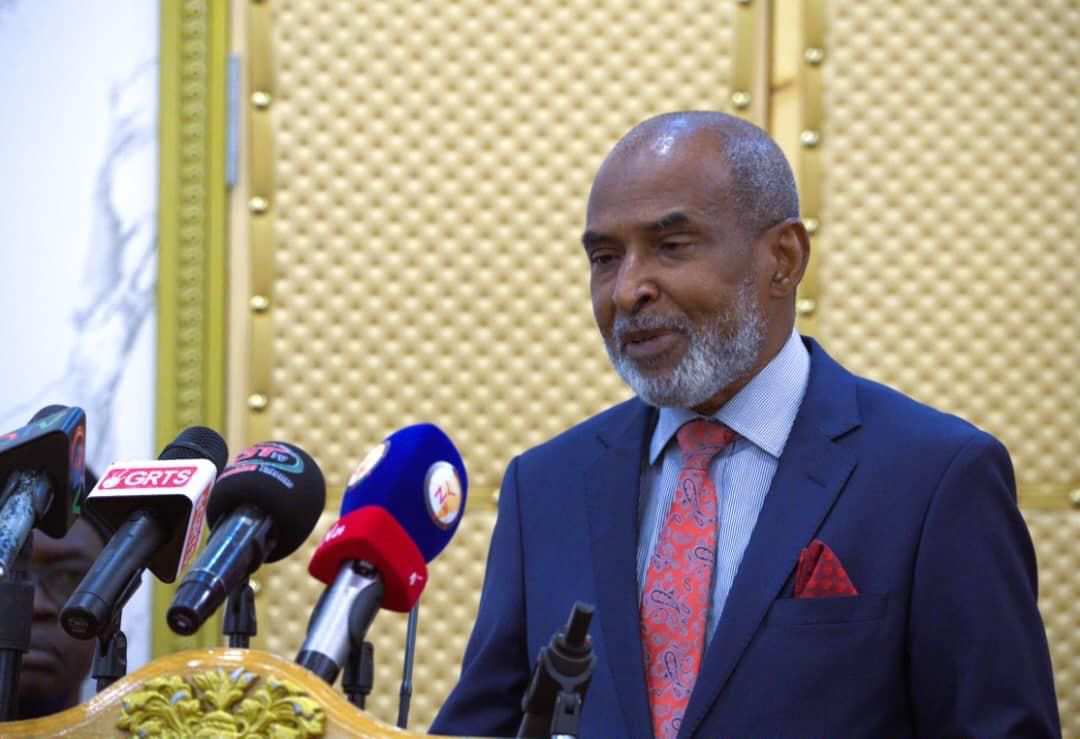
The revelation came from Alhagie Cherno Jallow, the IEC’s newly appointed Vice Chairman, in an exclusive interview on The Final Take with MK, hosted by journalist Sainey M.K. Marenah of The Alkamba Times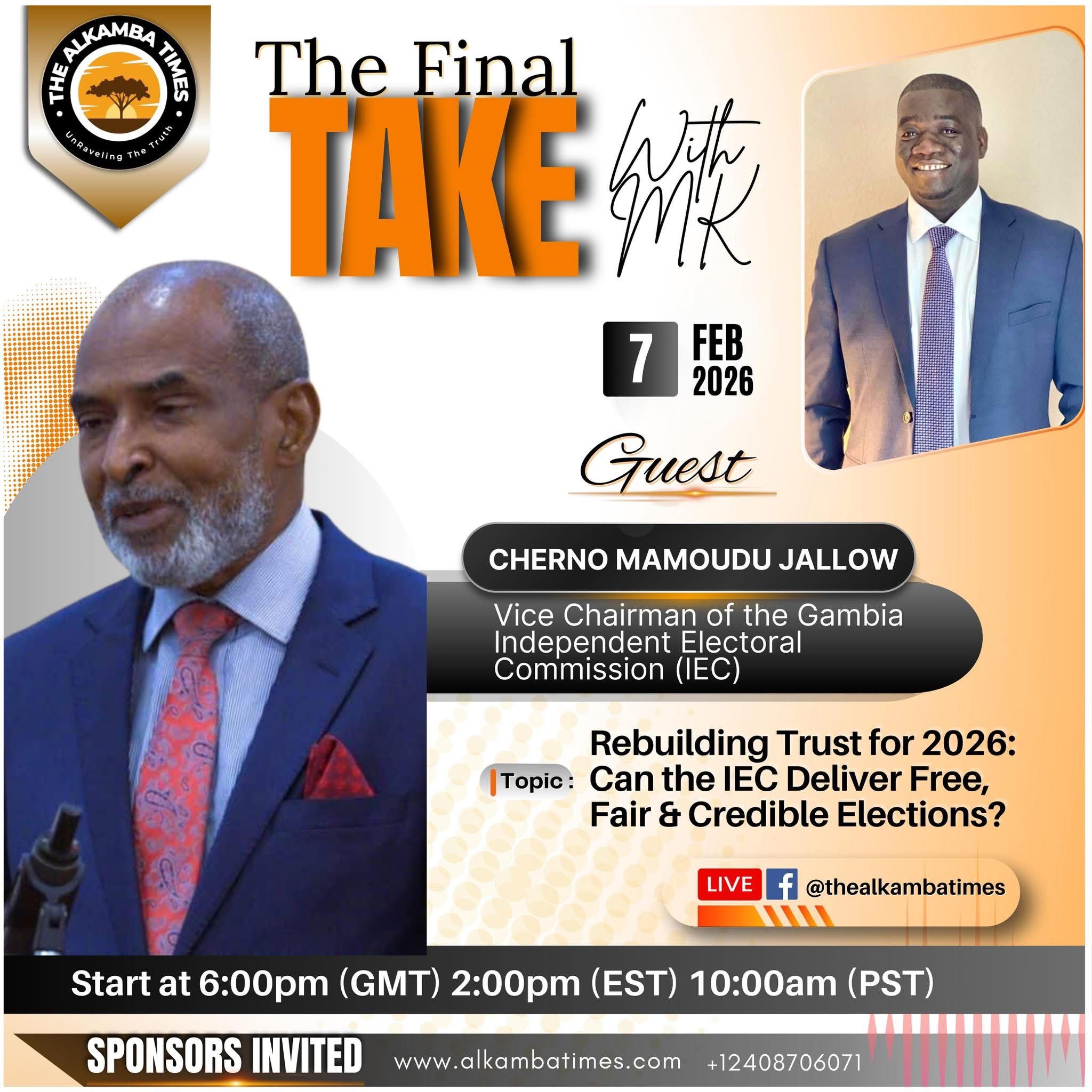
Jallow disclosed that while The Gambia currently has 22 fully registered political parties, the seven applicants were returned because “they did not do their homework” and were “found wanting” in key submissions. He stressed that the Commission is adopting a zero-tolerance stance on lax compliance.
“Under the new Elections Act, deregistration has been replaced with suspension,” Jallow explained. “The law now gives us stronger powers to suspend political parties that fail to meet standards.”
A core requirement under scrutiny is the maintenance of operational and functional regional offices nationwide. IEC field teams have completed a comprehensive assessment across the country and are finalizing reports that will guide decisions on non-compliant parties, including potential suspensions.
“We went around, our people are finalizing a report, and we will decide what to do with regard to some of these political parties that have not complied,” Jallow said.
The Vice Chairman also addressed ongoing preparations for voter registration, reaffirming the IEC’s commitment to transparency and inclusivity. All eligible Gambians possessing required documentation—such as national ID cards, passports, or other stipulated national documents—will be permitted to register. Where such documents are unavailable, attestation remains legally valid, despite public debate on the issue.
“The law is the law,” Jallow asserted firmly.
Additionally, two more political party registration applications are under active review, with outcomes pending the completion of assessments.
Reflecting on the IEC’s internal dynamics, Jallow commended the staff dedication and unity, describing the institution as focused on delivering peaceful, credible, and irreproachable elections.
“What is clear is the team spirit to ensure we foster peaceful, credible elections beyond reproach. At the end of the day, we are accountable to the Gambian people,” he noted.
In a broader appeal, Jallow called on all stakeholders—political parties, citizens, and civil society—to prioritize responsibility and shared national interest over individual agendas.
“We may have different agendas and strategies, but the ultimate objective is the betterment of the Gambian people. Let us demonstrate responsibility and make sure we do the right thing,” he concluded.
The IEC’s stricter oversight comes as The Gambia gears up for a pivotal election cycle, including the presidential poll scheduled for December 5, 2026, underscoring efforts to strengthen electoral integrity and public trust in the democratic process.