By Sainabou Sambou
The Minister of Environment, Climate Change and Natural Resources, Rohey John Manjang, has called on journalists to move beyond reporting environmental disasters after they occur and instead raise public awareness of risks in advance.
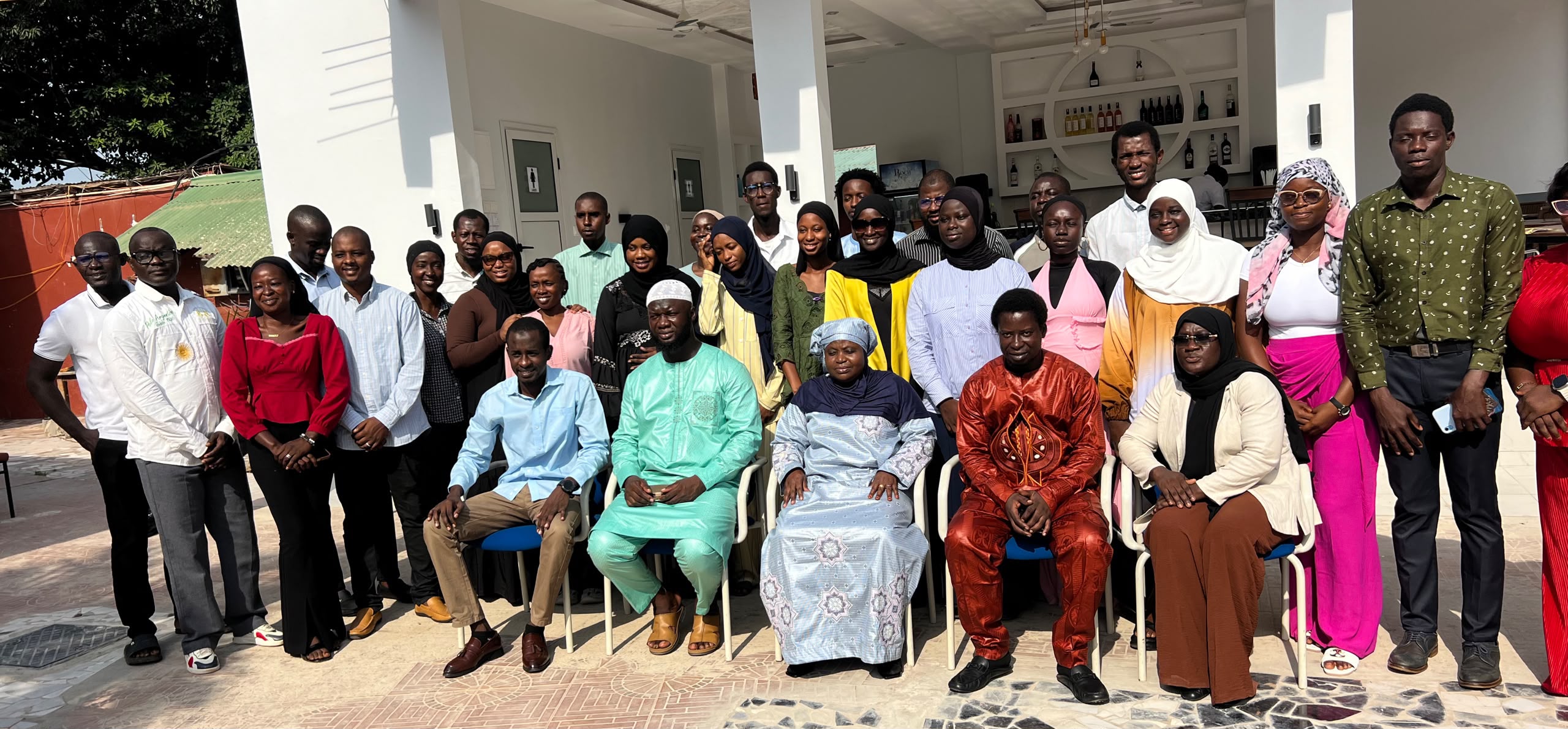
She made the remarks while opening a training workshop for journalists on nature-based solutions, wetland restoration and coastal protection. The Minister stressed that public awareness is essential for building resilient communities and that journalists play a critical role in informing people about environmental threats, response measures and self-protection.
“When floods come, you are the first to arrive and the first to tell the nation what happened. But our shared challenge is to tell the story before the disaster too,” she said.
More than 60 percent of Gambians live in coastal and urban areas, leaving them highly exposed to climate risks. Citing the World Bank’s Country Climate and Development Report for The Gambia, she noted that flooding causes annual damage equivalent to 3.8 percent of the country’s Gross Domestic Product. She urged greater investment in early warning systems and proactive measures.
Nature-based solutions, particularly healthy mangroves and wetlands, offer effective and affordable protection, she explained. These ecosystems absorb floodwater, filter pollution, store carbon, and provide breeding grounds for fish that support many livelihoods. Combining them with sound engineering can deliver longer-lasting results at lower cost.
These approaches align with the West Africa Coastal Areas Management Program (WACA), which promotes integrating nature-based solutions into infrastructure while strengthening coastal policies. The Minister also highlighted government efforts to improve waste management, noting that poorly managed waste blocks drains, pollutes waterways and worsens flooding.
She disclosed that the government recently signed an integrated waste management agreement with Ghana-based Joshpong Group of Companies to enhance collection, recycling and composting.
She expressed hope that the training would enable journalists to produce informed reports and raise public awareness. “The Gambia’s environment is our shared inheritance. Let us protect it together, with facts, with courage, and with stories that move people to act,” she said.
Gambia Press Union Board Treasurer Meita Touray described the event as the second collaboration between the GPU and WACA on environmental reporting. She noted that coastal erosion, flooding, saltwater intrusion, biodiversity loss, and declining fish stocks increasingly threaten livelihoods and food security. Yet, environmental journalism remains underreported and under-resourced because of its technical nature and limited specialized training.
WACA Project Coordinator Dr Mohammed Lamin Sanyang said the program continues to invest in environmental journalism. In the first year of the partnership, 25 journalists were trained and produced more than 30 articles highlighting hazards around areas such as the Kotu Stream. He said WACA is also piloting The Gambia’s first Sponge City concept around Nema Kunku, alongside green parks, mangrove restoration, water ponds and urban farming. Similar training has been extended to the National Roads Authority and the Ministry of Transport, Works and Infrastructure, with plans for civil society organizations. He urged journalists to report not only on problems but on resilience, innovation and practical solutions.