By: Alieu Ceesay
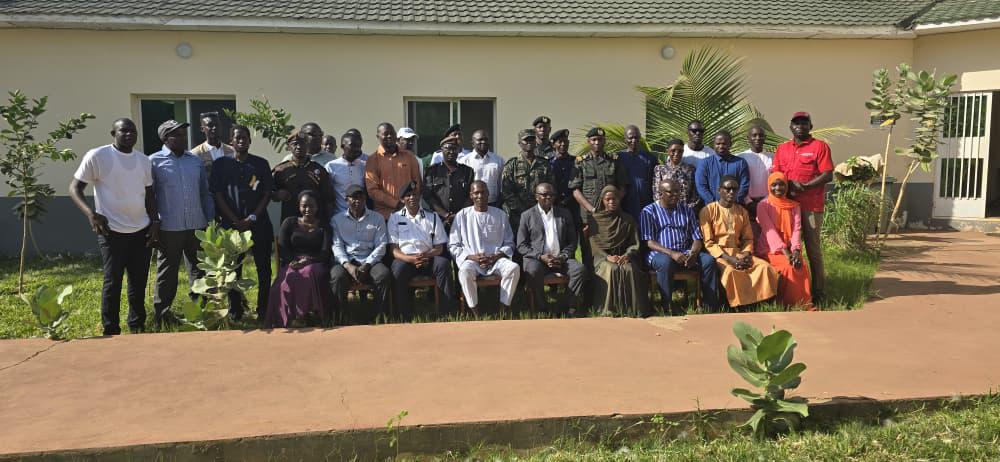
The Technical Advisory Committee (TAC) of the North Bank Region (NBR) held its first quarterly meeting of 2026 on Monday, March 30, at the Governor’s Office in Kerewan, bringing together regional duty bearers to review progress, confront persistent challenges, and reaffirm their dedication to serving local communities.
The gathering, organized in partnership with ActionAid International, The Gambia, served as a key platform for institutions to present reports covering January to March 2026. Under the provisions of The Gambia’s Local Government Act, TAC meetings enable duty bearers to report on their activities, provide technical advice, ensure alignment with national development priorities, and promote accountability to the people they serve.
ActionAid International The Gambia reaffirmed its ongoing support for the TAC mechanism, emphasising its role in advancing sustainable development through a human rights-based approach. The meeting allowed regional heads to share ideas, exchange technical support, and keep the Governor informed on critical issues for onward transmission to the central government.
Presentations painted a mixed picture of achievements and pressing concerns across key sectors.
The Gambia Immigration Department (GID) painted a stark picture of irregular migration’s impact on the region. Regional Commander DSI Lamin SK Jassey reported that the North Bank has become a significant hub for would-be migrants seeking opportunities in Europe. Settlements in areas such as Barra, Ginack, Farafenni, and Ballingho have reportedly turned into departure points, with migrants using wooden boats for the perilous journey to the Canary Islands of Spain and Italy.
“ The region has intercepted 721 would-be migrants within Barra, Ginack, Farafenni, and Ballingho. Would-be migrant agents have used this region as their harboring center to embark on the perilous journey to the Canary Islands of Spain and Italy. Many nationalities do their fishing in Barra, and boat building is also conducted at Barra,” DSI Jassey stated.
He further revealed that immigration personnel intercepted over 549 children along the border corridor at Amdalai and Kerr Ali border posts. Many of the children were reportedly on the move after leaving homes or schools due to maltreatment by teachers or lack of parental care, with some cases involving missing persons intercepted at the borders.
In the livestock sector, Regional Livestock Director Mr. Madou Camara acknowledged his staff’s commitment despite operational hurdles. Regular field visits and service delivery have been hampered by shortages of fuel and vaccines, thereby affecting the efficiency of animal health and production support.
To address these issues, he recommended the timely provision of fuel for field operations, improved procurement processes for vaccines and equipment, strengthened collaboration with farmers and local authorities through sensitization, and the establishment of digital recording systems for accurate reporting and monitoring.
Camara also used the platform to encourage Gambians to patronize locally produced poultry products rather than relying on imports, as a way to boost domestic production and support the rural economy.
Forestry officials, represented by Regional Forestry Officer Yaya F. Nyassi, highlighted ongoing efforts to protect and preserve the region’s forest resources. These include regular patrols, arrests, prosecutions, and confiscation of illegally obtained products in line with the Forest Regulations.
However, the work has encountered resistance from some residents, resulting in court cases and fines for illegal activities. Officials stressed the importance of coordinated enforcement to safeguard forests from exploitation.
As the meeting drew to a close, participants committed to deeper engagement with residents through direct dialogue to address concerns and foster inclusive development. The TAC is expected to compile and submit its quarterly report to relevant authorities, feeding into broader national planning and accountability processes.
This first TAC meeting of the year underscores the North Bank Region’s proactive stance in tackling multifaceted challenges while building on incremental successes, with stakeholders pledging renewed collaboration for the benefit of local communities.