By Sainabou Sambou
The National Democratic Institute has warned that hate speech could intensify identity politics and ethnic tensions in The Gambia as the country prepares for its December 5 presidential election, calling on political leaders, the electoral commission, the media and security agencies to protect a still-fragile democratic transition.
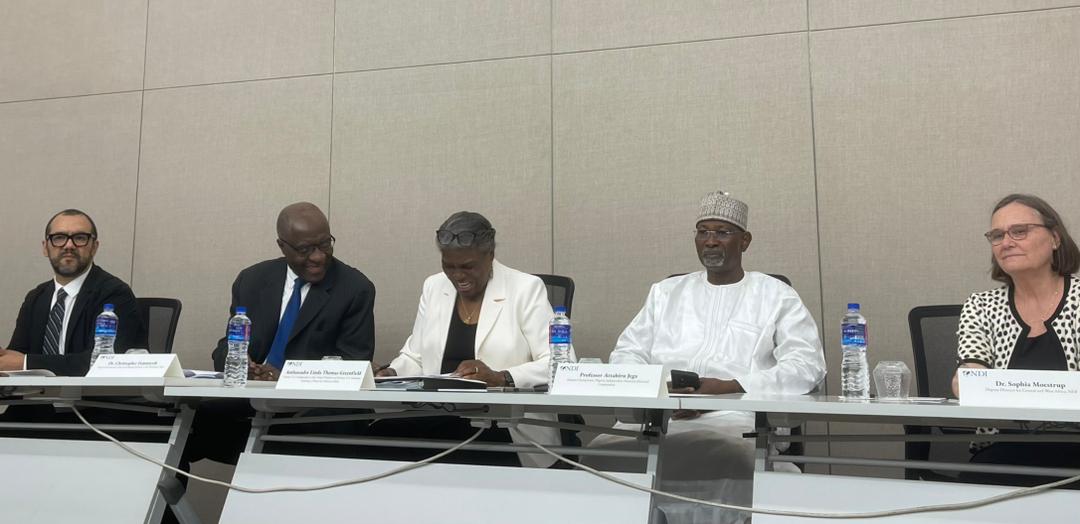
The warning was issued on Friday, August 28, at a press conference at the African Princess Beach Hotel in Kololi after a five-day international pre-election assessment mission visited The Gambia from August 24 to 28. Delegates met President Adama Barrow, potential candidates, the Independent Electoral Commission, political parties, civil society groups, security officials, journalists and development partners to gauge the political and electoral climate.
Presenting the mission’s findings, former U.S. Ambassador to the United Nations and NDI co-leader Linda Thomas-Greenfield said preparations for the presidential election were broadly on track. “The delegation found that overall preparations for the presidential election are proceeding as planned,” she said.
Gambians, she added, hope a credible vote will consolidate democratic gains made since the 2016 election that ended Yahya Jammeh’s 22-year rule. Those gains include wider political, civic and media freedoms. Yet many citizens remain uneasy about deteriorating political discourse. “Many are also apprehensive that negative trends, such as hate speech, could exacerbate identity politics and ethnic tensions in the country,” Thomas-Greenfield said.
She argued that The Gambia must lock in the past decade’s progress through comprehensive, consensually developed constitutional and legal reforms. Legal change remains incomplete, she said, and constitutional reform has stalled despite public demand for it. “For many Gambians, the transparency and credibility of the 2026 election will be an important marker of the health of the country’s democracy and a determinant of its future trajectory,” she said.
Former chairman of Nigeria’s Independent National Electoral Commission, Professor Attahiru Jega, presented short-term recommendations. He urged the IEC to improve transparency and communication across the electoral cycle, including timely sittings of revising courts so a final voters’ register can be published and made available to stakeholders.
The commission should also “redouble efforts to proactively share accurate information on all aspects of the electoral process before, during and after the polls” to counter misinformation, Jega said. He recommended special briefings for presidential candidates and parties on operational measures and any changes to regulations, stronger social-media communication, and the swift, accurate publication of results.
Accessibility featured prominently in the recommendations. Jega called for polling stations that voters with limited mobility can use and for Braille engravings on voting drums so persons with disabilities can cast ballots independently.
Turning to political actors, he said candidates and supporters must promote peaceful participation and avoid conduct that could trigger violence. Presidential candidates should sign a public peace pledge and press their supporters to remain calm throughout the campaign and voting period.
Jega was explicit on ethnic incitement. “Political parties, candidates and their supporters should avoid and denounce the fuelling of ethnic divisions through statements, social media posts and interviews that demean and incite hostility against other ethnic groups and could lead to violence,” he said.
He also said perpetrators of online gender-based violence and harassment must be held accountable, warning that such abuse can deter women from voting or standing as candidates.
Journalists and media houses were urged to intensify fact-checking before publishing material that could erode public confidence or inflame ethnic divisions. “Journalists should report accurately, responsibly and professionally, in line with the Charter of Ethics for Journalists, in order to foster civil discourse,” Jega said. Security agencies, he added, must remain impartial and professional when managing rallies and demonstrations.
NDI Senior Associate for Africa and special adviser to the NDI president, Dr Christopher Fomunyoh, presented medium- and long-term recommendations. He noted that the December presidential election will be followed by legislative elections in March 2027 and local elections in April 2027. Sustaining The Gambia’s democratic path, he said, will require political will, broad participation and consensus among Gambians of all political affiliations.
Fomunyoh called on political leaders and elected officials to renew their commitment to constitutional and electoral reform. He urged the government to revise the Public Order Act and related laws so permit requirements cannot be used to restrict freedom of assembly, and to review media provisions so journalists can work without undue constraint.
Electoral-framework reforms he recommended include reviewing how IEC members are nominated, ending the attestation process, implementing diaspora voting as provided for in the Constitution, and introducing campaign-finance rules.
He also pressed for greater participation by women, young people, persons with disabilities and other marginalized groups. Political parties, he said, should create more pathways for those groups to win leadership roles and nominations before the 2027 legislative and local contests.