By Alieu Ceesay
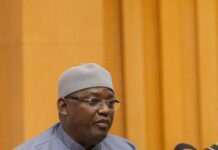
The People’s Democratic Organisation for Independence and Socialism (PDOIS) has boldly asserted its readiness to lead The Gambia, with party Secretary General Halifa Sallah declaring that after nearly four decades of existence, PDOIS is fully equipped to “take charge of the destiny of this country.”
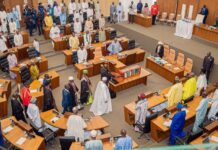
Speaking on 27 December 2025 during the second part of the party’s national congress, Sallah told hundreds of delegates that PDOIS has reached a pivotal moment in its political journey. As the party approaches its 40th anniversary next year, he described the congress as a “rite of passage into middle age,” marking the transition from a youthful opposition movement to a mature, disciplined organisation capable of governing.
“There is absolutely no doubt that the party is prepared to take charge of the destiny of this country. It is capable of doing so,” Sallah said emphatically.
He highlighted the party’s internal reforms, including the establishment of specialised bureaus, strict codes of conduct, financial regulations, and robust administrative systems. These structures, he argued, are not merely organisational tools but a “school for managing the affairs of a country,” designed to produce competent presidential candidates, National Assembly members, and local councillors.
“From them the party can have all the presidential candidates, national assembly candidates, and councillors it needs to shape the destiny of this country,” he stated.
While celebrating PDOIS’s growth, Sallah reserved his sharpest criticism for the current government’s record on poverty reduction, youth employment, economic self-reliance, and social development.
Drawing on official statistics, he painted a grim picture of widespread poverty. “Over a million Gambians are living in abject poverty,” he said, before dissecting the national budget’s social protection allocation. “If you divide the 200 million dalasi allocated for social protection by one million people, everybody gets two hundred dalasi a year. That’s how they want to protect the people.”
Sallah also lambasted the government for ignoring the youth unemployment crisis. Citing data from the Gambia Bureau of Statistics (GBOS), he noted that 41 percent of the population is neither in education, employment, nor training—yet the annual budget speech contains no meaningful response to the issue.
On the economy, he highlighted The Gambia’s staggering trade imbalance. “In 2024, The Gambia exported about three billion dalasi worth of goods and imported sixty-seven billion dalasi,” Sallah said. “We are not exporting. We are dependent. We cannot take care of ourselves.”
He questioned why massive investments in tourism and infrastructure have failed to benefit local producers. “Are the vegetables going to the hotels? Is the fish going there? Is the meat going there?” he asked rhetorically. “Where is the economy that generates foreign exchange for Gambians?”
Public contracts and concessions also came under fire, with Sallah arguing that deals involving port operations and major infrastructure projects have enriched individuals rather than strengthened national institutions.
In contrast, PDOIS offered a vision of transformative development rooted in comprehensive social protection. Sallah outlined policies that would support citizens “from prenatal” stages, declaring that “that mother is the mother of the nation. Without her, we have no future.” The party’s programme includes universal public education, mandatory national service, cooperative banking, village development funds, and community-based health systems.
Closing his address, Sallah issued a rallying call to party members, urging them to take personal responsibility for spreading PDOIS’s message nationwide.
“Each person must make it a duty to convince others that collectively, we can take charge of our destiny,” he said. “Collectively, we can build a country that will free us from the poverty that most of us are saddled with.”
As The Gambia prepares for December 2026 Presidential elections, Sallah’s speech positions PDOIS as a serious alternative to the ruling coalition, promising principled, knowledge-driven governance in place of what the party sees as decades of mismanagement and dependency.