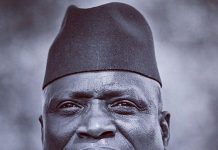
Ethnic communities that let their collective names be used to support political parties risk misrepresenting their members, sowing internal division, and eroding individual freedoms, according to a detailed analysis by Dr. Michael Ba Banutu-Gomez, a Gambian-born U.S.-based academic and management professor at Rowan University’s William G. Rohrer College of Business.
Dr. Banutu-Gomez argues that an ethnic group’s name embodies shared history, cultural identity, language, heritage, and belonging for people who may hold widely differing political opinions, religious beliefs, and aspirations. When that name is deployed to endorse a party, it creates the false impression of unanimous community support. While individuals remain free to back candidates or criticize governments, he contends the danger emerges when political preferences are presented as the stance of an entire ethnicity.
The analysis outlines ten specific challenges. First, such endorsements misrepresent community views. No ethnic group speaks with a single political voice; members may support opposing parties, stay independent, or abstain. Even a vote by a community association binds only that organization and its participants, not everyone who shares the ethnicity. Dr. Banutu-Gomez writes that an ethnic name should never substitute for individual consent.
“Second, linking ethnic identity to a party can fracture families, friendships, cultural associations, and institutions. Political differences risk being recast as betrayals of the community, eroding the trust needed for cooperation amid disagreement. A healthy community, he maintains, should welcome political diversity while preserving solidarity around culture and shared welfare.
Third, the practice undermines individual political freedom. Citizens should choose affiliations based on judgment, values, and policy assessment. Presenting a party as “the ethnic group’s party” can pressure members to conform to prove belonging, silencing criticism and discouraging independent thought. The professor insists that cultural membership must never hinge on a vote, campaign activity, or praise of a leader.
Fourth, it fosters suspicion among ethnic communities. When one group’s name becomes tied to a party, others may view that party’s goals as an effort to advance one community at their expense, turning competition into a contest over institutional control. This perception can arise even if many within the named group oppose the party. Separating collective identity from partisan endorsement preserves room for cross-community cooperation.
Fifth, it enables political actors to exploit cultural loyalty. Organizers may invoke ethnic pride to secure support without fully explaining policies or defending performance. Appeals to “our people” can sideline scrutiny of leadership, competence, integrity, and public service. Communities should demand that parties earn backing through credible commitments and accountable conduct rather than treating heritage as automatic legitimacy.
Sixth, accountability weakens. If criticism of a party is framed as an attack on the ethnic community, members may hesitate to challenge misconduct or poor results. Leaders can exploit the confusion by casting scrutiny as hostility toward the people they claim to represent. Banutu-Gomez emphasizes that sharing an ethnicity with a politician creates no duty to defend that official’s failures.”
” Seventh, uninvolved members face collective blame. When a party is identified with an ethnic group, people may attribute its mistakes, inflammatory statements, or abuses to the entire community. Individuals who never supported the party can encounter suspicion or hostility. Responsibility belongs to the decision-makers, not an entire ethnicity; groups should resist arrangements that imply collective culpability.
Eighth, cultural institutions can be compromised. Associations, gatherings, and traditional leadership structures often unite people of differing political affiliations. Turning them into vehicles for party endorsement may drive some members away or undermine confidence in their fairness. Community resources can also spark disputes if people see contributions as supporting politics without consent. These institutions function best when shared spaces remain open across political lines.
Ninth, ethnic appeals distract from public policy. Discussion can shift from education, employment, health care, infrastructure, agriculture, and resource management toward identity. Citizens may ask who a candidate is rather than what the candidate proposes. While ethnic identity can shape experiences and concerns—especially where exclusion exists—leaders must still demonstrate how policies will address those issues fairly. Identity alone cannot constitute a governing program.
Tenth, national belonging and future cooperation suffer. Countries require citizens able to collaborate across ethnic and political boundaries. Assigning communities permanent party identities risks turning elections into indefinite group struggles. This complicates post-election cooperation and limits new alliances around shared needs. An ethnic community protects its long-term interests by maintaining relationships across parties and insisting on equal treatment regardless of who holds power.”
Dr. Banutu-Gomez concludes that an ethnic group should not allow anyone to use its name in ways that falsely imply unanimous or exclusive support for a party. “The name is a common inheritance for present members and future generations; no individual, elder, politician, or association can claim ownership of every member’s political voice. Protecting the name does not demand silence on injustice. Associations can defend cultural rights, preserve languages, oppose discrimination, and advocate equal access to services, while questioning leaders and seeking commitments from competing parties. Such efforts should be transparent about who the organization actually represents.
Members forming political support groups should identify themselves accurately—for example, as individual supporters—rather than claiming an entire ethnicity endorses their party. Community leaders should affirm that members remain free to choose affiliations without intimidation or exclusion.”
A guiding principle he proposes: “Our heritage unites us; our political choices belong to each of us.”
“Political parties change, leaders leave office, and alliances shift, but an ethnic community’s identity endures. Its name should remain a source of belonging for all members, including those who vote differently.”
Dr. Banutu-Gomez argues that safeguarding that shared identity strengthens community unity, individual freedom, and the prospect of a country where every citizen belongs.