By: Madi Jobarteh
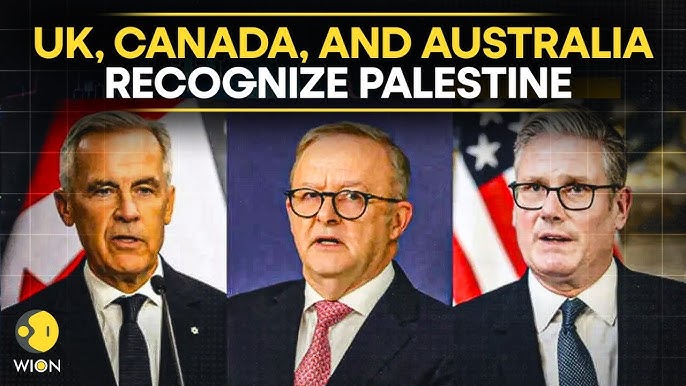
In a move that reeks of belated virtue-signaling, the United Kingdom, Canada, and Australia have finally recognized the State of Palestine as a sovereign entity on September 21, 2025. Framed by their leaders as a bold step toward reviving the moribund two-state solution, this coordinated announcement timed conveniently ahead of the UN General Assembly promises to “counter Israel’s expansion” and ease the “appalling suffering” in Gaza. But let’s call it what it is: a masterclass in hypocrisy and empty rhetoric, offering Palestinians little more than a fleeting feel-good moment while the machinery of occupation grinds on unabated.
The UK’s role in this saga is particularly galling, given its historical complicity. It was the British government that ignited this fire over a century ago with the 1917 Balfour Declaration, a colonial-era pledge that favored a “national home for the Jewish people” in Palestine while paying lip service to the rights of its indigenous inhabitants. This set the stage for the systematic dispossession of Palestinians, culminating in the 1948 Nakba, the catastrophic expulsion of hundreds of thousands during Israel’s founding.
Since then, the UK has empowered Israel through arms sales, diplomatic cover, and vetoes at the UN, shielding it from accountability for illegal settlements that now sprawl across more than 40% of the West Bank. Prime Minister Keir Starmer’s declaration today, insisting this recognition is not about “rewarding terrorism” but ensuring a viable Palestinian state, rings hollow against this backdrop. If the UK truly cared, why wait until Gaza lies in ruins, with over 65,000 dead and 90% of its population displaced?
Canada and Australia, as steadfast allies in the Five Eyes intelligence network, have long mirrored U.S. policy, shying away from recognition to avoid “prejudging” peace talks. Yet here they are, with Prime Minister Mark Carney hailing it as a “partnership in peace” and Foreign Minister Penny Wong calling it a “landmark shift.” These nations, which have historically aligned with Israel on security matters, now join over 150 countries mostly from the Global South in acknowledging Palestine. Proponents argue it’s a diplomatic pivot to isolate Israel’s far-right government, which openly vows no Palestinian state and pushes for West Bank annexation and Gaza’s “redevelopment.” But without concrete action, this is performative diplomacy at its finest, designed to quell domestic protests over the Gaza crisis rather than challenge the status quo.
What, then, is left for a two-state solution? Israel’s settlements house over 700,000 people beyond the 1967 Green Line, fragmenting Palestinian territory into isolated enclaves. Ministers like Itamar Ben-Gvir champion outright rejection of statehood, while Prime Minister Benjamin Netanyahu blasts the recognitions as a “prize for Hamas.” Even UN experts concede that a contiguous Palestinian state with East Jerusalem as its capital and fair territorial swaps is increasingly a pipe dream. The recent UNGA push for a “timebound” framework, backed by 140 nations, adds symbolic weight, but absent U.S. support which opposes these moves, it’s toothless.
Recognition alone changes nothing on the ground. It might unlock enhanced UN status for Palestinians, easier access to international courts, or bilateral aid. For example, the UK has hinted at £100 million for Gaza reconstruction. It could even pave the way for pressure tactics like arms embargoes or settler sanctions, as floated in EU circles. But will these countries go further? Will they deploy troops to enforce the 1967 borders, halting bulldozers and evictions? Of course not, they have explicitly ruled out military intervention, citing escalation risks and political backlash. Instead, they opt for “soft power”: vague calls for peacekeeping and boycotts that rarely materialize.
This is not about justice; it is about optics. For Palestinians enduring genocide, dispossession, occupation, and relentless bombardment, recognition feels like a cruel joke. It boosts morale momentarily but maintains the imbalance, allowing Israel to seize more land while the world watches. History shows half-measures perpetuate injustice: Norway’s 2011 recognition boosted leverage, but without broader realignment, it faded into irrelevance.
If the UK, Canada, and Australia are serious, they must back their words with deeds, i.e., halting arms to Israel, imposing real sanctions, deploying their troops to push Israel off Palestinian lands, and leveraging their alliances to demand accountability. Otherwise, this is just another chapter in the endless deferral of Palestinian rights, a concession to conscience that changes nothing. The world owes Palestinians more than rhetoric; it owes them action. Anything less is complicity dressed as progress.
Free Palestine. Hold Israel Accountable for Genocide!