By: Fatou Dahaba
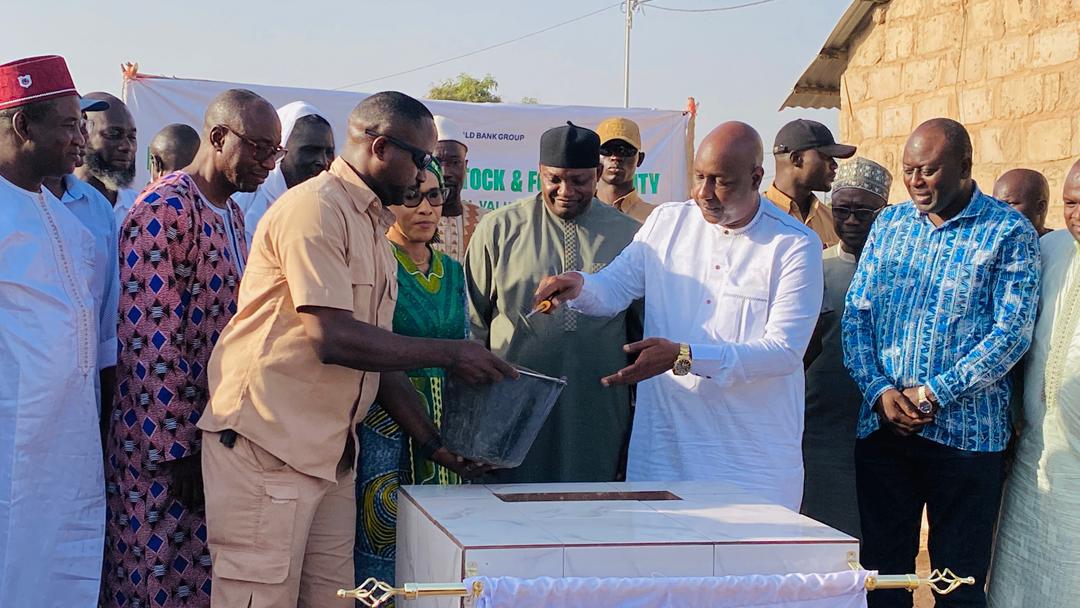
In a moment of long-awaited joy, residents of more than 50 villages in Upper Fulladu West erupted in celebration as President Adama Barrow laid the foundation stone for a new 35.2-kilometer feeder road that promises to end decades of isolation and open a new chapter of development for the area.
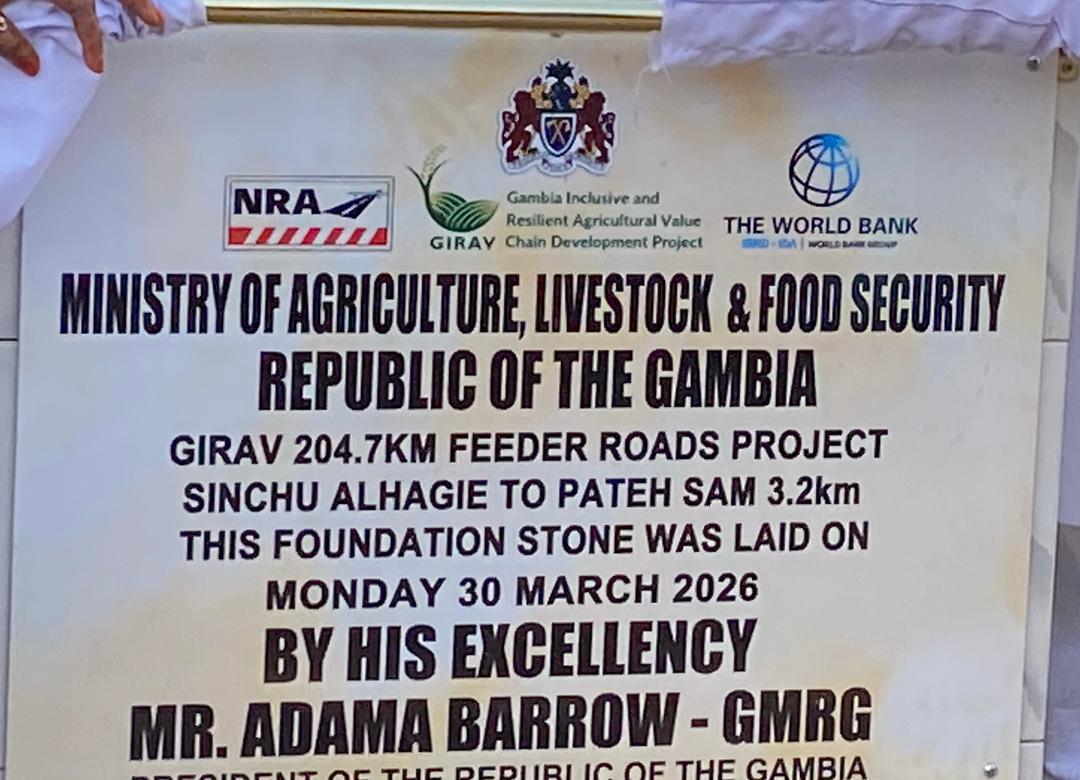
The event, held in Sare Soffie, is part of the nationwide foundation-laying ceremonies for the World Bank-funded GIRAV Roads Project. The initiative aims to improve rural connectivity, dramatically expand access to agricultural land, and link farmers directly to markets.
The new road is divided into two sections within the Central River Region (CRR): a 3.2km stretch from Sinchu Alhagie to Pateh Sam in Niamina East, and a much larger 32km route connecting Cha Kunda–Sare Soffie–Chargel–Madina Duta Wally–Nyamen Kunda–Dobong Kunda–Bansang in Upper Fulladu West.
During his visit – his second to the village since first arriving in 1988 – President Barrow shared heartfelt memories of the area. He recalled being driven through the village in a donkey cart by the father of the current Alkalos. Speaking emotionally, the President reaffirmed his commitment to the people, highlighting visible progress made under his administration, including the establishment of a school and health posts.
“This road will change everything,” President Barrow declared. “It will make it easier for our children to attend school, for the sick to reach hospitals, and for farmers to transport their produce to markets after harvest.”
He acknowledged that the government alone cannot shoulder the burden of development and thanked international partners, particularly the World Bank, for their support. The President urged the contractor to deliver a road built to the highest standards, warning that quality must never be compromised.
Minister of Agriculture Demba Sabally described the project as a game-changer for rural communities. He stressed that improved roads would connect farmers to farmlands and markets, reduce post-harvest losses, and enhance access to healthcare, education, and security.
“Better agricultural infrastructure is central to rural development,” Minister Sabally said. He also commended the GIRAFFE project, which operates under his ministry, for its broader contributions, including the creation of community gardens and other livelihood programs.
Sulayman Sumareh Janneh, Managing Director of the National Road Authority (NRA), painted a vivid picture of the hardships residents have endured for decades due to poor roads. He pledged that the new road would be completed within two years and meet world-class standards, featuring wider lanes, gutters, and proper drainage systems.
Janneh called on the contractor to prioritize hiring local laborers and to provide employment opportunities to those who have suffered most from the lack of infrastructure. He also made it clear there would be no supplementary budget, insisting that the project must be delivered efficiently and within the agreed cost.
Alkalo Sireng Sey of Sare Soffie expressed profound gratitude to President Barrow for finally delivering the road his community had been denied since the days of the First Republic. He praised the President’s nationwide achievements in providing clean water and electricity. He stressed the critical importance of the new road, especially during the rainy season, when the area becomes almost inaccessible.
Female Youth Leader Fatou Sama beamed with excitement as she welcomed President Barrow on his second visit. She admitted that many in the community had begun to doubt whether the road would ever materialize, but said the President’s presence proved his commitment to fulfilling promises.
“We, the women, stand firmly behind President Barrow,” Sama declared, while also calling for urgent improvements to the local hospital to serve the growing needs of the community better.
National Assembly Member for Upper Fulladu West, Bakary Kora, hailed the Barrow administration for delivering unprecedented development to his constituency. He noted that over 90 villages in the area have now been connected to the electricity grid, describing it as a remarkable achievement.
Kora urged citizens to focus on opportunities rather than depending on direct handouts, and called on the opposition to support national development efforts.
The Sare Soffie road project is part of a larger 204.7km feeder roads program under the GIRAV initiative, scheduled for implementation over the next two years. Once completed, the roads are expected to transform the lives of thousands of rural Gambians by boosting agriculture, improving access to essential services, and ending years of marginalization.
For the people of Sare Soffie and surrounding villages, Tuesday’s ceremony was more than the laying of a foundation stone – it was the beginning of the end of isolation.