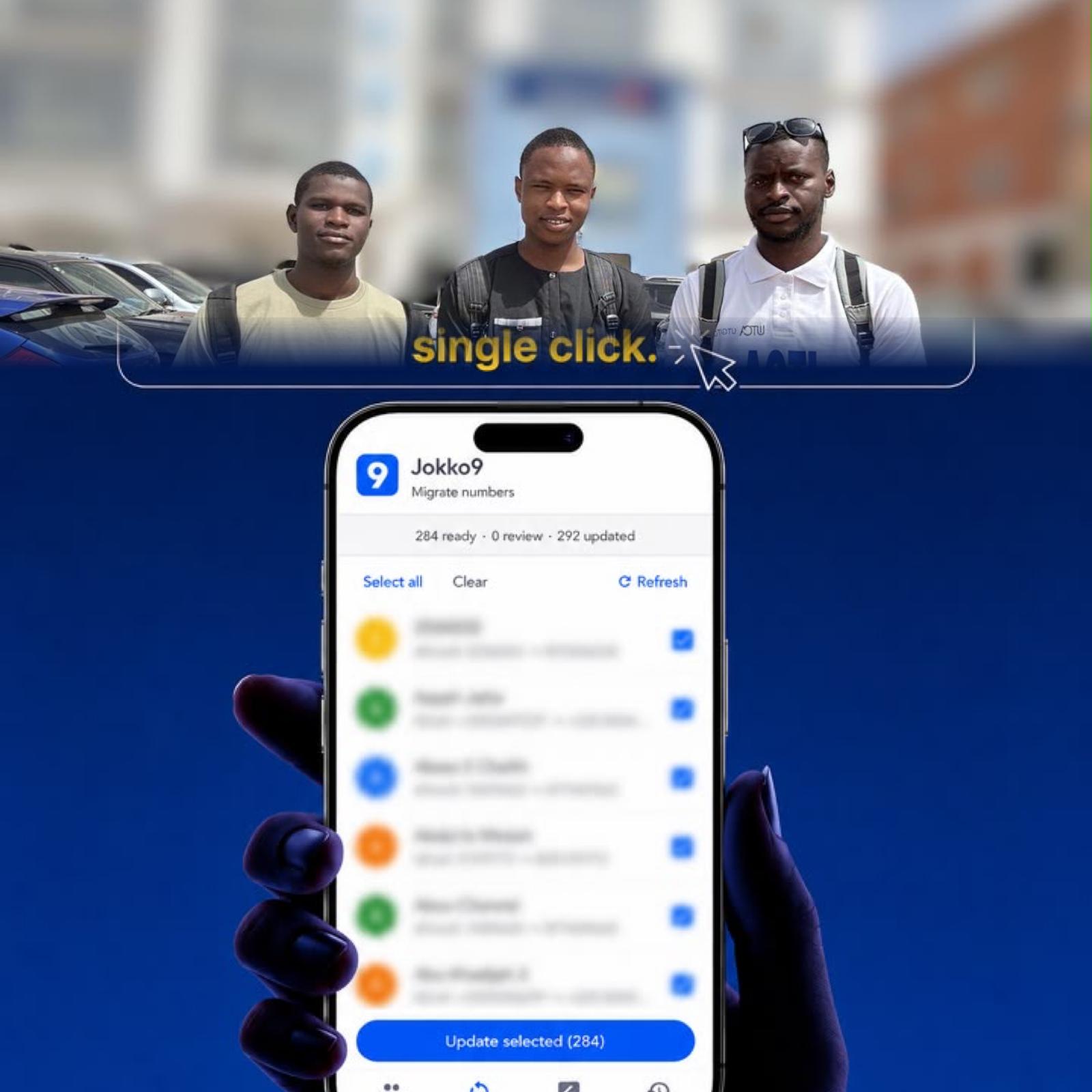
Three final-year Computer Science students at the University of The Gambia have developed a practical mobile utility designed to help citizens and businesses update their contacts ahead of a major national phone numbering change.
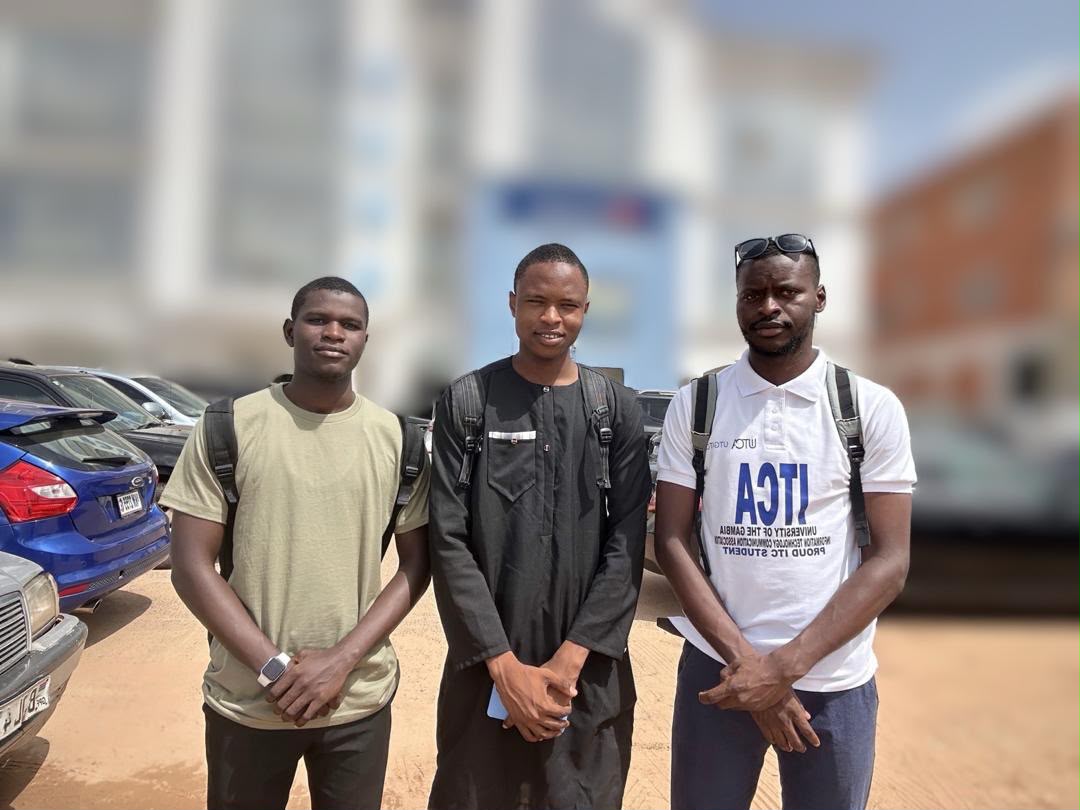
Sulayman Colley, Mamadou Bah and Alasan Saine created Jokko9 in response to The Gambia’s upcoming shift from 7-digit to 9-digit phone numbers, scheduled to begin next month. The transition requires adding new prefixes to every saved number. For users with hundreds or even thousands of contacts, manually updating each entry would be time-consuming and error-prone.
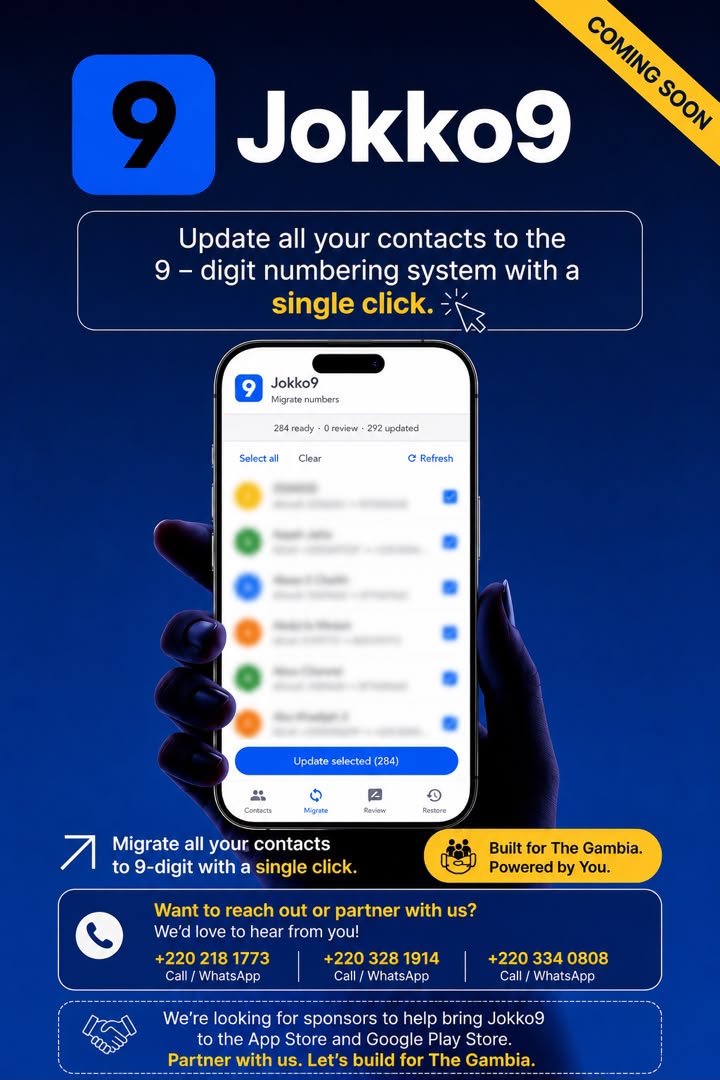
Jokko9 addresses this challenge by scanning a user’s contacts, identifying numbers affected by the migration, displaying the proposed changes for review, and allowing updates with a single click. The app processes all data on the user’s device rather than uploading it to a server, prioritizing privacy and user control. An undo feature is also included in case changes need to be reversed.
“Jokko9 is a mobile utility we developed to help Gambian users transition from the current 7-digit phone numbering system to the new 9-digit format,” said Sulayman Colley, one of the three developers. “The idea came from a simple problem: many people have hundreds or even thousands of contacts saved on their phones. Manually updating every contact is time-consuming and can easily lead to mistakes. Jokko9 simplifies this by scanning the user’s contacts, identifying numbers affected by the migration, showing the user the proposed changes, and allowing them to update them with a single click.”
Colley emphasized the app’s design priorities and potential reach. “We designed it with privacy and user control as priorities. The contact data is processed on the user’s device rather than being uploaded to a server. Users can review the changes before applying them, and there is an undo feature in case they need to reverse an update. The potential impact is quite significant because this is a nationwide numbering transition. Instead of individuals and businesses manually updating hundreds or thousands of contacts, Jokko9 can make that process much faster and easier. This can particularly benefit businesses, organizations, professionals, and anyone with a large contact list.”
The team has kept the app free for users, with the primary goal of easing the transition for as many Gambians as possible rather than generating revenue. “We are three final-year Computer Science students at the University of The Gambia, and the idea was essentially to take a national problem we could see coming and use our technical skills to build a practical solution for it,” Colley added.
The students have already demonstrated Jokko9 to the Public Utilities Regulatory Authority (PURA) and submitted a proposal for possible collaboration and support. PURA has requested further technical and security documentation as part of its review, which the team is currently preparing.
To make the app officially available on both Android and iOS platforms, the developers are seeking approximately $150 in immediate funding. This amount would cover Google Play Store and Apple Developer fees along with remaining deployment and testing costs.
By creating a simple, privacy-focused tool tailored to a pressing national need, Colley, Bah and Saine aim to smooth The Gambia’s phone number migration for individuals and organizations alike, demonstrating how young local talent can deliver practical technology solutions.