By Ebrima Mbaye
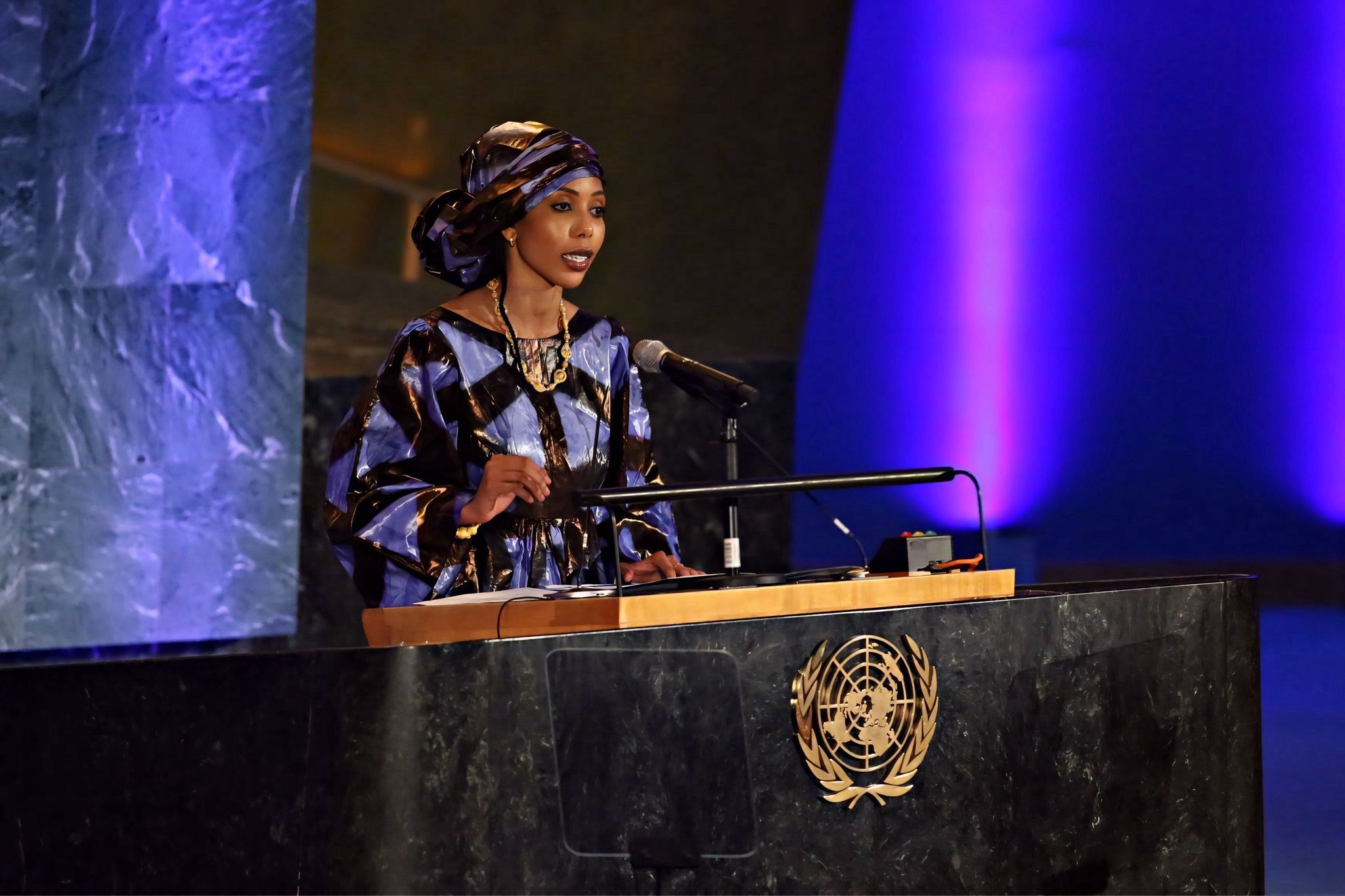
Jaha Marie Dukureh, one of The Gambia’s most prominent voices in the fight against Female Genital Mutilation (FGM), has revealed she is no longer directly engaged in anti-FGM activism, emphasizing that her advocacy was never intended to define her career. Speaking candidly on The Final Take with MK Marenah on The Alkamba Times, Dukureh addressed misconceptions about her work and reflected on the emotional toll of her decade-long campaign.
Dukureh, who gained international recognition for her relentless efforts to end FGM, clarified that her activism stemmed from personal experience and a deep commitment to amplifying the voices of millions of girls affected by the practice. “Initially, that’s what inspired me to add my voice to the campaign,” she said. “But that’s not the work I do anymore. Ending FGM was never a career for me.”
While Dukureh stressed she has not entirely abandoned the cause, she expressed frustration over assumptions that her life revolves solely around FGM. “I have always aspired to do things that would be remembered for what they were not just FGM-related,” she stated. “I am very fortunate that I am partially who I am today because of the movement. The respect that I carried around the world came from the publicity I gained for the FGM movement. But it was never my goal to make this a lifelong thing.”
Dukureh’s advocacy began with her founding of Safe Hands for Girls, a grassroots organization dedicated to ending FGM and child marriage. Her efforts were instrumental in The Gambia’s 2015 ban on FGM under former President Yahya Jammeh, a landmark achievement in the global fight against the practice. In 2018, her work earned her a nomination for the Nobel Peace Prize and the title of UN Women Goodwill Ambassador for Africa.
However, Dukureh described her decade-long campaign as emotionally draining and often hostile. “I was pissed. Ending FGM is very toxic,” she admitted. “I just spent 10 years of my life working in an environment that allowed me to be disrespected, allowed my family to be disrespected. I was misunderstood by my community. They never felt that I was doing this work for them; they always assumed I was doing it because I was getting paid by the West.”
She firmly rejected claims of foreign influence, even though she stated that both the United States and the European Union funded her activism. She also acknowledged receiving funding from friends and foundations in the fight against FGM in the Gambia and elsewhere.
Dukureh also acknowledged a shift in her role, noting that she no longer feels she can effectively change attitudes in The Gambia. “The day I felt like I was no longer able to change hearts and minds in the Gambia, I was not delusional about who I am,” she said. “I don’t just want to continue acting like I’m making an impact when the truth is I’m not.”
Her remarks come amid renewed debate in The Gambia over the FGM ban, with some advocating for its repeal on grounds of “religious and cultural rights.” The country remains deeply divided, and Dukureh’s decision to step back raises questions about the sustainability of high-profile activism in the face of cultural resistance and personal sacrifice.
Though no longer at the forefront of the anti-FGM movement, Dukureh remains resolute about her broader aspirations. “I was part of the FGM campaign when I was effective,” she said. “But I have always wanted to be remembered for more than just FGM.”
Her candid reflections highlight the emotional and psychological challenges faced by activists, particularly in confronting deeply entrenched cultural practices. As The Gambia grapples with the future of its FGM ban, Dukureh’s legacy as a trailblazer endures, even as she seeks to redefine her path beyond the fight that brought her global acclaim.