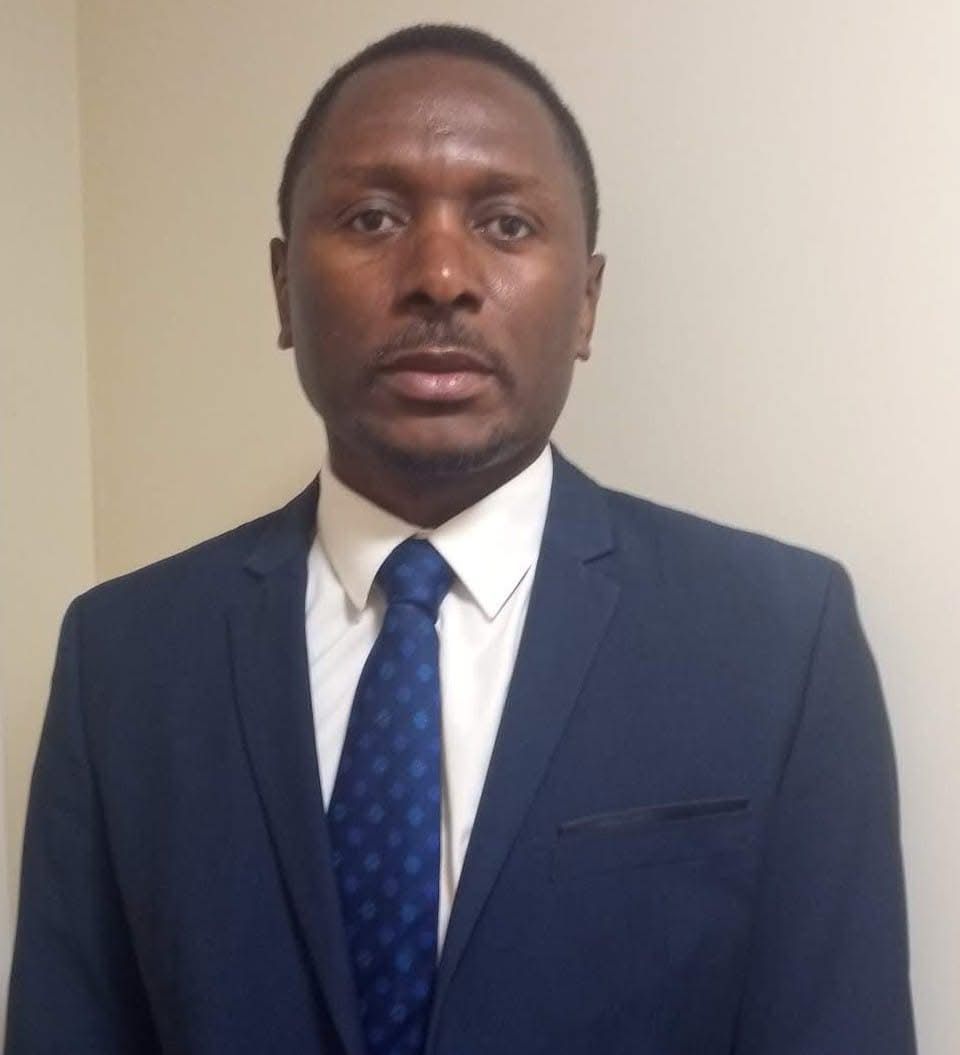
By Dave Manneh, Securing Futures: Land Rights Action Collaborative (SFLRAC)
At a moment of widespread disillusionment, we must ask the harder question: Why do we excel at blaming our leaders? The record is familiar. Jawara was complacent; Jammeh, brutal; Barrow, a squandered promise. This blame holds truth, yet risks missing the real target. What if the failure lies not in the men, but in the machine they operate?
Consider this: From Jawara to Jammeh to Barrow, each leader has operated the same state machinery. Each has drawn power from a sacred presidential aura. Each has presided over a legal system that disempowers and dispossesses ordinary citizens. The outcomes differ in scale and style, but they flow from the same source.
We face a critical choice. We can trace a line of uniquely flawed individuals. Or, we can ask the harder question: what if the state itself is architected to produce these results?
This analysis confronts that possibility. It argues the Gambian state is designed for predation. It stands on two pillars: a Cultural Pillar of sacred kingship, which manufactures deference and punishes dissent, and a Legal Pillar of confusion, which disempowers citizens and conceals theft. Together, this architecture makes systemic predation the logical path to power.
Think of this system as a house with two load-bearing walls. One wall, built from the language of Mansa Kunda, secures cultural and political acquiescence. The other, built from laws like the State Lands Act, enables material extraction and facilitates disinheritance. Different occupants may redecorate the rooms, but as long as these walls stand, the structure serves the same purpose: to engender elite impunity.
Halifa Sallah calls for “system change.” He is right. We do not need new decorators for the same house. We must tear down its foundational walls.
The President as Sacred King
We gained self-rule in 1965, but we never broke from colonial logic. We inherited its machinery of what Mahmood Mamdani calls “decentralised despotism,” a system where local chiefs wielded power but answered only to a remote centre. The people had no say.
Jawara’s failure was his inability to dismantle this system. Instead, his administration performed a dangerous fusion. It absorbed the sacred aura of the Mansayaa into the postcolonial presidency. This was a foundational trade-off: cultural inviolability for democratic accountability.
What if Jawara’s administration had chosen a different path? What if its defining mission had been to demystify leadership for a new, emancipated citizenry, to build a republic of informed citizens, not to reign over subjects of a reinvented empire?
By letting this aura attach to the presidency, the Jawara regime made its choice. It gained cultural inviolability while abandoning genuine accountability. The state wrapped itself in tradition, filtering popular demand through a lens of reverence instead of a framework of direct contractual obligation.
This logic of sacred Mansayaa is a political tool the state draws from across the ethnic spectrum. It resonates with Fula, Wolof, Jola, Serahule, Manjak and other communities, each with its own deep-seated traditions of fatalism and reverential leadership. The postcolonial state flattens these distinct concepts into a single national script, and the underlying mechanism works because it exploits a cultural predisposition, shared across ethnic lines, to see leaders as chosen rather than hired.
Yahya Jammeh industrialised this fusion. He built a security apparatus to punish dissent, wove patronage networks to breed community dependency, and styled himself as a mystical healer-king. He took the Mansayaa conflation to its grotesque extreme. By the time ECOWAS drove him into exile, the architecture of unchecked presidential power stood stronger than ever.
And Barrow? A coalition determined to break this mould swept him to power. But upon entering State House, he did not dismantle the throne; he simply occupied it. The machinery idled, ready for the next operator.
This myth requires a constant performance of largesse. They say the president builds the roads, the hospitals, the utilities and even gifts the land. But where does the money for the gift come from and what land does the president own to gift? From our fieldwork in Kombo, we see the answer: the “gifted” land is ancestral customary land, taken from communities and presented as a presidential favour to a connected elite. The gift is theft, sanctified by ceremony.
The state funnels all development through the singular figure of the president. This performance obscures a brutal truth: it is funded not by royal bounty, but by debt. Today, The Gambia’s public debt exceeds D82 billion. The president who cuts the ribbon on a loan-funded project performs a sinister alchemy: he transmutes national liability into personal loyalty, and collective debt into royal deference. The president’s benevolence becomes a yoke placed on the necks of generations yet unborn.
The Language That Traps Us
What power resides in a name? Listen to the Mandinka name for the head of state. We call the president Mansa and the government Mansa Kunda. This is not mere cultural expression. It is Jawara’s foundational failure to change this political vocabulary. This is not passive tradition but modern engineering. The Barrow administration cemented this choice, branding its flagship public forum with the official title Mansa Kunda. This move etches the ruler-subject dynamic into the operating system of the state itself. It weaponises tradition, conditioning citizens to seek royal audience from their government, not to demand accountable service from their public instrument.
We need new words. The president is not a Mansa. They are a Ñaatonko, one whom the people chose for a fixed term. The cabinet is Ñaatonkolu. The bureaucracy and the technocracy are Banko Taamangdilalu. Together, they form Jamaa Kunda, the people’s compound, held in collective trust. These draw from our own languages. But they point toward accountability, not reverence.
When a farmer in Niamina hears Mansa Kunda, he lowers his head without thinking. When he hears Jamaa Kunda, he may ask: what is my house doing for me?
Theft by Confusion
The citizen sees a divine benefactor. The official sees a pretext for confiscation. How does the first belief enable the second act? Does faith in the throne sanctify the theft from the village?
Consider land, the lifeblood of our society. Across Kombo, communities lose ancestral land through processes they never understand. Officials sign a lease in Banjul; a notice appears in the Gazette. By the time the village learns, it is too late.
The state designed this confusion. Colonial law applied only to the Colony but not to the Protectorate. Our own leaders extended it. The State Lands Act of 1991 specifically targeted Kombo Central, Kombo North, and Kombo South. It converted the most commercially valuable customary land into state property. This was not for public good. It was expropriation for private benefit.
One could call this legal innovation. But whom does the law innovate for, and whom does it impoverish?
Illiteracy and civic ignorance widen this gap into a chasm. The social contract remains an abstract idea, not a known right. A Gazette notice is unreadable to many. The mechanisms of governance are a mystery. This deficit forces reliance on the very intermediaries who benefit from the theft. It makes the sacred king’s broadcast word the primary source of truth. The state validates only its own language. A community’s ancestral knowledge holds no weight against a bureaucrat’s stamp. This is the core of the predation: it thrives where citizens cannot see the blueprint of their own oppression.
System Change: The Necessary Revolution
A permanent coalition of gatekeepers maintains this system: corrupt and corrupting elites, co-opted local heads, senior bureaucrats who connive to approve family leases, and business figures who trade bribes for access. Their power survives elections. They form the permanent board of the predatory state.
Some will point to our opposition parties and elections as proof of a functioning system. But examine their prevailing aim. For most, their goal is not to dismantle the architecture of sacred kingship and legal theft. Their goal is to occupy the throne within that same architecture. They critique the current occupant but seldom the design of the throne itself. They do not campaign to repeal the State Lands Act or to demystify the presidency; they campaign to become the Mansa and control the machinery of predation. This dynamic is why elections typically change the manager but not the factory’s output. The permanent coalition of gatekeepers remains, waiting to instruct any new conventional winner in the operation of the old machinery.
Halifa Sallah’s call for “system change” stands as the critical exception that proves this rule. It defines the true antithesis to the predatory state. Yet its marginal political success reveals the architecture’s most potent defence: its ability to sideline any politics that seeks to dismantle it.
This forces the harder question. If this systemic critique has existed for decades, why has it not succeeded? The architecture itself provides the answer by neutralising the alternative on all fronts. The Cultural Engine offers the emotionally resonant script of the sacred Mansa, a powerful myth against which the dry, demanding model of the accountable Ñaatonko struggles for air.
Simultaneously, the Legal-Confusion Engine, combined with civic illiteracy, creates a population focused on daily survival, crowding out the space for the sustained political education required to build a new civic consciousness. A citizen fighting to understand a land notice or a debt burden has little energy to redesign the state. Finally, the Financial Engine of patronage, funded by debt and opaque capital, creates a tangible economy of loyalty where the immediate, material payoff of supporting the Mansa’s network consistently outweighs the abstract promise of a just system.
The struggle of the system-change message does not invalidate it. It defines the monumental scale of the task. The predatory state is not a passive structure. It is an active, adaptive organism that rewards complicity, punishes dissent, and commodifies loyalty. To educate a citizenry the state works to keep uneducated and desperate is to fight the architecture with bare hands while it operates with the full force of law, tradition, and capital.
Fixing this demands more than a new election. It demands the system change Sallah advocates. We must demolish the architecture itself.
The first revolution must be one of demystification and civic literacy. We must break the link between the presidency and sacred kingship. Stop saying Mansa. The president is a Ñaatonko, an elected servant. The state is Jamaa Kunda, the people’s compound. This linguistic shift attacks the mythology that legitimises theft. But words alone are not enough. We must teach the social contract. Every Gambian must know that the state is their instrument, not their master.
The second, parallel revolution must be one of knowledge and justice. This is where Saama Kanto (Securing Futures) comes in. We must arm citizens with the practical knowledge that the state owns no land outside the former colony, and that any state use of communal land is lawful only if it serves a genuine public purpose and the state secures the community’s consent
Citizens must learn to read a Gazette, trace a lease and challenge dispossession. This change starts in kabilo meetings, building a consensus so powerful it becomes politically unavoidable. We do this to safeguard the security of generations yet unborn: a sacred duty we must accomplish.
We must advocate for a Community Land Rights Act. This law would repeal the State Lands Act, decolonise our laws, recognise the primacy of customary tenure and mandate Free, Prior and Informed Consent. This adapts the Saama Kanto foundational principle – land as communal trust – into law to make mass dispossession impossible by design.
We have stood at this crossroads in 1965, in 1994 and in 2017. Each time, we changed the leader but left the system intact.
How many times will we redecorate the house while its foundations rot?
Until we dismantle the machinery itself (the words that frame governance as royal domain, the laws that legalise theft, the deference that silences challenge), we will keep returning, wondering why nothing changes.
This is not mismanagement. It is predation by design, built on our collective innocence about power. Our task is not to find a better king. Our task is to demolish the throne, reclaim our knowledge, and build a house that belongs to the people.
Securing Futures: Land Rights Action Collaborative (SFLRAC) is a Gambian think tank. We use community-based participatory action research to secure land rights and advocate for accountable governance and sustainable development policies.