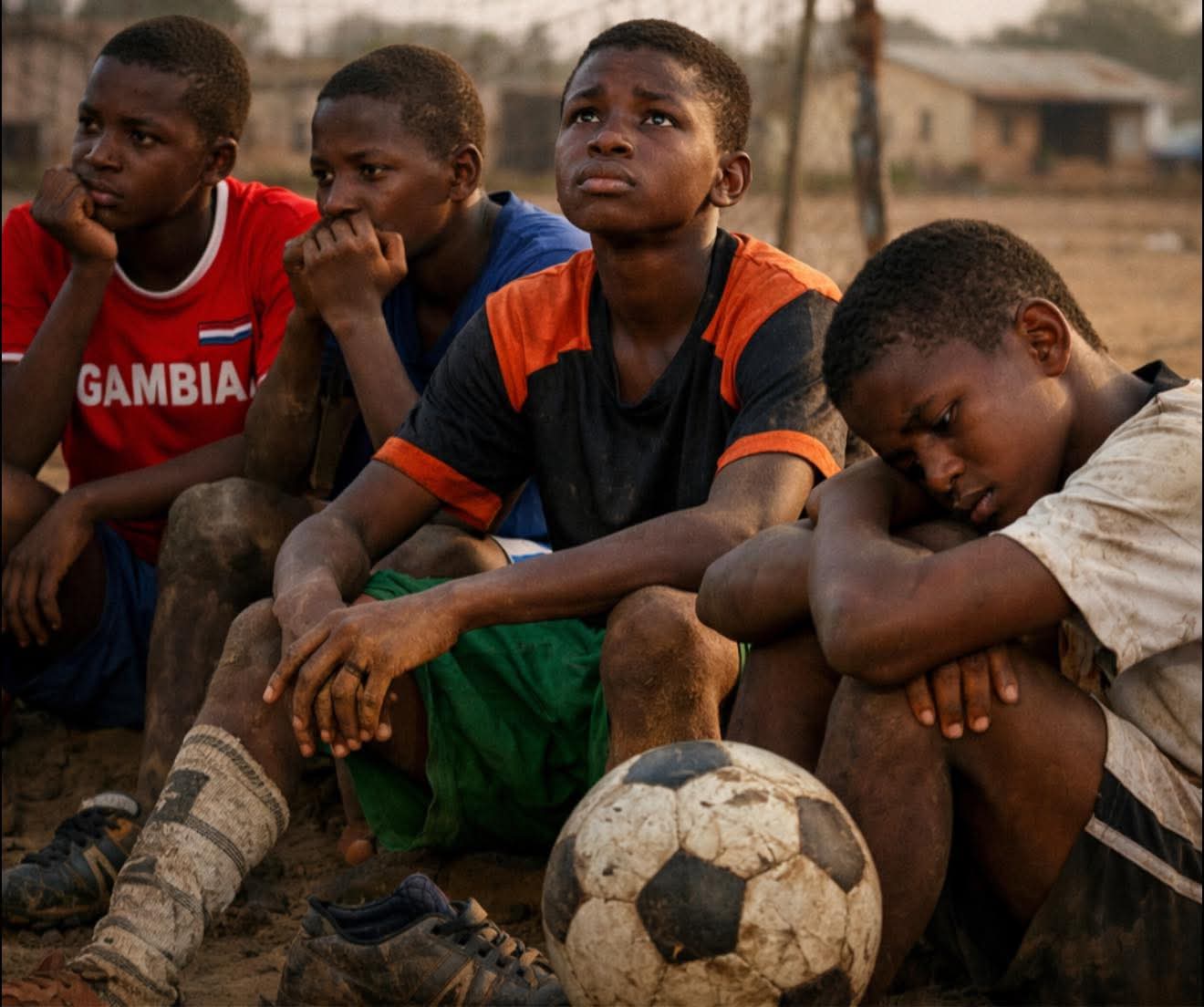
As youth football becomes big business, who is protecting the children?
By Pa Ebrima Sawaneh
In a recent article published by The Alkamba Times, renowned sports journalist Baboucarr Fallaboweh ranked what he considers the best football academies in The Gambia, categorising them into tiers based on structure, player development, and contribution to elite football. The article sparked necessary conversation about the state of youth football development in our country.
However, it also raised a fundamental question: How do you rank academies on “structure” when there is no nationally defined framework for what structure means? No GFF accreditation standards were referenced. No CAF benchmarks applied. No documented criteria for evaluation.
Until we establish and enforce clear national standards for academy accreditation, any tiering exercise remains subjective opinion dressed as authoritative ranking. The conversation is not “who’s best” but “what should the standard be?”
This is where the real work begins.
Football academies are springing up across The Gambia at an unprecedented rate. From urban centres in Kanifing and West Coast Region to rural communities in Basse and Jarra, the academy model has taken root. This growth reflects the nation’s deep passion for football but increasingly, it also reflects something else: business opportunity.
What was once driven purely by love for the game has become a lucrative venture. And when profit enters the equation, the need for regulation becomes non-negotiable.
The Gambia has become a recognised talent pipeline. Our players now feature in European leagues, feed into elite Senegalese academies like Generation Foot and Mame Wade, and attract scouts from across the globe. This visibility has turned youth football into an industry.
Academy founders now operate with one eye on development and another on transfer fees, agent commissions, and international placements. This is not inherently wrong as sustainable football development requires financial models. But when commercial interests drive operations involving minors, the absence of regulation creates dangerous gaps.
Football academies work predominantly with children and teenagers, some as young as eight or nine years old. These young players are often separated from their families, housed in residential facilities, and placed under the authority of coaches and managers with unchecked power.
Without regulation, we have no way to verify who is running these academies and their background, whether coaches hold valid qualifications, what safeguarding policies exist to protect children, how player-academy relationships are contractually defined, whether parents have given informed consent, or how finances are managed and where fees go.
The potential for exploitation, whether physical, financial, or psychological, is significant. We have already seen academies rise and collapse, leaving players stranded. We have heard whispered accounts of mistreatment, broken promises, and young talents abandoned after failing to secure moves abroad.
A comprehensive regulatory framework for football academies in The Gambia should address several key areas.
Every academy operating in the country must be formally registered with a designated authority, whether the Gambia Football Federation, the Ministry of Youth and Sports, or a dedicated body. Registration should require disclosure of ownership, management structure, physical address, and operational scope.
Individuals managing academies should undergo background checks. This is standard practice in education and childcare. Football academies should be no different. Anyone with a history of abuse, fraud, or exploitation should be barred from operating.
Coaches working with minors should hold recognised certifications. The GFF through the Gambia Football Coaches Association already runs coaching courses. Completion of at least a CAF C License or equivalent should be mandatory for academy coaches. This ensures baseline competence in both technical instruction and child welfare.
Every registered academy must have documented safeguarding policies covering code of conduct for staff and players, reporting mechanisms for abuse or misconduct, clear disciplinary procedures, and designated safeguarding officers.
Formal agreements should exist between academies, players, and their parents or guardians. These contracts should outline duration of engagement, financial obligations if any, rights and responsibilities of all parties, conditions for termination, and transfer and compensation clauses.
Academies, particularly residential ones, should meet minimum standards for accommodation, nutrition, education, and medical care. A child’s development is not limited to football; their holistic welfare must be protected.
Academies charging fees or receiving external funding should maintain transparent financial records. Where players are transferred and fees are received, clear policies should govern how proceeds are distributed, including to the player and their family.
Registration should not be a one-time event. Academies should be subject to annual licensing renewal contingent on compliance inspections. Non-compliant academies should face sanctions, suspension, or closure.
The Gambia Football Federation must take the lead in establishing technical standards for academies, including coaching requirements, player development frameworks, and competition eligibility. However, broader child protection mandates fall under government jurisdiction.
A collaborative approach is needed. The Ministry of Youth and Sports, the Ministry of Gender and Social Welfare, and the National Agency for Legal Aid could work alongside the GFF to create a unified regulatory body with enforcement powers.
Without enforcement, regulations are merely suggestions. And suggestions do not protect children.
Ghana has taken decisive action. In 2025, the Ghana Football Association approved the GFA Registered Football Academy Licensing Regulations, requiring all clubs intending to operate academies to meet strict requirements and undergo inspection before certification. The framework covers young players aged 6 to 18 and mandates that all licensed academies have designated Safeguarding Officers. Existing clubs using “Academy” in their names were given one year to comply or drop the term entirely.
GFA President Kurt Okraku acknowledged the problem directly: “For far too long, the operation of football academies in Ghana has lacked uniformity and oversight.”
The Gambia faces the same gap.
At the international level, FIFA’s Regulations on the Status and Transfer of Players provide guidance through Article 19 and Article 19bis. Article 19 prohibits international transfers of players under 18 except in specific circumstances. Article 19bis addresses minors in academies, requiring safe environments free from exploitation, educational programmes alongside football development, and appropriate accommodation with supervision.
However, these FIFA provisions primarily govern international transfers and cross-border movement. They do not address the thousands of young players in domestic academies who may never be involved in international transfers but remain equally vulnerable to exploitation, mismanagement, and abuse.
This is precisely the gap national frameworks must fill. FIFA sets the floor for international dealings. It is the responsibility of each federation and government to build the walls and roof that protect children operating entirely within domestic football ecosystems.
Ghana has begun building. The Gambia must follow.
Regulation is not anti-business. In fact, it strengthens the market. Accredited academies become more attractive to international scouts and partner institutions. Parents gain confidence in placing their children with verified operators. Sponsors and funders prefer supporting compliant organisations.
A regulated ecosystem separates legitimate developers from opportunists. It raises the floor for everyone and builds The Gambia’s reputation as a serious football nation, not just a source of raw talent, but a place where talent is developed responsibly.
The growth of football academies in The Gambia is a positive development. It reflects our national passion and creates pathways for young players to pursue professional careers. But growth without governance is reckless.
We are dealing with children. We are dealing with dreams. We are dealing with families who trust these institutions with their sons’ futures.
That trust must be protected by law, not left to the goodwill of individual operators.
The conversation is no longer about which academy is best. It is about what standards all academies must meet. It is time for the GFF, NSC, the government, and all stakeholders to act.
Regulate. Accredit. Enforce.
Our children deserve nothing less.