At 33, Sainabou Marenah has built a diverse career as a fashion designer, entrepreneur, and sports journalist while balancing family life as a mother of three. She currently serves as the media officer for Hawks Football Club and the Serekunda West Sports Association.
Coming from the Marenah family—where many members pursue careers as doctors, nurses, and bankers—journalism was not the most common path. In fact, only two members of the family are journalists: Sai herself and Sainey MK Marenah, CEO of The Alkamba Times.
“I do not regret being a journalist in the family,” she said. “Even though we are only two, they have always supported me. I don’t feel left behind because I am a journalist—it makes me happy.”
Early Journey into Journalism
Marenah’s journey into media began in 2012 when she started studying Mass Communication at Stratford College. One of the mentors who influenced her early development was Sainey Marenah.
Her first steps in journalism were in entertainment reporting. During that period, she was shortlisted alongside Fatou Camara among 212 applicants for a position at Senegalese media giant Télé Futurs Médias (TFM).
She later spent six months working as TFM’s entertainment correspondent in The Gambia and had a brief stint with The Fatu Network.
“It was a crazy journey,” she recalled about her time with TFM. “You were working with well-known personalities and big names in the media. It was night work, but it gave me exposure. I would grab that opportunity again if it comes.”
Transition into Sports Journalism
Sai later joined Eye Africa TV, where she worked on current affairs programs and also deputized as a sports journalist.
Her involvement in sports journalism actually began earlier in 2012 under the mentorship of Modou Lamin Beyai while covering domestic league matches.
“I must admit I was not a good writer back then,” she said. “But I improved and strengthened my writing skills thanks to the help of Fatou B. Camara.”
She later focused more on covering professional football players and the development of the game.
Despite her passion, she acknowledges the financial realities of the profession.
“Sports journalism is one of the poorest professions. You do it out of passion. If you want money, you go into public relations.”
Challenges as a Female Football Reporter
Being a female journalist covering football has not been easy.
“Support rarely came from family in the early days,” she said. “Most of it came from colleagues.”
She credits media professionals such as Lamin Del Fadera, Omar Jarju, and Janko for supporting her from the beginning of her career.
She also acknowledges the role played by Baboucarr Nani Sey, who helped create opportunities for her work.
“If people are talking about Sainabou in this industry today, it is because of Baboucarr Nani Sey,” she said.
Veteran journalist Annette Camara has also served as a major mentor.
“She pushes me beyond my limits and always reminds me that I can achieve more.”
Career Highlight
One of Sai’s proudest professional moments came while working under CNG as a country coordinator during coverage of the international match between the Gambia national football team and the Senegal national football team in Ivory Coast.
“The videos and programs were widely shared across Senegalese media,” she said.
She believes journalism has taught her many important skills including patience, observation, and impartiality.
Launching Saitapha Sports Zone
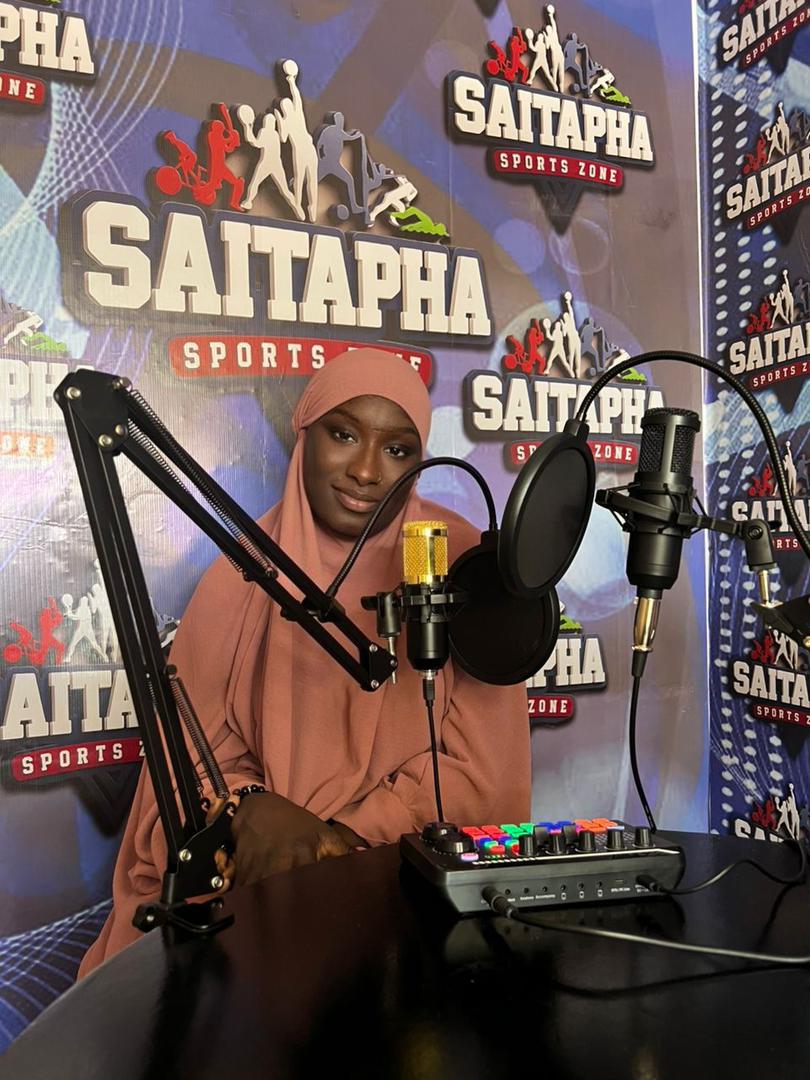
After 13 years working in media, Sai is embarking on a new chapter with the launch of her own sports podcast platform called Saitapha Sports Zone.
The idea came from a friend who encouraged her to use available space in her shop to set up a studio.
“For years I worked for companies as a broadcaster and many of my videos went viral, often sparking controversy because of the angles I discuss,” she said.
“I asked myself—why not work for myself?”
Although initially hesitant about becoming self-employed, she eventually decided to take the risk after leaving her role with CNG.
She has invested heavily in the project, importing studio equipment from the United States months before launching the podcast.
Two potential sponsors have already come on board, and she has also signed a contract to handle the production side of the project.
Changing the Narrative in Sports
Sai hopes the podcast will provide a platform for honest conversations about football and sports governance.
“I love challenges. When people say you cannot do something, that pushes me to prove them wrong.”
She also believes controversial topics often spark necessary discussions.
“Every journalist wants their work to go viral, but our main duty is to inform the public and present the facts.”
Calling for Protection of Female Journalists
Sai has also spoken out about the challenges female reporters face in football coverage.
As media officer for Hawks Football Club, she often travels long distances for match coverage, sometimes as far as Jara Soma.
She says she and the club’s doctor are currently the only women in the team setup.
“Sometimes officials from opposing teams make disgusting comments when they see me filming interviews,” she said. “They say things like my mates should be cooking instead of following men around football fields.”
She believes more awareness and protection are needed for female sports reporters.
“Female sports journalists are not idle. We are here to work just like everyone else.”
Family Support
Despite the challenges, Sai credits her family—especially her mother and husband—for supporting her journey.
Her mother, a gender activist, encouraged her ambitions from a young age.
Her husband has also been instrumental in supporting her work.
“He supports me in every way,” she said. “Sometimes I travel far for coverage and even spend the night away. He understands and helps take care of the children.”
A Love for Football
Sai’s love for football began more than two decades ago. While her mother was working in Manchester in the United Kingdom, she followed European football closely.
At the time, Chelsea FC had several African players, and she became a supporter of the club. Her brother even named himself after David Beckham.
Her mother regularly sent football jerseys from abroad, which deepened her passion for the sport.
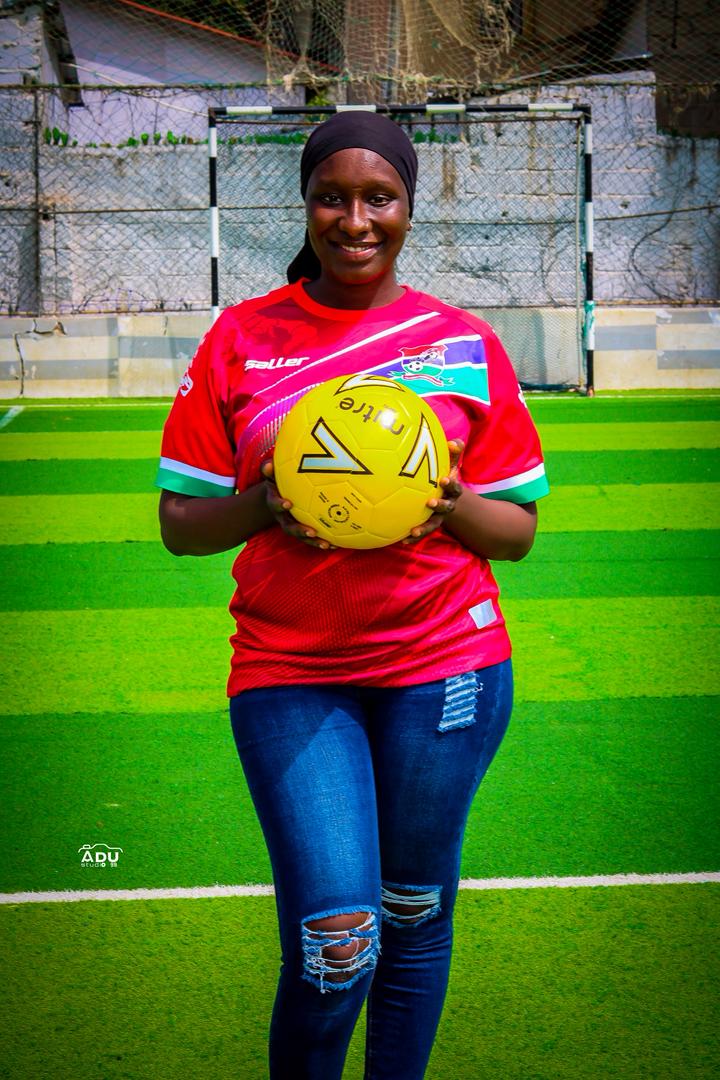
Today, football remains a central part of family life.
“We are a football family,” she said. “We support different teams, but we always gather to watch and talk about football.”
Her eldest son has already joined a football academy, and she often takes him to matches.
“I grew up in a football family, and now my children are growing up in one too.”
After more than a decade in the field, Sainabou Marenah continues to challenge stereotypes while building new platforms for sports discussion in The Gambia.