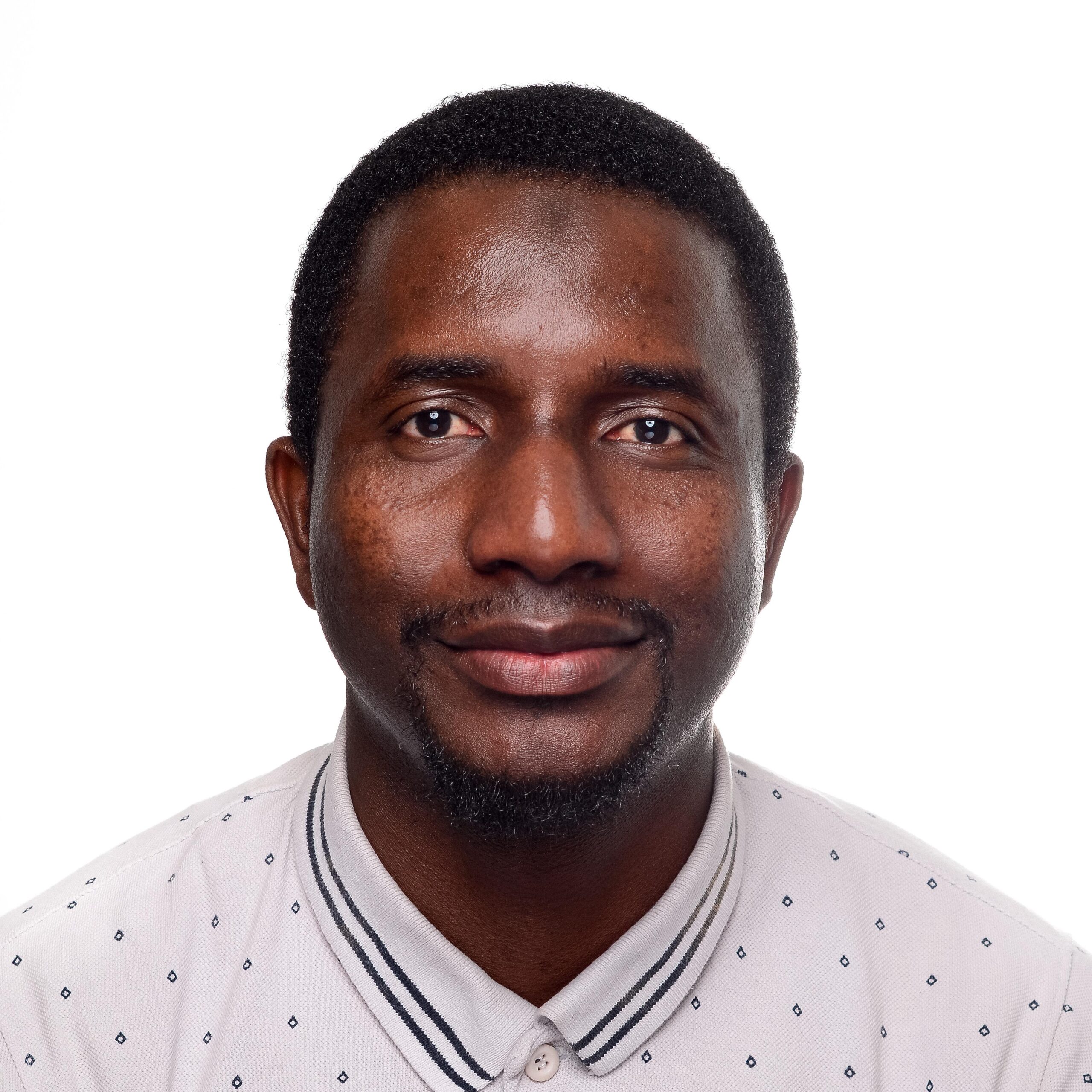
By Lamin Jahateh
This year’s World Press Freedom Day came just as the Gambian government launched the National Misinformation and Disinformation Response Centre (NMDRC), which operates through a fact-checking platform called Fact Guard. The initiative has generated significant debate. Some stakeholders have welcomed it, based on the government’s stated commitment to protecting the information environment, while others remain cautious and sceptical.
What is not in dispute is that mis- and disinformation are no longer hypothetical threats. Even in a peaceful country such as The Gambia, information disorder, in general, continues to fuel religious and ethnic intolerance, inflammatory political rhetoric, and misogyny. The information disorder ecosystem is becoming increasingly sophisticated, especially with the rise of artificial intelligence. However, globally, the dominant trend in responding to this challenge has not been direct government intervention. And such is least expected in The Gambia.
The country already hosts a vibrant ecosystem of at least five active fact-checking platforms, including two specialised outlets and three major media houses with strong fact-checking components. Per capita, this may be the highest concentration of fact-checking initiatives in West Africa. More importantly, the work is substantive. From virtually zero fact-checks in early 2021, by the end of 2022, more than 100 well-researched fact-checks, explainers, and fact sheets were published. Since 2023, the annual output has averaged around 100 fact-checks, according to UNESCO reports.
These platforms played a critical role in the 2021 presidential election through real-time non-partisan fact-checking. The Commonwealth Observer Group commended them for effectively countering misinformation circulating on social media. The European Union Election Observation Mission similarly noted that “national fact-checking fostered transparency and strengthened electoral integrity.” Following the election, the ECOWAS observers praised and promised support to fact-checking in The Gambia through the Gambia Press Union for existing professional fact-checking structures. And that makes its current support for a government-backed response centre particularly noteworthy.
International best practice overwhelmingly favours independent, civil society-led fact-checking. Across West Africa, professional media and civil society entities are leading the way, with innovative tools like Dubawa’s ChatBot and audio fact-checking platform (used in Nigeria, Ghana, Sierra Leone and Liberia) and FactCheckAfrica’s MyAIFactChecker. Gambian fact-checkers were already exploring similar integrations, drawing on existing regional templates.
Even at their most rudimentary element, independent Gambian fact-checkers continue to expose political disinformation and hold both government and opposition figures accountable for spreading misleading narratives. They have also expanded fact-checking efforts beyond digital spaces. FactCheck Gambia, for example, partnered with 10 radio stations to convert selected fact-checks into audio content, widening access for audiences without internet connectivity or English proficiency.
If it is not broken, why fix it?
This is not an argument against strengthening or expanding fact-checking in The Gambia. There is indeed a clear need for more technologically advanced verification tools. However, it is important to acknowledge that there already exists a vibrant and active ecosystem of fact-checking in the country. More importantly, there is a need to also recognise that even the most robust fact-checking cannot fully counter the scale of today’s information disorder, which is accurately described by the United Nations as an “information epidemic.” Research consistently shows that false news spreads six times faster than accurate information on social media. Even if fact-checking were the sole solution, it should never be the business of government to lead it for many reasons.
Governments are not generally cut out to referee the information space, much less to determine what is true or false in public discourse. Much as the International Monetary Fund and World Bank steered governments away from direct ownership of business enterprises to promote free-market principles, there is a similar need to discourage state-backed refereeing of the information space. Perhaps, governments across the world already knew that arbitrating the truth is not one of their callings and that is why even the most illiberal of them have avoided establishing national fact-checking centres. There are notorious exceptions, including China, India, and Russia. What governments generally do, and what is widely encouraged, is establishing units and centres dedicated to correcting mis- and disinformation about the government itself and improving proactive disclosure and responsiveness to information requests.
Perhaps the most compelling reason the government should not referee the information space is its own role as a primary source of misleading claims. A quick content analysis of the two specialised fact-checking platforms in The Gambia reveals that over 50% of fact-checks originate from claims made by senior government officials, including the highest office, or ruling party politicians. Of these, at least 75% were rated false, inaccurate, or misleading. This raises an obvious question: can a government-backed centre truly hold such information ecosystem polluters accountable? Recent events suggest otherwise. The centre remained silent when a minister falsely claimed the Gambia Press Union never boycotted the government during the dictatorship when the media was suppressed and repressed. Similarly, when the government issued a press release welcoming the country’s performance in the World Press Freedom Index, it misstated certain basic facts. Askanwi correctly noted that this misrepresentation of facts understates the country’s previous performance and significantly diminishes what was one of Gambia’s strongest improvements in recent years. This failure to address state-propagated misinformation says a lot about the embryonic centre.
Furthermore, the government’s involvement in arbitrating information carries the inherent risk of ‘fake fact-checking’: a process where disinformation is disguised as an objective fact-check. Government actors can weaponise fact-checking to disseminate fabricated narratives under the guise of refuting existing falsehoods. This trend was recently exemplified by the case of former GRTS journalist Omar P Jallow. While the Ministry of Information denied he had been interrogated by the State Intelligence Services (SIS), Omar confirmed that the questioning did, in fact, take place. Neither the Ministry nor the centre came up with any follow-up explainer or fact-check to contextualise or even debunk the disinformation.
Besides, fact-checking is a process-driven discipline that requires transparency and non-partisanship. It is not merely output-based. If the process lacks transparency or impartiality, the credibility of the entire enterprise collapses. The International Fact-Checking Network (IFCN) Code of Principles notes that fact-checking is not simply about producing a ‘true’ or ‘false’ label, but about providing transparent, evidence-based reasoning. A critical part of this is the claim selection process. Granted, there is full assurance by the government that claims submitted to NMDRC would be treated anonymously and with the highest degree of confidentiality. In professional practice, claim submission is just the beginning. The real risk lies in which claim gets selected to be fact-checked. If the NMDRC lacks clear, objective standards for selection and verification, the entire process becomes vulnerable to politicisation and bias.
Additionally, while mis- and disinformation are serious concerns, the most immediate threat to The Gambia’s information landscape, social cohesion and peace – particularly in an election year – is the rise of hate and dangerous speeches. The National Human Rights Commission’s first comprehensive assessment of hate speech in The Gambia confirms a troubling trend that directly undermines social cohesion and democratic stability. Unlike general mis- and disinformation, hate speech often acts as a direct catalyst for violence, as demonstrated across Africa. Despite this, there is no evidence that the NMDRC is prioritising the issue. Recent inflammatory remarks by a National Assembly member aligned with the ruling party, made in the presence of the president, did not merit any attention from the centre. The NMDRC’s failure to address such incidents suggests either a narrow mandate or a reluctance to confront powerful political actors.
In conclusion, the government must avoid assuming the role of an arbiter within the information space. A more credible and effective strategy would involve bolstering the existing independent fact-checking ecosystem, enhancing governmental transparency, and prioritising the mitigation of hate speech to safeguard democratic integrity.
The second part of this commentary will explore practical strategies for addressing disinformation in general, alongside specific recommendations for reform to improve the centre’s mandate and structure.
The author, Lamin Jahateh, is a journalist, project management professional, and emerging researcher‑practitioner in peace and conflict studies. He previously served as Programme Manager and acting Secretary General of the Gambia Press Union.