By Sainabou Sambou
In the quiet Fulani village of Dutabulu near Farafenni, Alhagie Jallow spent his early years herding cattle and working the land. Like many in his community, formal education seemed out of reach. “I have never been to school until I turned 18,” he recalls. Yet even as a young boy tending livestock, Jallow harbored a quiet but fierce ambition: to learn and transform his life.
That determination would carry him far beyond the village pastures. At 18, after years of labor as a farmer, Jallow returned to the classroom for the first time. His father had initially sent him to Kombo for an apprenticeship with a cousin to learn a trade and support the family. But Jallow had other plans. “My goal was different,” he says. “I wanted to go to school.”
His late start did not slow him down. He progressed through high school and eventually enrolled at the University of The Gambia, where he studied computer science. During his final year, he witnessed a harsh reality: many graduates faced long, uncertain queues in the job market. “I watched senior students struggle,” Jallow remembers. “After all my struggles, I didn’t want to wait for someone else. I wanted to create opportunities.”
That insight became the foundation of his entrepreneurial path. In 2013, he founded the SUNA Institute of Science and Technology in Brikama, West Coast Region. At the time, the area lacked local IT training centers, forcing aspiring students to travel long distances. Jallow aimed to change that by making quality tech education accessible close to home.

What began as a modest initiative has grown into a cornerstone of Gambian IT education. SUNA offers courses in computer skills, software development, and related services, including printing. The institute has built portals for major institutions like the University of The Gambia and Gambia College. Thousands of students have graduated, many of whom have launched their own ventures and contributed to the local economy. Jallow’s efforts have been recognized as a model of youth-led national development, with SUNA establishing partnerships and earning accreditation from bodies like the National Training Authority.
Running the institute brought its share of hurdles. Securing a suitable building, winning contracts, and managing finances demanded resilience. Yet Jallow stayed focused on community impact, hiring locally, and keeping education affordable.
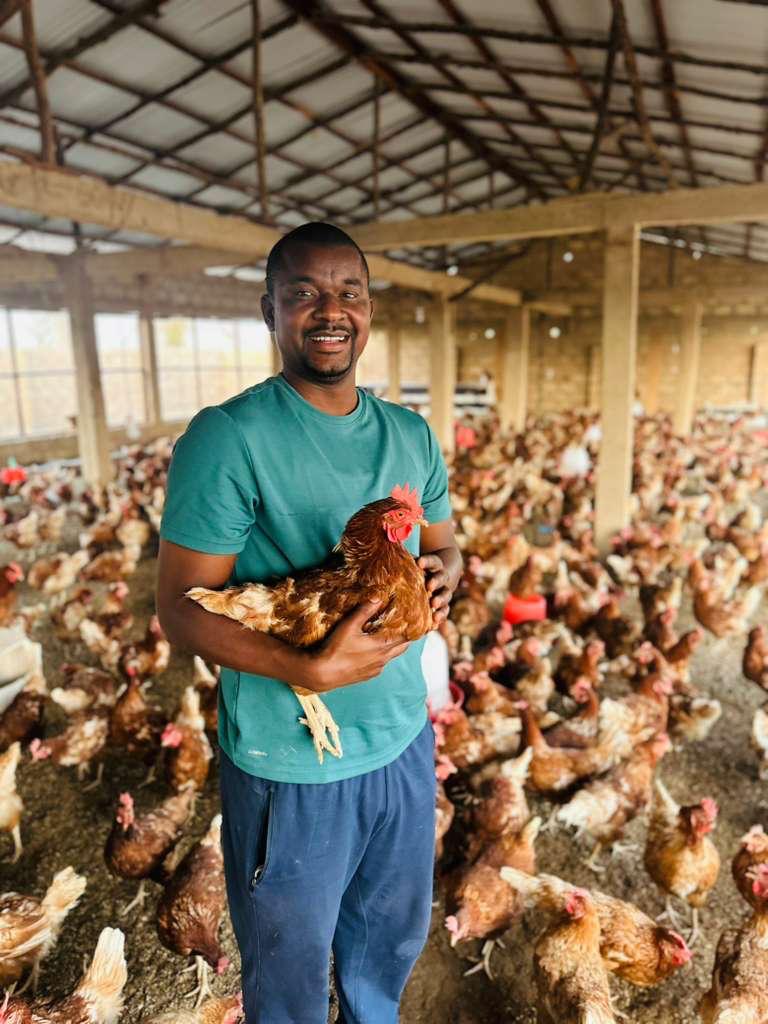
His vision of empowerment did not stop at technology. Drawing inspiration from the hardships faced by women and youth in Dutabulu—especially during the dry season when milk and income sources dwindled—Jallow turned to poultry farming. A trip to Senegal proved pivotal. There, he observed women profitably selling eggs, both raw and boiled. “I asked them if they were making a profit,” he says. “They told me yes. That’s when I thought, why not start poultry here in The Gambia in my village, so women and youths can earn a living locally.”
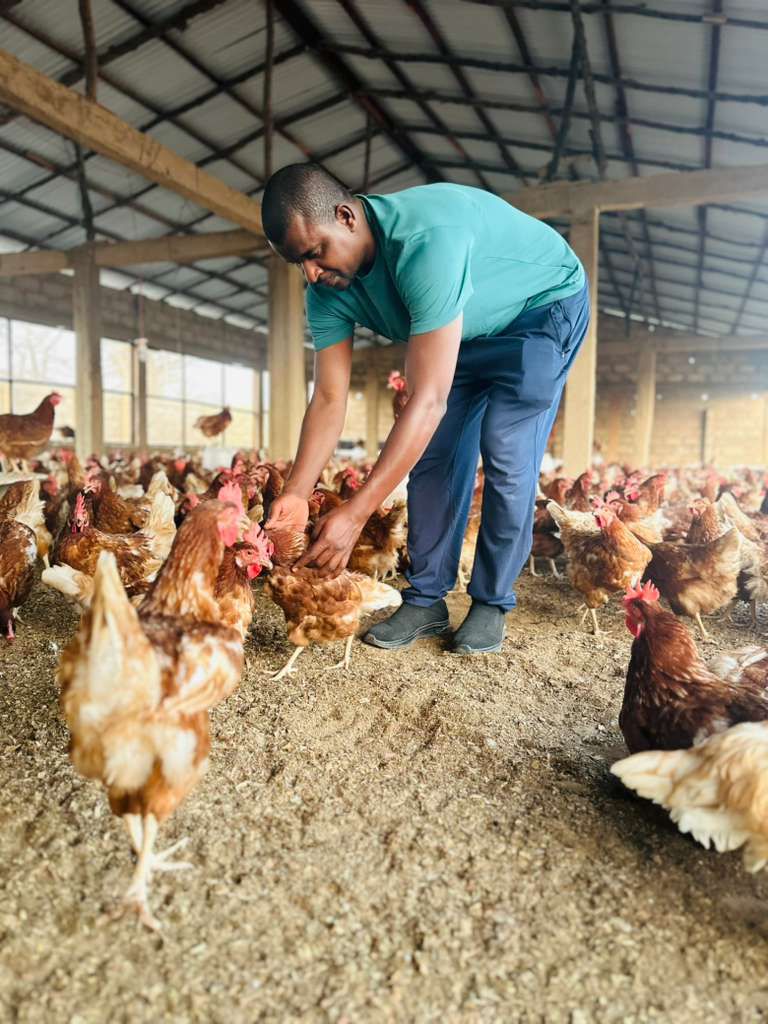
With no prior experience in poultry, Jallow took online courses to master feeding, incubation, and production. He launched the farm to provide a stable income source without forcing villagers to migrate for work. Today, it supplies eggs to surrounding communities. A crate sells for 280–300 dalasi at the farm, allowing resellers to earn 350–375 dalasi in markets. Some women boil eggs for individual sales, further boosting profits.
The operation has overcome obstacles such as high equipment and imported feed costs—much of it from Senegal—by producing about 50% of its feed locally. It generates steady employment, with staff salaries comparable to those at the IT institute. The work is demanding, but the rewards are tangible: reliable monthly income and dignity.
The farm’s benefits extend beyond economics. It anchors youth in the village, reducing the lure of risky “back way” migration or distant, unstable jobs. Families gain dependable nutrition and earnings, while travel for egg purchases decreases.
Jallow sees a natural synergy between his worlds of technology and agriculture. “Technology has enabled me to operate machinery efficiently,” he explains. “All the knowledge I gained in IT helps me run the poultry farm better.” From digital tools for management to innovative farming approaches, his dual expertise drives efficiency and sustainability.
His message to young Gambians is straightforward and powerful: “If you start somewhere, you will get somewhere. Opportunities exist in education, agriculture, sports, journalism, theatre, or anywhere you are willing to work.”
Looking forward, Jallow’s ambitions remain bold. He plans to scale the poultry farm to 30,000 laying hens and to introduce degree programs at SUNA Institute. “My vision combines education, agriculture, and entrepreneurship,” he says. “It’s a blueprint for community development and self-reliance in The Gambia.”
From a boy herding cows in Dutabulu to a leader bridging tech innovation and rural agriculture, Alhagie Jallow’s journey embodies perseverance, vision, and a deep commitment to uplifting his people. In a nation where opportunity often feels distant, his story proves that transformation begins with one determined step—and can ripple outward to change entire communities.