The Edward Francis Small Centre for Rights and Justice (EFSCRJ) has welcomed Gambia’s significant improvement in the 2026 World Press Freedom Index released by Reporters Without Borders (RSF), describing the jump as a notable achievement that reflects sustained government efforts to foster a freer media environment.
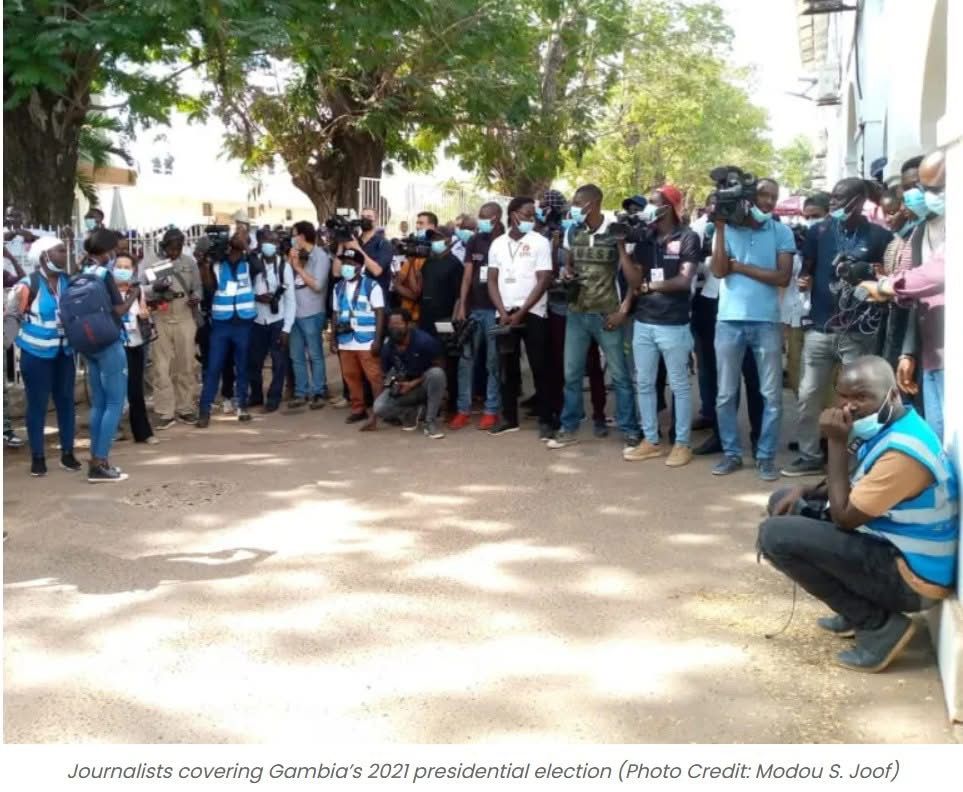
In its official statement, the human rights organization noted that The Gambia climbed 12 places from 58th out of 180 countries in 2025 to 46th in 2026. This marks a sharp contrast to the country’s dismal 143rd position in 2017 under the previous regime. EFSCRJ commended the government for maintaining an enabling atmosphere in which journalists and media houses can operate with greater safety and independence.
“Media freedom remains an indispensable pillar of good governance and sustainable development,” the Centre stated. It highlighted that the Gambian Constitution not only guarantees press freedom but also entrusts the media with the vital public duty of holding leaders accountable on behalf of citizens.
While celebrating the gains, EFSCRJ cautioned that the improved ranking should not mask ongoing challenges. The organisation pointed to RSF’s observation that, despite an expanding media landscape, the government occasionally exerts pressure on certain outlets and has shown limited political will to enact protective laws for journalists.
Several critical legal gaps persist, the statement noted. Although the Access to Information Act has been passed, its effective implementation remains pending. Restrictive clauses in older legislation continue to threaten press freedom, including provisions in the Information and Communication Act 2009 that criminalise online criticism of public officials. Section 152 of the Criminal Offences Act 2025, concerning false publication and broadcasting, is also viewed as a direct risk despite Supreme Court rulings.
EFSCRJ expressed particular concern over proposed ‘Broadcasting and Online Content Frameworks 2026’ by the Ministry of Information and the Public Utilities Regulatory Authority (PURA). The Centre warned that these measures could extend state control over both traditional and digital media, conflicting with constitutional guarantees and international standards.
The organisation cited the recent assault on journalist Momodou Justice Darboe of Jolof News by police officers while he was performing his duties as a stark reminder of the physical risks media practitioners still face.
To build on the current momentum, EFSCRJ urged the government to withdraw the contentious 2026 frameworks, drop all charges against Darboe, and guarantee his safety. It called for strengthening the Media Council of The Gambia as a truly independent, self-regulatory body, removing PURA’s content regulation powers, and conducting a comprehensive review of all media-related laws to align them with regional and international benchmarks. Prompt investigations into all cases of journalist harassment were also demanded.
On the economic side, EFSCRJ advocated for policy support to ensure media sustainability, including tax concessions, duty waivers on equipment, and a statutory public subvention administered through the National Assembly and the Media Council.
“While we commend this year’s improved ranking, substantial work remains,” the statement said. “The Government must use this momentum to secure a truly free, safe, and independent media environment—one protected not only in law but fully realised in practice.”