By: Alieu Ceesay
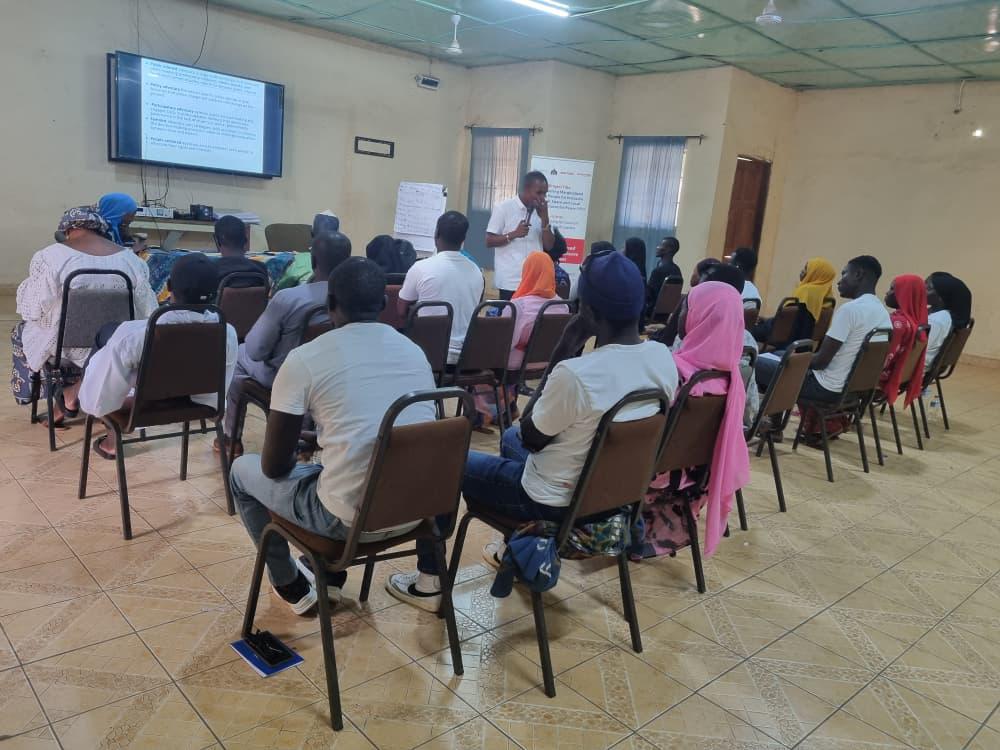
ActionAid International The Gambia (AAITG), supported by the United Nations Peacebuilding Fund, has successfully concluded a six-day Human Rights-Based Approach (HRBA) training workshop for council staff and youth leaders in Kerewan.
The training, which ran from April 12 to 17, 2026, brought together 25 participants, including youth leaders, representatives from the Kerewan Area Council, and persons with disabilities.
It forms a key component of the Youth Promotion Initiative (YPI) project, designed to empower marginalized young people to engage meaningfully in civic spaces and local peace infrastructures.
Participants delved into core HRBA principles—inclusion, accountability, participation, and non-discrimination—with a strong focus on integrating women, youth, and persons with disabilities into decision-making processes at both community and council levels. Facilitators adopted a highly participatory and practice-oriented methodology, incorporating group discussions, interactive sessions, and real-life case studies. This approach created a safe and respectful learning environment that aligned with ActionAid’s longstanding commitment to gender equality and social inclusion.
Leading facilitator Mr. Saikou Bah stressed the transformative power of such capacity-building efforts. “Capacity building training is key for transforming local livelihoods,” he said. “ActionAid is using HRBA as a tool to build the capacities of communities to ensure sustainable development.”
Bah urged participants to translate the training into action: “What we expect after this training is that young people will be very inclusive, involve everybody in their arenas and activities, and leave no one behind—including people with disabilities. Young people need to come on board and claim what’s theirs. This training is supposed to bring those indicators in the future.”
He added a powerful call to action: “We want you to claim, we want you to demand. We don’t want you to be seeking support. Demand what you own from the council, from the primary duty bearer, which is the government.” Bah further advocated for meaningful youth inclusion across all stages of national and local decision-making, from planning and conceptualization to implementation, monitoring, and evaluation.
The training also covered essential topics, including human rights awareness and protection against sexual harassment.
One enthusiastic participant, Nyemmeh Ndure, Assistant IPRO of the Jakadou Youths District Committee, expressed readiness to cascade the knowledge back to her district.
“To hold authorities accountable, one must know his or her rights,” she noted. “We are going to implement what we have learned here by going back to the district that selected us. Let them be aware of their rights.”
Ndure also encouraged fellow youths to register for the upcoming electoral cycle to strengthen their civic engagement.
At the closing session, participants reported heightened confidence in applying rights-based approaches in their respective roles. They pledged to use the acquired skills to enhance advocacy, foster better stakeholder collaboration, and drive equitable and sustainable development in their communities.
Alhagie K. Saho, Vice Chairman of the Kerewan Area Council, described the training as an “eye-opener” that would reshape the council’s planning processes. “If we are going to do the budget again, we’ll consult our people. We’ll go back to our people, do the consultation, and have the correct needs of those people,” he explained. “So that we can bring it to the council. The council will finalize the budget based on the needs of the people, not only banking on the councilors, but also for them to bring the priorities.”
Saho’s remarks underscored the training’s potential to make local governance more responsive, ensuring that residents benefit more effectively from their taxes through people-centered strategic planning.
The initiative reflects broader efforts under the YPI project to promote youth leadership in peacebuilding and governance, ultimately contributing to a more inclusive and accountable development landscape in The Gambia’s North Bank Region.