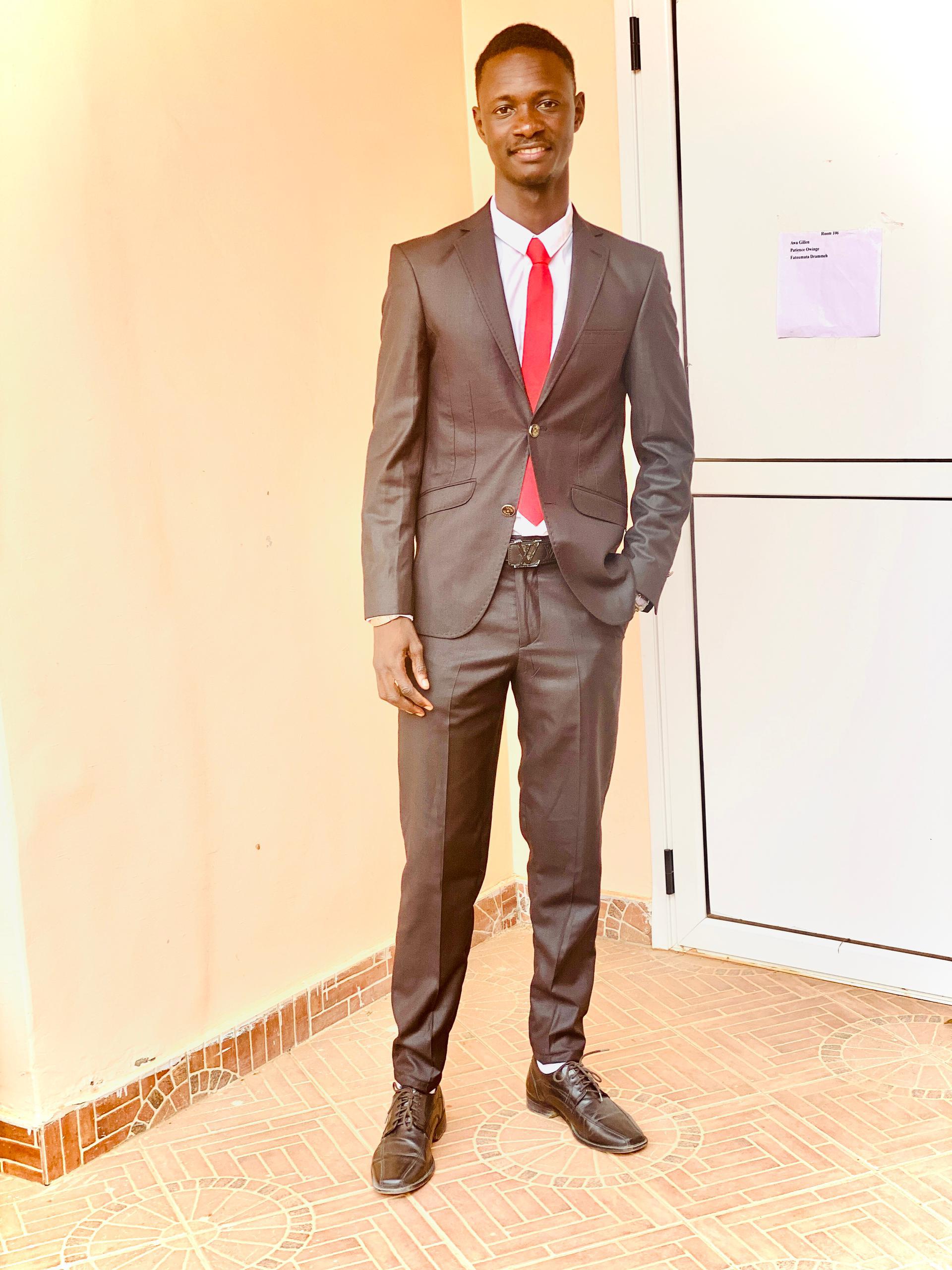
A Gambian researcher studying in Russia has released a timely new study showing how the country’s media outlets continue to frame political opponents as enemies even after the fall of authoritarian rule.
Ebrima Boye, currently pursuing a Master’s degree in Intercultural Communication in a Global Information Space at the National Research University – Higher School of Economics in Moscow, published the paper titled Framing “The Other”: A Comparative Analysis of Pro-Government and Independent Media in the Gambia’s Post-Authoritarian Transition (2024–2025).
Boye, a former student leader of the University of The Gambia’s Social Sciences and Humanities Students Association and a teacher with nearly ten years of classroom experience, said the research grew from his concern that democracy cannot thrive if media narratives remain polarised.
“What happens when a country emerges from decades of authoritarian rule—but its media landscape remains deeply divided?” Boye asks in the study. “Can state-owned and independent outlets truly tell different versions of the same story? And what does that mean for democracy itself?”
To find answers, Boye analyzed content from four major Gambian media houses between 2024 and 2025: the state-owned Gambia Radio and Television Services (GRTS) and three independent outlets – Kerr Fatou, The Fatu Network, and The Alkamba Times.
His findings are clear. Pro-government media consistently portray dissent and opposition voices as threats to national unity and stability. In contrast, independent outlets frame the same events through the lens of accountability, human rights, and the need for transparency.
The study also highlights the double-edged role of digital platforms. While social media and online news have dramatically expanded the reach of independent journalism, they have also introduced ethical challenges, including the rapid spread of unverified information and heightened polarisation.
Legal and regulatory constraints, Boye notes, continue to limit the work of independent media, echoing lingering authoritarian-era pressures.
The research, published in the International Journal of Research and Innovation in Social Science, is the latest contribution by a young Gambian academic working from abroad to shine a light on the country’s democratic journey.
Boye hopes the study will spark a wider debate among journalists, policymakers, and citizens about the media’s responsibilities in a young democracy.
The full publication is available here:https://rsisinternational.org/journals/ijriss/uploads/vol10-iss4-pg2212-2241-202605_pdf.pdf