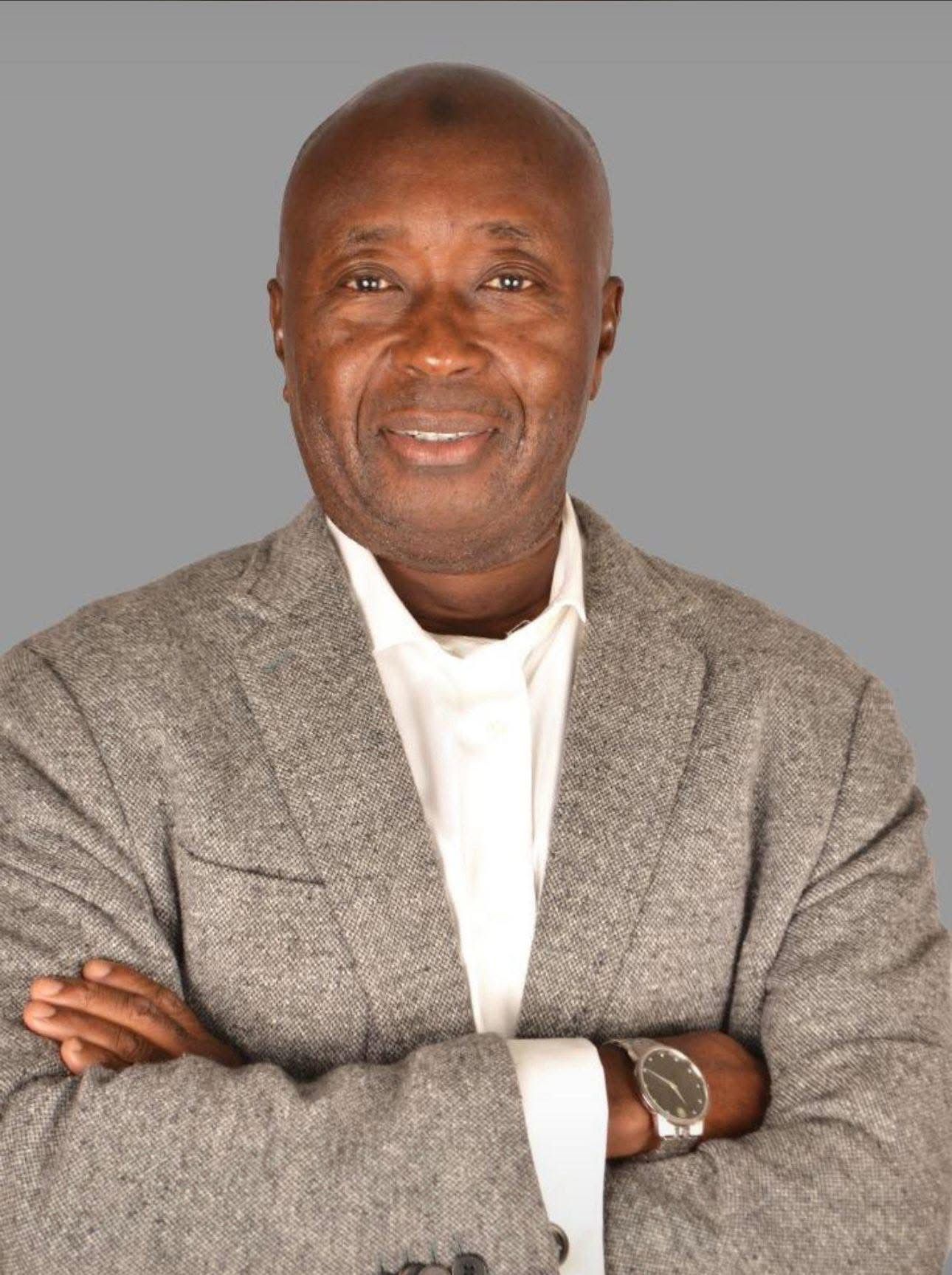
By Musa Bassadi Jawara
Preamble
When Sambou Cissokho’s “The Party Against the Norm: X-Ray of a Senegalese Fracture” reached me from Dakar, it landed like a subpoena to the facts. The piece was not polemic. It was a diagnosis. It forced a pause, then a rush to the texts: the Constitution, organic laws, the Règlement intérieur, and Council jurisprudence.
I am humbled by how seriously my articles are received in Dakar. After writing to President Bassirou Diomaye Faye only yesterday, I received a response with such gravity and candor that it compelled this immediate clarification. The speed of that exchange underscores what is at stake: the Republic cannot afford ambiguity when the law is clear. That response, together with Cissokho’s analysis, necessitated this piece.
Before Cissokho’s article, I had written a serious and sober letter to President Faye. In it, I urged the appointment of Ousmane Sonko as President of the National Assembly. My motive was plain: to avoid conflict, ease tensions, and foster unity in the supreme interest of Senegal. I believed it was a path to institutional de-escalation. What I did not know, before Cissokho’s analysis, is that such a path is not constitutionally feasible. The law takes precedence over my personal preference. I am a scholar. I go by what the rule of law dictates, not by what I wish were possible.
I must state this without evasion: I did not research the law before writing to the President. I was not aware of the restrictions imposed by Article 54, nor of the irreversible effect of the eight-day rule. My letter was sent in good faith, but good faith is not a source of law. The Constitution is. To persist in error once the text is known would be to replace scholarship with partisanship. I will not do it.
Therefore, I am in total agreement with my discoveries, and I now urge, appeal to, and ask Ousmane Sonko to abide by the law and stick to the dictates of the rule of law. Leadership is measured not by how one acquires power, but by how one submits to limits. Senegal’s institutions will survive this moment only if those who claim to defend them are the first to obey them. My letter to President Faye was written to protect the Republic. This retraction is written for the same reason.
This clarification matters. Intellectual honesty requires us to correct the record when the law speaks. What follows is the product of that correction, a legal analysis stripped of preference, myth, or bias. The question is not what should happen. The question is what can happen under Senegal’s Constitution. The answer is unforgiving.
Sonko and the Assembly: Why “Reintegration” and a Speakership Are Legally Impossible
Article 54 of the Constitution is the gatekeeper. It declares the office of a member of the Government incompatible with the mandate of a deputy. The remedy is singular: within eight days of validation, the elected minister must choose. Silence is a legal act. It operates as a resignation from the parliamentary mandate, not from the government.
The constitutional clock ran out in December 2024. Ousmane Sonko led the PASTEF list as Prime Minister. He did not resign as PM nor opt for the Assembly within the eight-day window. By operation of law, the parliamentary mandate was extinguished before it vested. He never took the oath. He never sat. The suppléant became the titular deputy for the 15th Legislature.
You cannot preside over a body to which you do not belong. Article 85 of the Constitution and Article 9 of the Règlement intérieur require the President of the National Assembly to be elected “from among the deputies.” Sonko is not a deputy. The suppléant is. Eligibility to the perchoir presumes membership. Membership does not exist.
The Règlement intérieur cannot override the Constitution. Article 15 permits a sitting deputy who becomes a minister to “retrouve son siège” after leaving Government. The clause presumes prior membership. It does not create a reverse channel for a minister who never became a deputy. Article 124, often cited, applies to the same scenario. Neither article cures a breach of Article 54.
A non-existent mandate cannot be “reintegrated.” Law distinguishes between a suspended mandate and a null mandate. Suspension presumes existence. Nullity presumes the opposite. The May 26 agenda seeks to revive what never lived. No vote, even at 130–0, can create a deputy where the Constitution says there is none.
The hierarchy of norms binds the Assembly to the Constitution. Article 98 subordinates all parliamentary rules to the Constitution. A vote to seat Sonko would invert that order. It would mean a simple majority can amend Article 54 without a referendum or Congress. That is not democracy. That is a constitutional rupture.
The Constitutional Council has already spoken on analogous facts. Décision n° 3-C-2012 annulled provisions of the Règlement that conflicted with constitutional incompatibilities. Décision n° 1-C-2019 affirmed that “le silence gardé vaut démission” when the Constitution imposes a deadline. The precedent is clear. The Council, if seized, would have no legal ground to validate a reintegration.
The suppléant’s mandate is constitutionally protected. Once the eight-day period had lapsed, the suppléant acquired an irrevocable five-year mandate under Article 60. He cannot be displaced except by death, resignation, or constitutional disqualification. To “make room” for Sonko would nullify the November 2024 vote.
Popular will does not cure a constitutional defect. PASTEF’s 130 seats confer legislative power, not constituent power. The electorate voted for a list governed by incompatibility rules. The law, not the list leader, decides who sits when those rules are triggered. Universal suffrage created the constraint. Universal suffrage cannot waive it.
Comparative constitutionalism confirms the interpretation. Senegal’s Article 54 mirrors Article 23 of the French Constitution. In France, a minister who fails to opt loses the seat definitively. The Conseil constitutionnel has never permitted reinstatement absent a new election. Senegal drafted Article 54 in that lineage.
The precedent would institutionalize crisis. If the Assembly can vote a citizen into its ranks today, it can vote another out tomorrow. The Assembly would become a self-appointing body, detached from elections. That is the end of the separation of powers and the beginning of majoritarian absolutism.
Lawful avenues exist, but they are narrow. One: the titular deputy resigns, triggering a by-election Sonko could contest. Two: Article 54 is amended by referendum or 3/5 of Congress, with presidential assent. Three: Sonko awaits the 16th Legislature. “Reintegration” by plenary vote is not among them.
The Diomaye-Sonko project collided with constitutional design. The “binôme” presumed equality of legitimacy. The Constitution grants it only to the President under Article 43 and Article 49. The May 22 dismissal was a presidential prerogative. The attempt to relocate executive authority to the perchoir violates Article 67’s separation of powers.
The rule of law is not a preference. I advocated for Sonko’s speakership to preserve peace. The Constitution answered that advocacy with Article 54. As a scholar, I submit to that answer. Senegal’s test on May 26 is whether 130 votes will be submitted as well. The law is above the number. The Republic is above the party.
To Ousmane Sonko and his surrogates, I issue this warning, not as adversary but as witness: respect the law. I have walked the streets of Monrovia after the guns fell silent. I have stood in Kigali where silence was all that remained of a million voices. I have documented in Freetown how a single breach of constitutional order can open a chasm that swallows schools, markets, and generations. I was in Abidjan before Alassane Ouattara ascended to power, when electoral disputes and constitutional brinkmanship turned neighborhoods into battlegrounds and left a nation traumatized by brutality.
I was present in Bangui when sectarian violence ripped the Central African Republic apart, because the state could no longer enforce one law for all. I walked in Nairobi after the 2007 crisis, when the question of who legitimately holds office became a match near ethnic kindling. I have reported from Bamako as the security challenges of the Sahel metastasized, feeding on every instance where political actors treated the Constitution as optional. Conflict does not begin with bullets. It begins when men decide the text does not bind them. Senegal is not immune to that script. I have seen what happens when ambition outruns the law, and I have buried the data that proves it. Do not light that match. The Constitution is the last firewall between Dakar and the darkness I have chronicled elsewhere. Honor it.
The myth is cleared. The confusion is lifted. The debate can now proceed, but only from the text.
Let the law speak.
Musa Bassadi Jawara
Economist and Author
Bintou’s Point, Kerewan