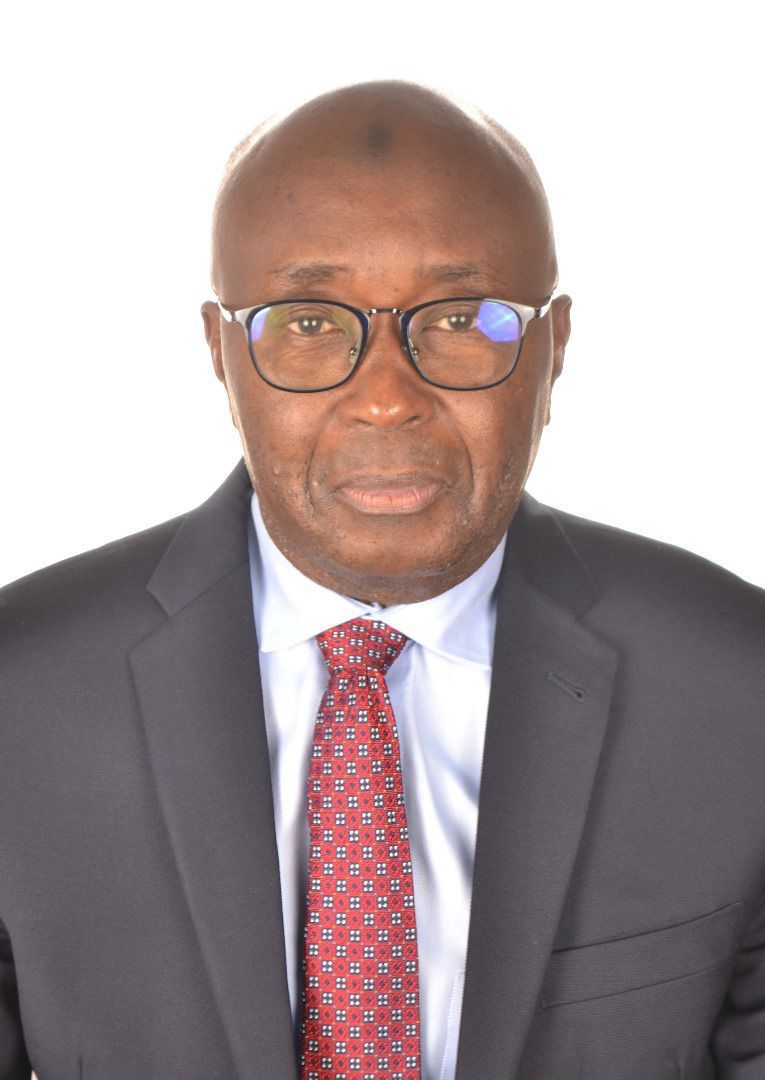
Prominent Gambian economist and author Musa Bassadi Jawara has issued a strong call for comprehensive political reform, warning that selective application of term limits and planned street protests risk deepening the nation’s divisions rather than resolving them.
In a detailed statement released on Tuesday, Jawara argued that The Gambia stands “between the devil and the deep blue sea,” trapped not only by political failures but by a societal reluctance to confront uncomfortable truths. He described this as “Mashlahaa” – the local habit of sugar-coating problems to preserve superficial peace.
Jawara’s central message targets the ongoing debate over presidential term limits. While supporting the principle of “No to Third Term” for President Adama Barrow, he insisted the same standard must apply across the board. He pointed specifically to United Democratic Party (UDP) leader Lawyer Ousainou Darboe, who has contested multiple presidential elections and is reportedly eyeing another run.
“Term limits are not selective,” Jawara wrote. “If UDP leader Lawyer Ousainou Darboe is seeking his fifth or sixth five-year term, then he cannot claim the moral authority to challenge the incumbent on term limits alone.” He described the current political system as broken and warned that demanding limits for opponents while seeking exemptions for allies amounts to replacement, not genuine reform.
On national challenges such as persistent energy shortages, Jawara urged opposition figures to move beyond criticism to constructive engagement. He recalled Darboe’s role in the 2017-2018 coalition government and questioned why the UDP leader has not presented a detailed alternative energy policy to the government, NAWEC, and relevant authorities. Mocking power outages on social media may generate attention, Jawara said, but “engagement creates light.”
A significant portion of the statement addresses the Gambians Against Looted Assets (GALA) and other groups planning protests from June 15 to 19. Jawara appealed directly to them to abandon the demonstrations, warning that teargas, arrests, and street chaos would only inflict further hardship on ordinary citizens without delivering meaningful change.
“I have already written to national leadership and prominent authorities in the international community,” he revealed. “The issue is engaged. Please stay home. Please stay calm. The work of reform has begun.”
Jawara framed The Gambia’s difficulties within a broader historical context he termed “The Gambian Question.” Since independence on February 18, 1965, when Britain granted instruments of nationhood to Sir Dawda Kairaba Jawara – the author’s uncle – the small West African nation has grappled with whether a resource-poor, ethnically diverse country of just 11,000 square kilometers can sustain democracy, tolerance, and self-sufficiency.
He described the post-independence era under Sir Dawda as a promising “Gambian Experiment” that was violently interrupted by the 1981 coup attempt and the 1994 military takeover. These events, he argued, replaced institutional development with the “rule of men,” leaving the nation swinging between hope and despair.
“The systemic decay, institutional deficits, and existential crises we face did not start today,” Jawara noted. “This is not a five-year problem. This is a sixty-year question.”
He called on all political actors – including the UDP, GALA, and the newly emerging United Movement for Change (UMC) led by Talib Bensouda – to prioritize institution-building over protests and personality politics.
Jawara criticised Bensouda for attending a PASTEF congress in Dakar and posing with former Senegalese Prime Minister Ousmane Sonko, describing it as an “unforced error” that risks drawing The Gambia into Senegal’s turbulent politics. He urged Gambian leaders to focus inward on domestic challenges.
Jawara, who has worked extensively on poverty alleviation through initiatives such as borehole construction, school supplies, and women’s horticulture projects, documented in his book Village Life, emphasized that his intervention stems from a love of country rather than partisan interest.
“I refused to be silent because silence is surrender,” he concluded. “This is not politics. This is worship through service. This is love of country made visible.”
The statement arrives amid heightened political tension as The Gambia prepares for December elections and grapples with economic pressures, energy crises, and questions over constitutional reforms. Observers note that Jawara’s intervention highlights a growing desire among some Gambians for a more mature, institution-focused political culture that transcends five-year electoral cycles.