 by Baboucarr Fallaboweh
Real Betis has joined the growing list of European football clubs establishing academies and football schools across Africa, reflecting the continent’s increasing importance in global talent development.
European giants such as FC Barcelona and Paris Saint-Germain have already built a strong presence on the continent through academies and development programmes in countries including Egypt, Nigeria, South Africa, and Senegal. These projects not only provide elite football training but also create educational opportunities, coach development, and pathways for young African talents to pursue professional careers in Europe.
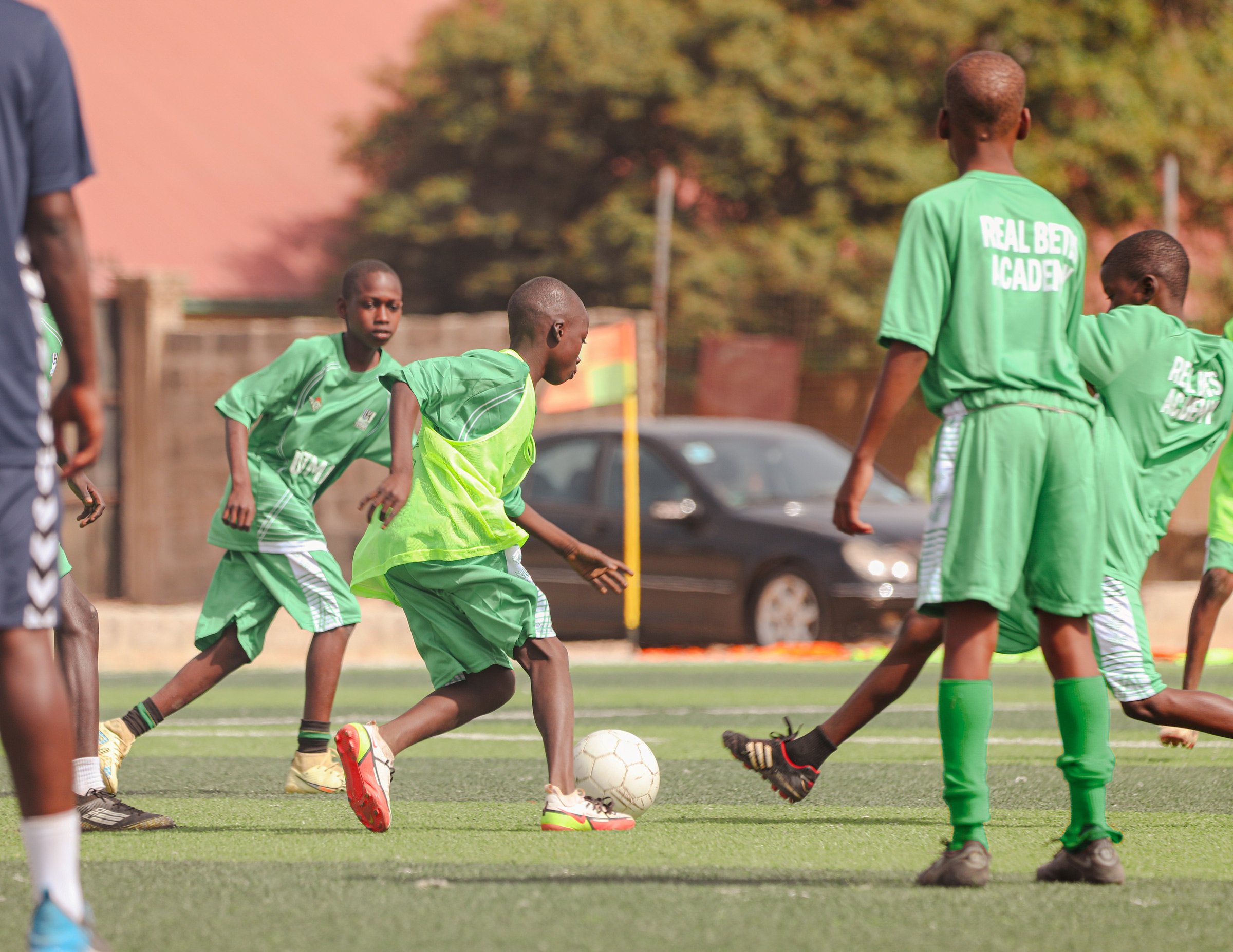
With the launch of the Real Betis Academy in The Gambia, the Spanish club has expanded its footprint in Africa, reinforcing its commitment to youth development while opening new opportunities for Gambian footballers to learn under the club’s renowned methodology.
In this exclusive interview, JUAN PARRA explains why Real Betis chose The Gambia as its newest destination in Africa, the club’s long-term objectives, its player development philosophy, and how the academy aims to create a pathway for talented Gambian footballers to progress through the Real Betis system.

What inspired Real Betis to establish an academy in The Gambia?
Our inspiration stems from our desire to share Real Betis Balompié’s methodology and values in countries with a deep passion for soccer and significant potential for development. The Gambia has a vibrant soccer culture and young people who deserve stable, challenging training environments focused on both athletic and personal growth. It’s not just about identifying talent, but about building a sustainable project that is connected to the local reality.
Does Real Betis have similar projects in Asia, the United States, or elsewhere in Africa apart from The Gambia?
Yes. The academy in The Gambia is part of the Real Betis Academy’s international network, which runs ongoing projects (academies) and camps in various countries. In Africa, the Club also has a presence in Algeria, Eswatini, and Senegal; in the United States, there are initiatives in several cities; and in Asia, projects have been developed in countries such as Iraq and Oman, in addition to recent camps in India and China. We also have academies in Chile and Venezuela and have held camps in the United Kingdom and Macedonia, among other countries. Each academy is tailored to its specific context but shares the same methodology and common values.
What is the long-term goal of the academy? What are the objectives and overall vision of this project?
The long-term goal is to establish a stable academy, recognized for the quality of its training and its positive impact on young people and the community. We want to help players improve their technical and tactical skills and physical conditioning, but also reinforce habits such as discipline, respect, and teamwork.
Our vision is for Real Betis Academy Gambia to be a leading institution in soccer training and personal development, capable of supporting generations of young people in the years to come and opening up opportunities for growth to those who demonstrate the necessary skill and attitude.
What philosophy and values do you want the coaches and players to embrace?
We want coaches and players to share a philosophy based on daily effort, humility, respect, responsibility, and camaraderie. We view soccer as an educational tool: competing is important, but so is learning to get along with others, to listen, to overcome challenges, and to proudly represent your team and your community.
The Real Betis Academy’s methodology aims to develop better soccer players, but above all, better people.
How will the academy align with Real Betis’ youth development system and overall club structure in Spain?
The academy will operate according to Real Betis’ methodological principles: technical development, tactical understanding of the game, decision-making, team play, and intelligent use of space. Local coaches will receive guidance, monitoring, and training in line with the club’s sports structure. In addition, evaluation and communication processes will be established to track the players’ progress.
We understand that, following the first talent identification screening, two players are expected to travel to Real Betis. Could you elaborate on that process?
Yes. Following the first round of talent identification, two players will have the opportunity to travel to Seville to participate in Real Betis Camp THE BEST, a gathering of international players selected from all of Real Betis Academy’s international sports programs, to be held from September 7 to 11, 2026.
It will be a very enriching experience, both athletically and personally, as it will allow them to compete, interact with players from other academies and camps, and gain firsthand insight into Real Betis’ methodology and values. This participation is part of the process of monitoring and developing the young players selected for the Real Betis Academy Gambia project.
What criteria were used to identify these players, and what opportunities will be available to them once they arrive in Spain?
The players were selected based on a combination of age, playing level, technical-tactical skills, game understanding, and physical condition — we look for players who show both talent and the right mentality to grow.
Once in Spain, they’ll train at Real Betis’s own facilities with our academy coaches, following the same methodology we use with our youth teams. It’s a real formative experience and for those who stand out, it can open the door to being followed more closely by our scouting network for future opportunities within the academy.
Will these players train with Real Betis academy teams, participate in assessment programmes, or be considered for long-term integration into the club’s youth system?
During the camp, players train directly with our academy staff, using the same sessions and methodology as our youth teams — so in that sense, yes, they train alongside our system, not just a generic clinic.
There isn’t a formal assessment programme with guaranteed follow-up — we don’t make promises we can’t keep. But our coaches are always watching, and if a player stands out, that gets noted and can lead to further contact down the line. It really depends on each player: their level, their evolution, and how they fit what we’re building. So the door is open, but nothing is automatic — it has to be earned.
How many Gambian players do you realistically expect to progress through the academy and potentially reach the Real Betis system over the next five years?
It would be irresponsible to set a specific number at such an early stage of the project. Our main goal is for a large number of young Gambians to benefit from quality training, regardless of whether or not they go on to play professional soccer.
Naturally, we hope that some players will be able to advance to higher-level sporting opportunities, whether in Spain or in other competitive environments. But success will not be measured solely by how many players make it into a professional setup, but rather by how many young people improve as soccer players, students, and individuals thanks to the academy.
Five years from now, what would make Real Betis consider the Gambian academy project a success?
In five years, we will consider the project a success if the academy is stable, respected, and beneficial to the community; if it has trained good coaches and supported many families; if the players have improved both athletically and personally; and if some of them have been able to access new opportunities thanks to their hard work and progress.
It will also be a success if Real Betis Academy Gambia has forged a strong bond between The Gambia and Seville, based on respect, training, and a shared vision of soccer.