By: 𝐄𝐛𝐫𝐢𝐦𝐚 Mbaye
The Gambia has reaffirmed its dedication to building a more humane and effective child justice system, with senior officials, UN agencies, civil society, and development partners gathering for a two-day high-level dialogue to tackle persistent challenges facing children in contact with or in conflict with the law.
The multi-stakeholder forum, organized by UNICEF in partnership with the Judiciary of The Gambia, opened today at the Sir Dawda Kairaba Jawara International Conference Center. Participants are assessing the current child justice framework, pinpointing critical gaps, and crafting actionable recommendations to ensure every child receives justice that upholds their dignity, rights, and prospects for a better future.
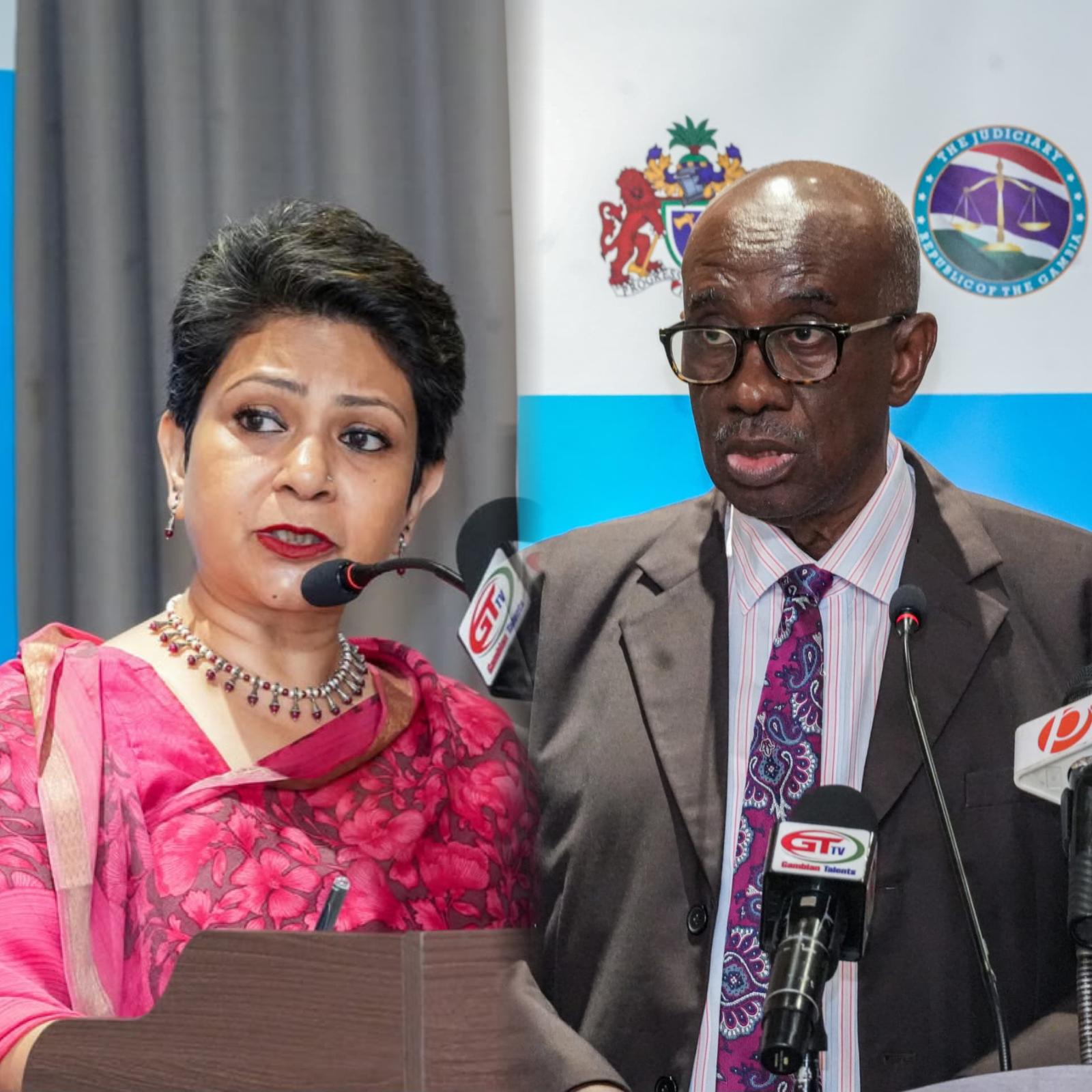
Chief Justice Hassan B. Jallow, delivering the opening address, underscored that how a nation treats children in its justice system mirrors its broader commitment to human rights, social justice, and the rule of law.
“Children are not simply smaller versions of adults,” Chief Justice Jallow said. “The age, vulnerability, developmental needs, and capacity for rehabilitation of children require a distinct and specialized approach” that prioritizes protection, rehabilitation, reintegration, and the best interests of the child.
The Gambia has recorded notable progress since the enactment of the Children’s Act 2005, including the establishment of specialized Children’s Courts in Brikama, Basse, and Kanifing, with plans to expand to other regions. Yet significant obstacles remain: prolonged delays in investigations and case processing, insufficient diversion and rehabilitation programs, limited victim support, and weak coordination among justice institutions.
Chief Justice Jallow called for enhanced collaboration and proposed establishing a Child Justice Stakeholder Committee to improve coordination, accountability, and information sharing across the sectors.
UN Resident Coordinator Karl Frederick Paul described the dialogue as a direct follow-up to the December 2025 visit of the UN Secretary-General’s Special Representative on Violence Against Children. He urged stakeholders to view child justice not merely as a sectoral issue but as integral to governance, inclusion, national development, and peace.
“An effective child-responsive justice system depends on strong legislation, institutional coordination, accessible legal aid, timely social services, reliable data, skilled professionals, and communities that understand and support children’s rights,” Mr. Paul stated.
UNICEF Country Representative Nafisa Bint Shafique praised the country’s legal and institutional foundations but highlighted ongoing shortcomings, including case backlogs, limited diversion options, constraints in legal aid, weak case management, and insufficient child-related data. She acknowledged the vital contributions of the Directorate of Children’s Affairs, Police Child Welfare Units, the National Agency for Legal Aid, and social welfare services.
Representing the Minister of Justice, Solicitor General, and Legal Secretary, Hussein Thomas reaffirmed the government’s commitment to a protective justice system. He emphasized the need to understand the systemic factors that often lead children into conflict with the law.
“A child who offends is not simply a perpetrator of wrongdoing. More often, that child is a product of systemic gaps – gaps in protection, guidance, opportunity and care,” Mr. Thomas said.
He advocated for greater investment in diversion mechanisms, child-friendly rehabilitation facilities, expanded legal aid, improved coordination, and professional capacity building. The goal, he added, is to shift from a punitive model to a restorative and transformative system that helps children recover, learn, and reintegrate successfully into society.
Discussions also highlighted the need to strengthen oversight, research, and evidence-based policymaking through bodies such as the National Human Rights Commission’s Child Rights Monitoring Unit and the Child Rights Center at the University of The Gambia.
By the end of the two-day forum, stakeholders aim to produce a comprehensive roadmap with short-, medium-, and long-term actions to transform the delivery of child justice. Participants expressed a unified resolve to ensure no child is left behind, building a justice system that protects, restores, and offers every young person a genuine chance to thrive.