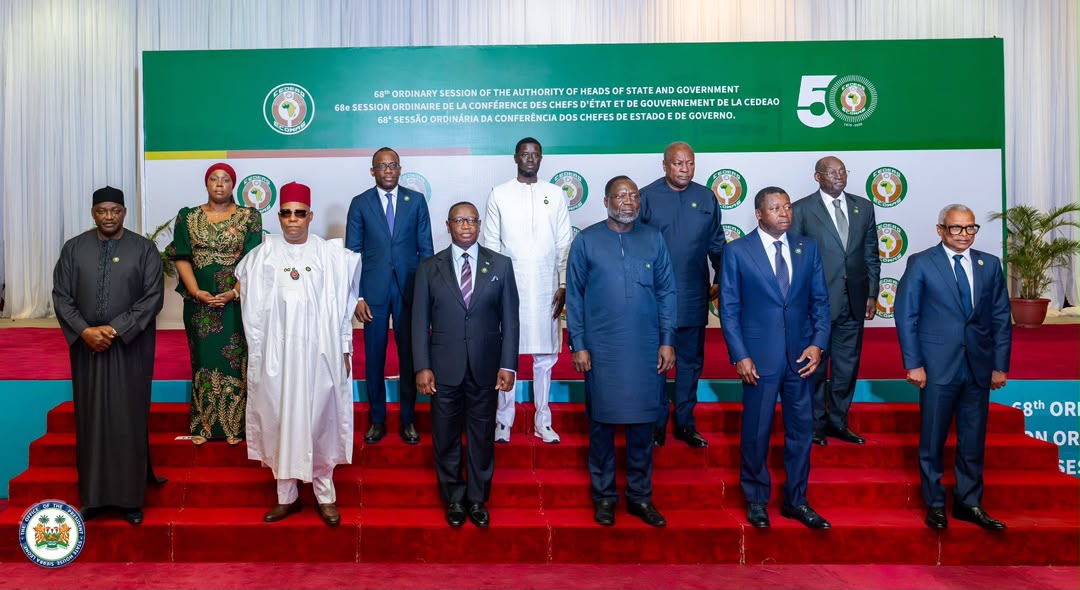
West African heads of state on 19 July 2026 adopted a landmark declaration committing to achieve gender parity in elective positions across the Economic Community of West African States (ECOWAS) by 2035, marking the regional bloc’s 50th anniversary with a bold push for inclusive governance.
Gathered at a special summit on the future of regional integration in Freetown, the leaders of Benin, Cabo Verde, Côte d’Ivoire, The Gambia, Ghana, Guinea, Liberia, Nigeria, Senegal, Sierra Leone and Togo solemnly declared their resolve to advance equal political representation of women and men. The “Declaration on Advancing Gender Parity in Political Representation in the ECOWAS Region” was presented as a lasting legacy initiative.
The document reaffirms ECOWAS’s adherence to its Revised Treaty, the African Charter on Human and Peoples’ Rights, Vision 2050, and a host of continental and international instruments including CEDAW, the Maputo Protocol, the Beijing Platform for Action and Sustainable Development Goal 5.5.
Leaders acknowledged progress in girls’ education, gender quotas and women’s networks in some member states, while noting that women remain underrepresented in legislatures, cabinets and senior executive roles.
They committed to six core actions: progressive achievement of full gender parity in elective posts by 2035 according to national circumstances; deeper inclusive governance so parliaments better reflect all citizens; legal and policy reforms including temporary special measures and electoral changes with compliance mechanisms; empowerment of women and girls through civic education, leadership training and mentorship; mobilisation of parliaments, electoral bodies, parties, traditional and religious leaders, civil society and partners; and improved regional data collection, monitoring and accountability.
Leaders highlighted expected benefits: stronger peace and security through balanced decision-making; greater social cohesion and national unity; more effective, transparent and responsive institutions; enhanced democratic legitimacy and public trust; better policies; improved outcomes in health, education, climate resilience and human capital; and accelerated equitable economic growth.
The ECOWAS Commission was invited to provide technical and legal support, facilitate peer exchanges, strengthen capacity for women’s leadership, establish research grants and scholarships, explore a regional monitoring mechanism, and embed the goals in strategic frameworks.
“We reaffirm our collective commitment to building a region where women and men participate fully and equally in shaping the destiny of our nations,” the declaration states. Signed in English, French and Portuguese, the text was endorsed by presidents including President Adama Barrow of The Gambia, Bola Ahmed Tinubu of Nigeria, John Dramani Mahama of Ghana, Julius Maada Bio of Sierra Leone, Alassane Ouattara of Côte d’Ivoire and Bassirou Diomaye Faye of Senegal, among others.
The initiative seeks to honor the founding fathers’ vision while setting a trajectory of democratic renewal and shared prosperity for the next 50 years of West African integration.