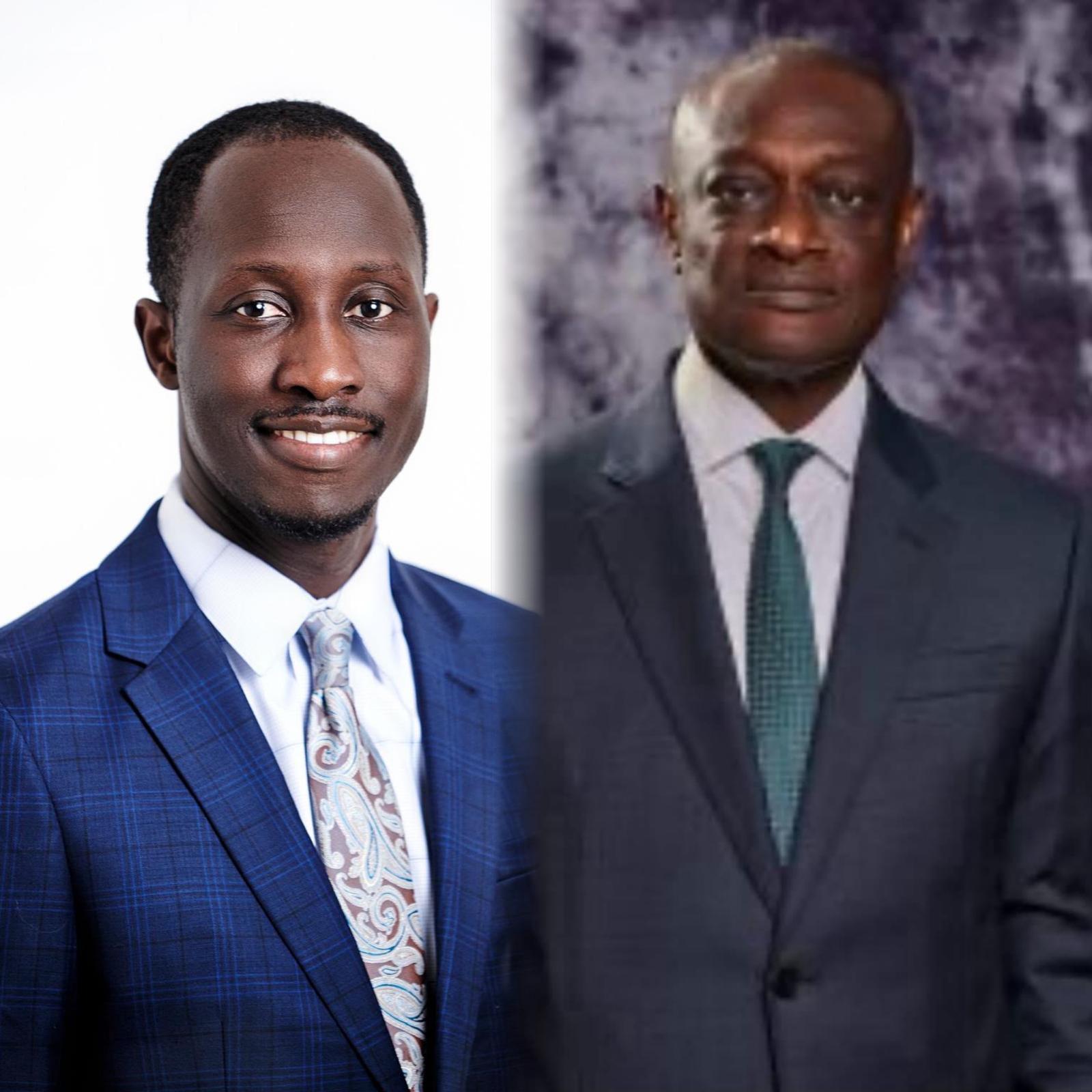
The nomination of veteran US-based Gambian lawyer Edi Faal as Chief Justice has sparked debate over whether he satisfies the constitutional requirements for the post.
In a detailed opinion piece, US-based Gambian legal scholar and lawyer Sarjo Barrow, Esq., argues that the only question that truly matters is whether Faal meets the criteria set out in Section 139 of the Constitution — not his reputation, geography, or personal connections.
Barrow, who, like Faal, is American-trained, states he supports the nomination because exposure to multiple legal traditions can strengthen The Gambia’s reforming judiciary. That support, he stresses, is not unconditional. Public confidence in the judiciary requires strict fidelity to the Constitution, the rule of law, and the integrity the office demands.
Objections that Faal is “an American lawyer” whose career was built in Los Angeles rather than Banjul are dismissed by Barrow as a reflex, not a legal argument. “The Constitution does not run on reflexes,” he writes.
Faal’s Gambian citizenship is undisputed. He was called to the Bar at the Middle Temple in London, holds an LLM from the University of London and a Juris Doctor from California, and has decades of courtroom experience in the United States. In 1993, the Los Angeles Times named him a “rising legal star” for his work in a major criminal trial. Capability as an advocate is not in question, Barrow says. The issue is precise constitutional definition.
Section 139 does not require a nominee to be enrolled on the Gambian Roll or to have practiced exclusively in Banjul. For much of The Gambia’s history, judges who never practiced at the local Bar have sat on the courts, including as Chief Justice. A person qualifies for the Supreme Court with five years’ service as a judge of a comparable court in a common law country or twelve years’ practice before a court of unlimited civil and criminal jurisdiction in such a country. To become Chief Justice, a nominee must meet one of those standards or have served ten years as a judge of a superior court.
Barrow draws a distinction between mere admission and actual practice. The Gambian provision requires the nominee to have “practiced” — a doing word — before a court of unlimited jurisdiction. He argues this includes chamber work such as opinions, drafting and advisory services, not only courtroom appearances. A leading commercial lawyer who rarely enters court should not be disqualified while a junior handling daily bail applications sails through.
As the law currently stands, however, Faal’s decades of practice in American courts cannot count toward the twelve-year requirement. Section 139(5) has not yet prescribed the United States as a jurisdiction whose practice counts. Qualifying years must therefore be found in the United Kingdom, where Faal was called at the Middle Temple, and in The Gambia. Whether those years of active practice — contentious or non-contentious — total twelve is a factual question that requires documented evidence, Barrow says.
He rejects any suggestion that American practice is inherently suspect. Those years represent distinction earned at a high level, not a mark against the nominee. The limitation exists only because the United States has not been formally prescribed under the current rules.
Barrow forcefully argues that America is a common law country. Its legal system traces directly to English common law brought by the colonists. US Supreme Court decisions from the 19th century through modern rulings on constitutional interpretation continue to read the American Constitution against its common-law background. The Gambia and the United States are two constitutional republics descended from the same legal family.
The Gambian Supreme Court itself has looked to American doctrine. In Jammeh v. Attorney General, the Court exercised the power of judicial review — a power first articulated by the US Supreme Court in Marbury v. Madison — and adopted a broad approach to standing drawn from US precedents. A court that draws on American constitutional principles can hardly treat American legal training as foreign or irrelevant, Barrow contends.
He also criticizes the Legal Practitioners (Recognized Jurisdictions) Rules, 2024, which include Rwanda — a system that was largely civil law until recent reforms — while omitting the United States. The Republic of Ireland is included on common-law substance alone. Section 139(5)(b) permits prescription of any country whose courts exercise common-law jurisdiction. On that test, Barrow says, the United States qualifies as clearly as any nation.
The appointment process itself provides safeguards. Under Section 138(1), the President appoints the Chief Justice only after consultation with the Judicial Service Commission, which includes the Chief Justice, a superior-court judge, the Solicitor General and a Bar-nominated practitioner. The Commission has access to the nominee’s full record. If a citizen believes the constitutional threshold has not been met, the Supreme Court possesses original jurisdiction to decide the question.
Barrow concludes that eligibility must be tested through the constitutional mechanisms of consultation and, if necessary, adjudication — not through speculation or politics.
He calls the current exclusion of the United States a defect in the definition that the National Assembly or General Legal Council can easily correct. The Constitution measures a judge by practice and years of service, he writes, not by the ocean across which that practice occurred