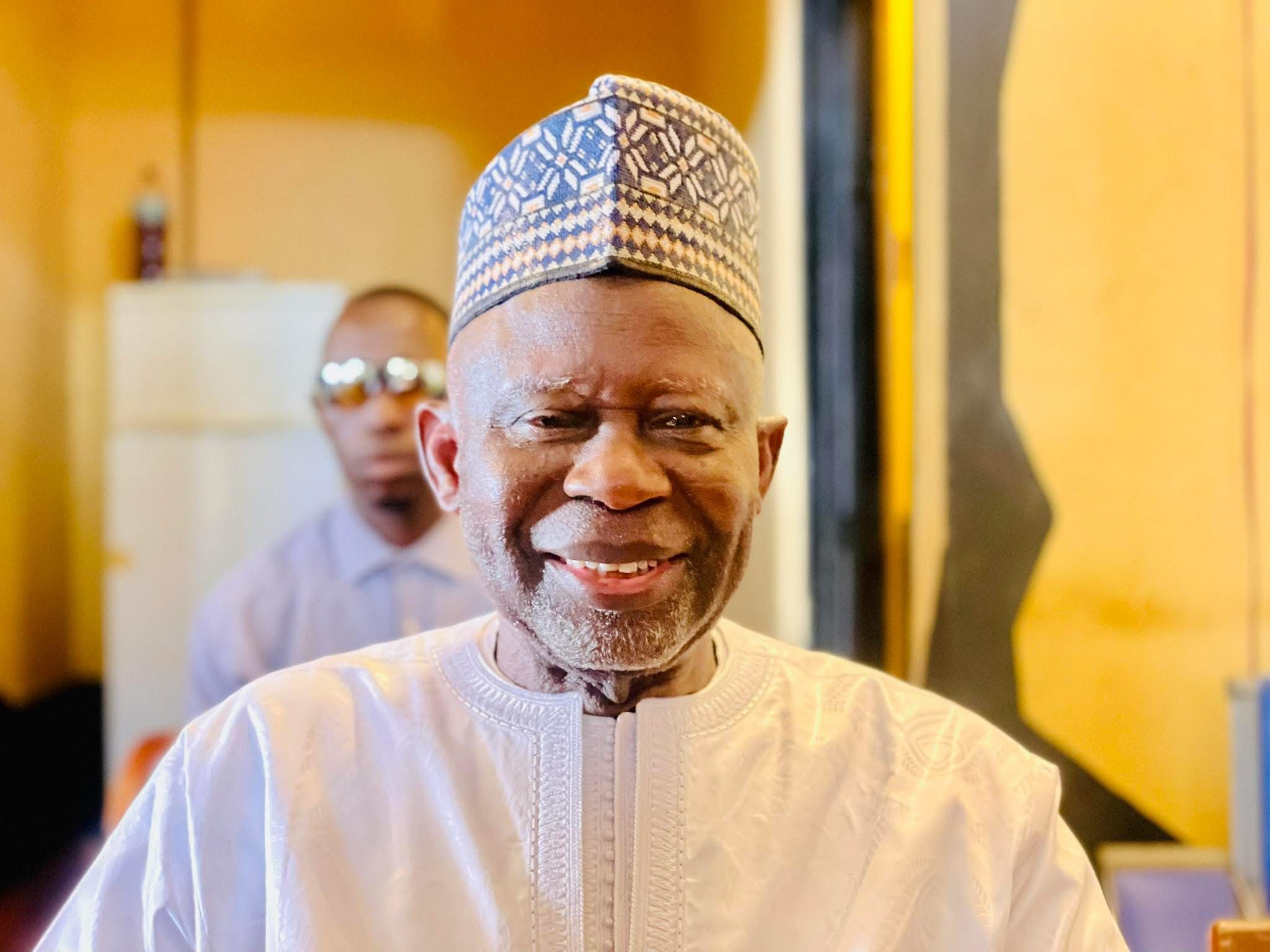
United Democratic Party (UDP) leader and 2026 presidential flag-bearer Ousainu Darboe has unveiled an ambitious Diaspora Engagement and Participation Policy, promising to end decades of marginalization for Gambians living abroad by granting them full political rights and integrating them as equal partners in national development.
In a powerful address to party members and the Gambian diaspora, Darboe declared that “The Gambia, as a country, is found wherever Gambians live,” spanning cities from Banjul and Brikama to London, New York, Beijing, and beyond. He highlighted the diaspora’s vital contributions through remittances that sustain families, build homes, educate children, and prop up the national economy, while criticizing their long-standing treatment as “spectators” in the country’s political life.
“This injustice is unacceptable and must end,” Darboe said. “The Gambia’s development will never be complete without the full, equal and effective inclusion of its Diaspora.”
The policy, described as a “clear, deliberate, and binding commitment,” centers on four main pillars: political participation, economic empowerment, knowledge and skills transfer, and strengthened institutional frameworks.
On political rights, a UDP-led government would guarantee voting rights for all eligible Gambians abroad in presidential, parliamentary, and referendum elections. Working with the Independent Electoral Commission, the party plans to establish secure voting mechanisms at embassies, consulates, and approved locations, while amending electoral laws to remove existing barriers.
“No Gambian, with the requisite qualification, should lose his or her voice simply because of being resident abroad,” Darboe emphasized.
The commitment extends to dual citizenship. Darboe pledged to reform constitutional provisions that currently exclude qualified dual citizens from serving in key positions, allowing them to contest National Assembly elections and serve under clearly defined rules for diaspora constituencies.
“Citizenship is about loyalty, service, and commitment, and not about paperwork alone,” he said. “Our nation must benefit from global exposure, international experience, and professional excellence.”
Economically, the UDP aims to transform the diaspora from a mere source of remittances into a powerful engine for growth. Diaspora investors would receive equal consideration in national programs, with preferential access to sectors such as agriculture, tourism, renewable energy, housing, infrastructure, digital innovation, and creative industries.
Plans include issuing Diaspora Bonds, reducing remittance transaction costs, and developing tailored savings and investment products. Diaspora groups would also gain fair access to privatization and public-private partnership opportunities, subject to transparency and safeguards for the national interest.
Recognizing that development extends beyond finance, Darboe announced the creation of a Diaspora Think Tank comprising Gambian professionals abroad to advise on policy and research. The government would engage diaspora experts as consultants in critical sectors such as health, education, infrastructure, and technology, while promoting skills transfer programs.
Institutionally, the existing Diaspora Affairs Directorate would be strengthened with clearer mandates, better resources, and real authority. An updated national diaspora skills and investment database would match opportunities with expertise, alongside improved consular services to protect Gambians abroad. Reintegration programs for returnees, support for diaspora-led education and health initiatives, and greater inclusion of youth and women were also highlighted.
Darboe stressed that the approach would be guided by transparency, accountability, and fair play. “The Diaspora will not be seen as an ATM, not as an afterthought, but as a strategic national development partner of value,” he said. Permanent dialogue platforms would ensure ongoing engagement.
The UDP leader framed the policy as a fundamental shift toward an inclusive nation where no Gambian is left behind. “Together, those at home and those abroad, we will build a democratic, prosperous, and inclusive Gambia. A Gambia that values all its citizens. A Gambia that works for everyone,” he concluded.
The announcement comes ahead of the 2026 presidential election, positioning diaspora inclusion as a central campaign issue. Political observers note that with hundreds of thousands of Gambians living abroad, the policy could significantly influence voter sentiment and future development strategies.
Darboe’s speech received enthusiastic responses from diaspora communities, many of whom have long advocated for greater political and economic participation. The UDP described the commitment as non-negotiable under any government it leads.