By: Aja Beyai
The Government of Japan, in partnership with UNICEF and the Government of The Gambia, formally handed over essential health, nutrition, and water, sanitation, and hygiene (WASH) supplies on Tuesday to bolster the national response to a scabies outbreak and strengthen community-based health services.
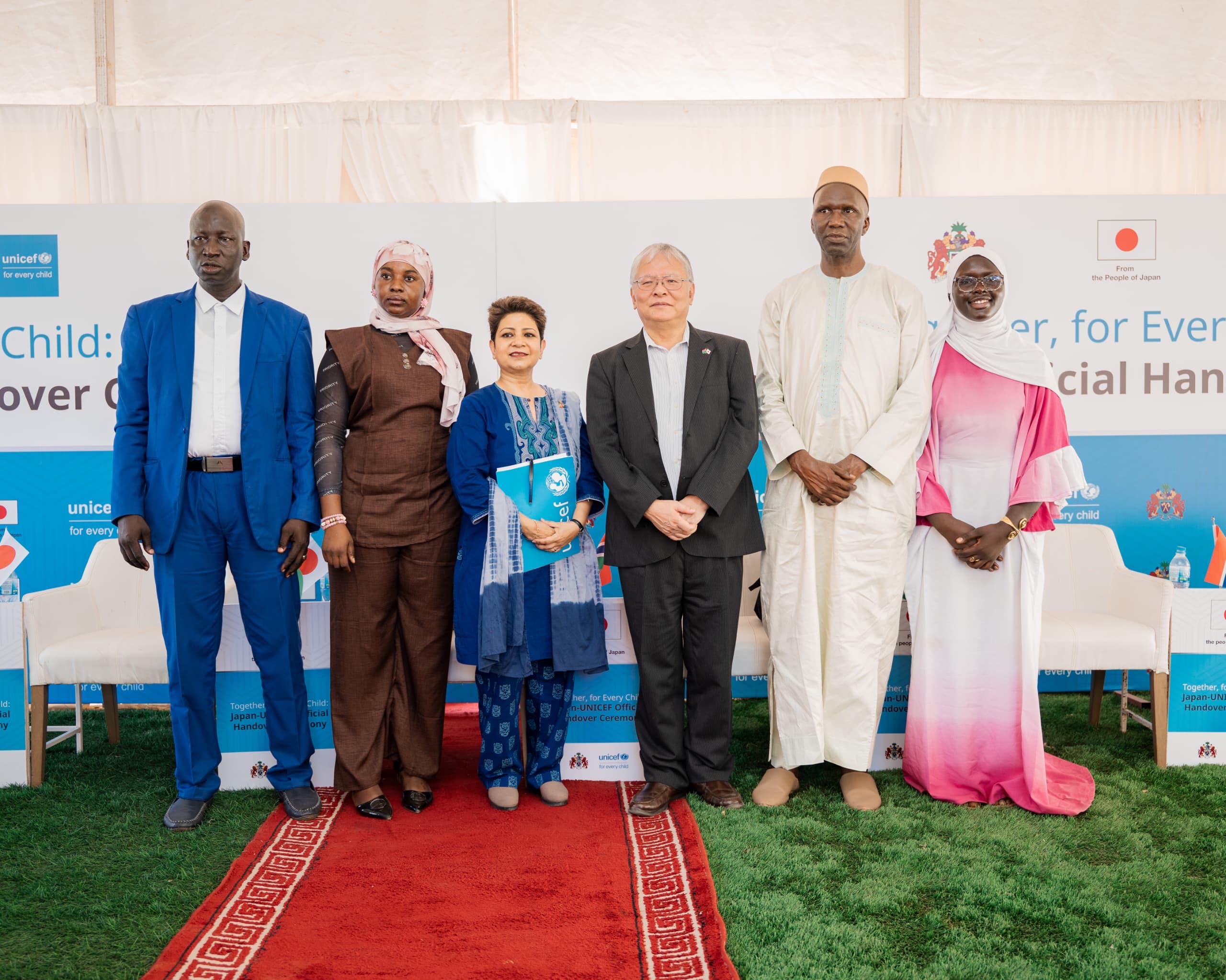
The ceremony took place at the West Coast Regional Health Directorate in Brikama under the project “Addressing Urgent Scabies Outbreak and Strengthening Community-Based Health Response in The Gambia.” Japan’s Ambassador to Senegal accredited to The Gambia, H.E. Takeshi Akamatsu, presented the supplies to Gambian authorities through UNICEF. The initiative targets three regions recently affected by outbreaks: West Coast, Central River, and Upper River.
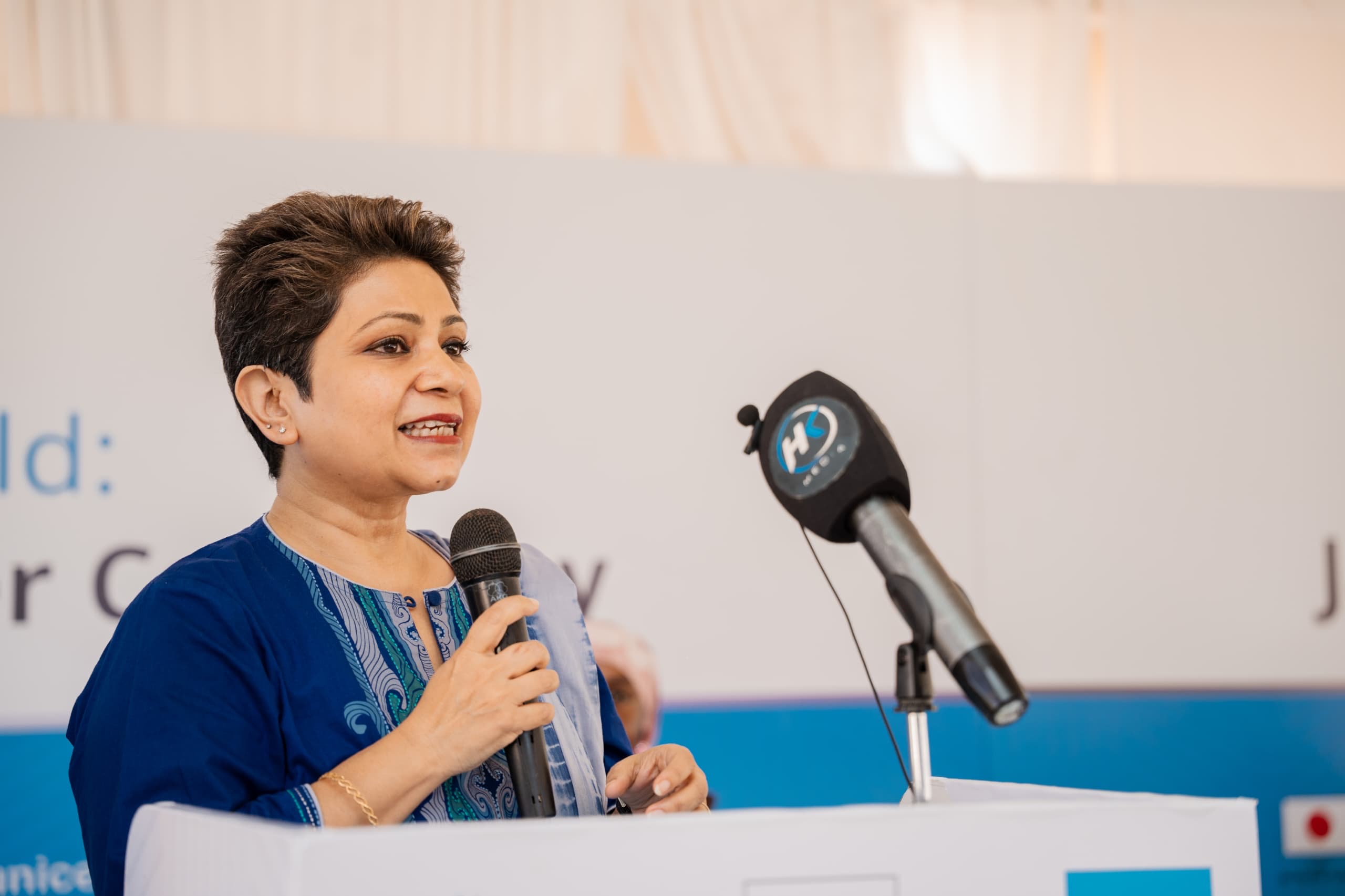
UNICEF Representative Ms. Nafisa Binte Shafique said the partnership has already reached approximately 157,000 children, families, and community members. “This support is not only about the delivery of essential supplies that we handed over here today. It is, in fact, much more than that. It is an investment in strengthening The Gambia’s health system,” she stated. She praised the Ambassador for traveling from Dakar to meet beneficiaries and children directly, calling it a clear testament of commitment turned into action. As UNICEF approaches its 80th anniversary next month, she reiterated the organization’s core message: every child has a right to be healthy, well-nourished, and safe.
Japanese Ambassador to Senegal also accredited to Gambia Takeshi Akamatsu underscored that infectious diseases such as scabies threaten children’s health and development, especially in overcrowded conditions with limited access to safe water and sanitation. Prevention, he said, requires early detection and treatment, along with awareness-raising and improved hygiene. “To address the challenges, it is essential not only to deliver necessary supplies, including medicine, but also to take a comprehensive approach,” he noted. Under the project, more than 400 healthcare workers and surveillance officers have been trained in early detection of infectious diseases; more than 68,000 children under five have been screened for malnutrition, with therapeutic foods being procured for severe acute malnutrition; and safe handwashing and sanitation facilities are being provided for more than 55,000 people, supported by community awareness activities. “Ensuring that children can learn and grow in a healthy and safe environment means investing in the future of The Gambia,” he said, affirming Japan’s continued cooperation under the principle of human security.
Director of National Health Services, Dr. Momodou T. Nyassi, explained that the nutrition commodities for severe acute malnutrition, scabies medicines, and WASH materials were provided through Japan’s 2025 Supplementary Budget and implemented with UNICEF. Speaking on behalf of the Government and people of The Gambia under President Adama Barrow, he expressed deepest gratitude for the timely contribution. The supplies, he added, will protect children whose weakened immune systems leave them vulnerable to infections while also building health workers’ capacity to prevent, detect, and respond to public health threats.
Director General of the National Nutrition Agency (NaNA), Mr. Malang N. Fofana, described the handover as another milestone in the UNICEF partnership. “Nutrition is not merely about food; it is about human capital, dignity, sustenance and development,” he said. He cited a Cost of Hunger study showing The Gambia loses 5.1 percent of its GDP—about $4.39 billion—to child malnutrition. He noted the recent launch of the National Nutrition Policy 2026-2035, its Strategic Plan 2027-2031, and the validation of the National Guideline on Integrated Management of Acute Malnutrition aligned with new WHO guidelines. Wasting affects over 5 percent of Gambian children, while stunting, underweight, anemia, and micronutrient deficiencies remain serious concerns, even as overweight, obesity, and non-communicable diseases rise. The supplies will help treat and rehabilitate malnourished children and advance the new policy’s targets.
Representative of the West Coast Region Governor’s Office, Ms. Natoma Fofana, highlighted the region’s status as the country’s most populous, with rapid growth from rural-urban migration straining services. She pointed to the nearby Brikama District Hospital as one of the busiest facilities, where staff work tirelessly despite limited resources. “By strengthening disease surveillance, supporting the response to the scabies outbreak, improving access to essential supplies, and investing in community-based health, nutrition and WASH interventions, this partnership helps strengthen the resilience of our health system,” she said.
Deputy Speaker of the Children’s National Assembly of The Gambia, Hon. Mariama Anta Secka, speaking for children from Central River Region, described scabies from a child’s perspective: “It is not only an itch. It is a night without sleep. It is a child who cannot concentrate in class, who is teased by friends and who feels ashamed to say what is wrong.” Thanks to the support, she said, families now have medicine, health workers detect illness earlier, malnourished children receive nutrition support, and schools are becoming cleaner and safer. “A child who is sick cannot learn. A hungry child cannot grow. And a child without clean water cannot stay healthy.” She pledged that children will encourage handwashing, cleanliness, and early treatment without fear or shame, and urged that children remain at the table in decisions about their health and future.
The ceremony was moderated by Children’s National Assembly Speaker Hon. Babucarr Sowe, who thanked Japan, the Gambian government, UNICEF, and partners. Officials from the Ministry of Health, NaNA, the Department of Water Resources, UNICEF staff, community leaders, beneficiaries, health workers, media, and a guest from Baylor College of Medicine attended.