By Alieu Ceesay
The Independent Electoral Commission (IEC) has received 18 nomination submissions from aspiring presidential candidates by the end of the ninth day of the nomination process, even as nine others have withdrawn from the race ahead of the December 5, 2026 presidential election.
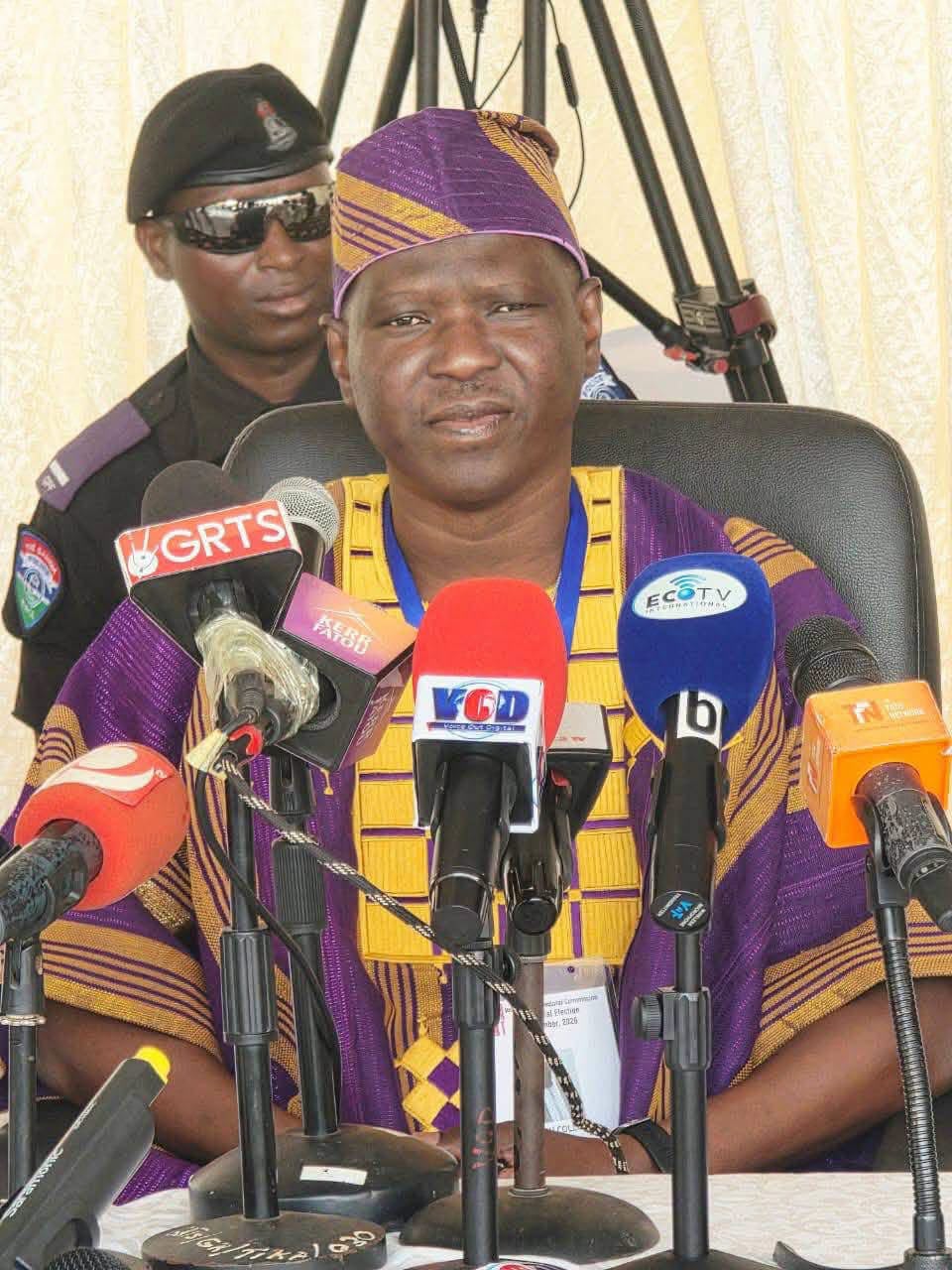
The nomination exercise, which began on November 3 and is scheduled to conclude on November 14, 2026, had initially been expected to attract submissions from 27 aspiring candidates. IEC Chairperson Joseph Colley confirmed the update on the process, noting the shortfall in submissions and the withdrawals that have already taken place.
Among those who have pulled out are the All Inclusive Party, the Gambia Action Party, the National Unity Party, and independent aspirants Musaid Jallow, Ismael Jobe, Alkali Cham, Sheik Matar Nyan, Omar Mbaye, and Fabakary Jammeh. The Democratic Party has also formally notified the Commission of its decision to withdraw from the nomination process.
Of the 18 submissions received, six remain unprocessed because the required D1 million deposit has not yet been paid. The Gambia Labor Party’s nomination is also on hold after its aspiring candidate, Bakusa Dukureh, publicly acknowledged holding dual citizenship. His senior secondary school certificate has been forwarded to the relevant authorities for verification.
Several other candidates have had their papers processed but must still meet outstanding legal requirements, particularly regarding the collection of signatures from registered voters. Under the law, presidential aspirants must secure a total of 5,000 signatures nationwide, with specific distributions across administrative areas.
Modou Lamin Sima of the Alliance of Progressive Citizens needs 1,040 more signatures to reach the national threshold. Ansu Sanneh of the National Builders Party must submit further signatures from Banjul, Basse, and nationally, while his citizenship status remains under verification.
The National Democratic Party must provide additional signatures from Banjul and Kanifing, plus 1,914 more to meet the overall national requirement; its candidate’s senior secondary school certificate is also being verified.
Independent aspirant Bakary Badjie needs additional signatures from Banjul, Kanifing, Kerewan, Mansakonko, Janjanbureh, and Basse, for a total of 2,310 nationally. Ebrima Tabora Manneh of the People’s Alliance Party must submit additional signatures from Kanifing, Mansakonko, and Janjanbureh, along with 1,507 more nationwide.
In contrast, four candidates have already met the documentation and signature requirements. They are independent aspirant Issa Tuturi, Talib Ahmed Bensouda of Unite, A.N.M. Ousainou Darboe of the United Democratic Party, and Adama Barrow of the National People’s Party. The nomination papers of independent aspirants Lamin J. Darbo and Almameh Gibba are still under review.
Colley stressed that the process is not yet complete. “Until we come to the end of the process, we won’t know the outcome,” he said. The Commission has indicated that it will issue acceptance letters on Thursday, November 12, 2026, to all candidates who have qualified so far. It also pledged to continue providing regular updates on processed papers and any remaining requirements as the November 14 deadline approaches.
The withdrawals and incomplete submissions highlight the rigorous nature of the nomination requirements as The Gambia prepares for its next presidential election. With only days left in the nomination window, the final list of candidates will become clear only once the IEC completes its verifications and issues formal acceptances.