By Aja Beyai
The Independent Electoral Commission (IEC) on Wednesday confirmed that eight candidates will contest The Gambia’s presidential election on December 5, 2026, after Ansu Sanneh of the National Builders Party (NBP) abruptly withdrew.
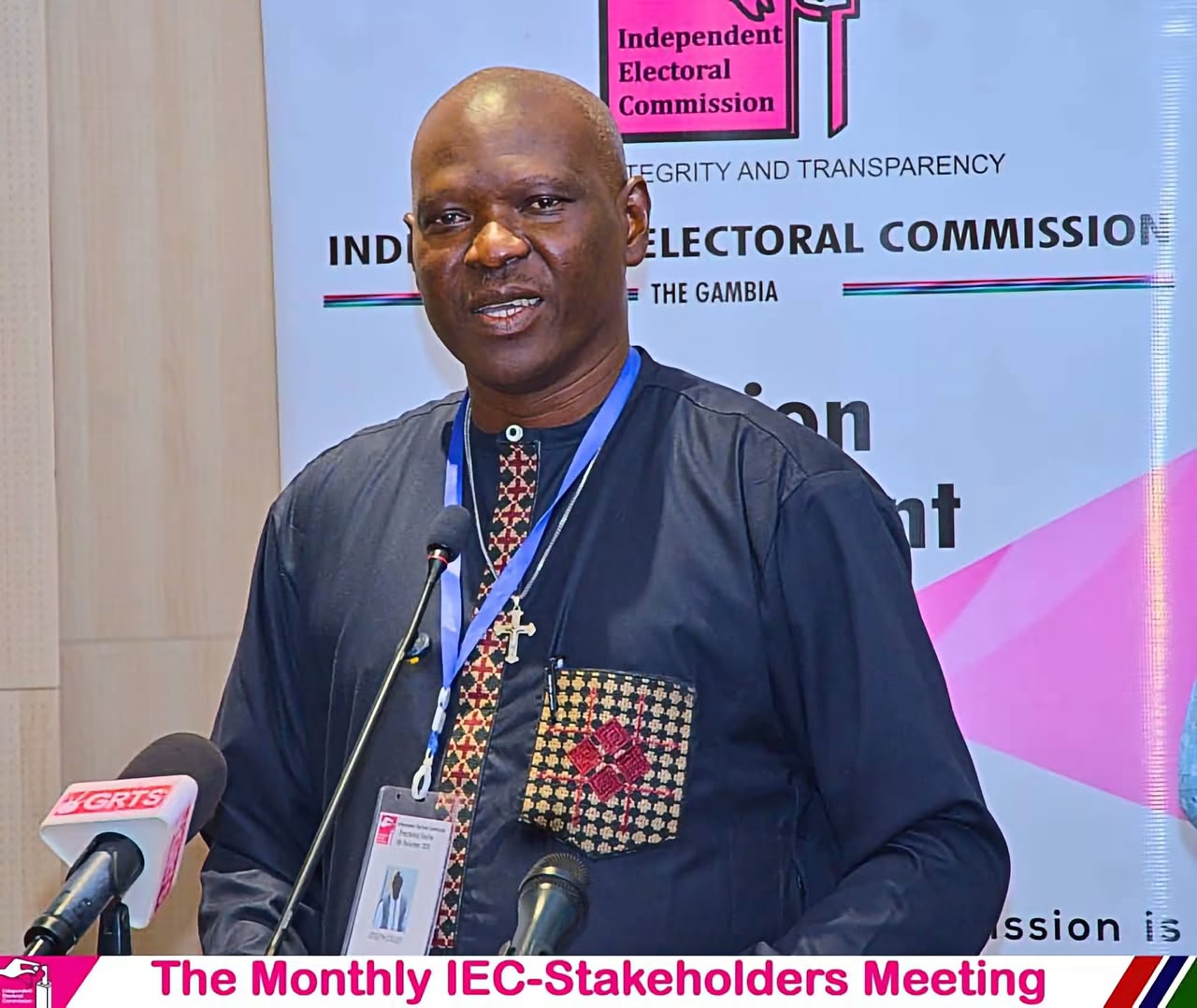
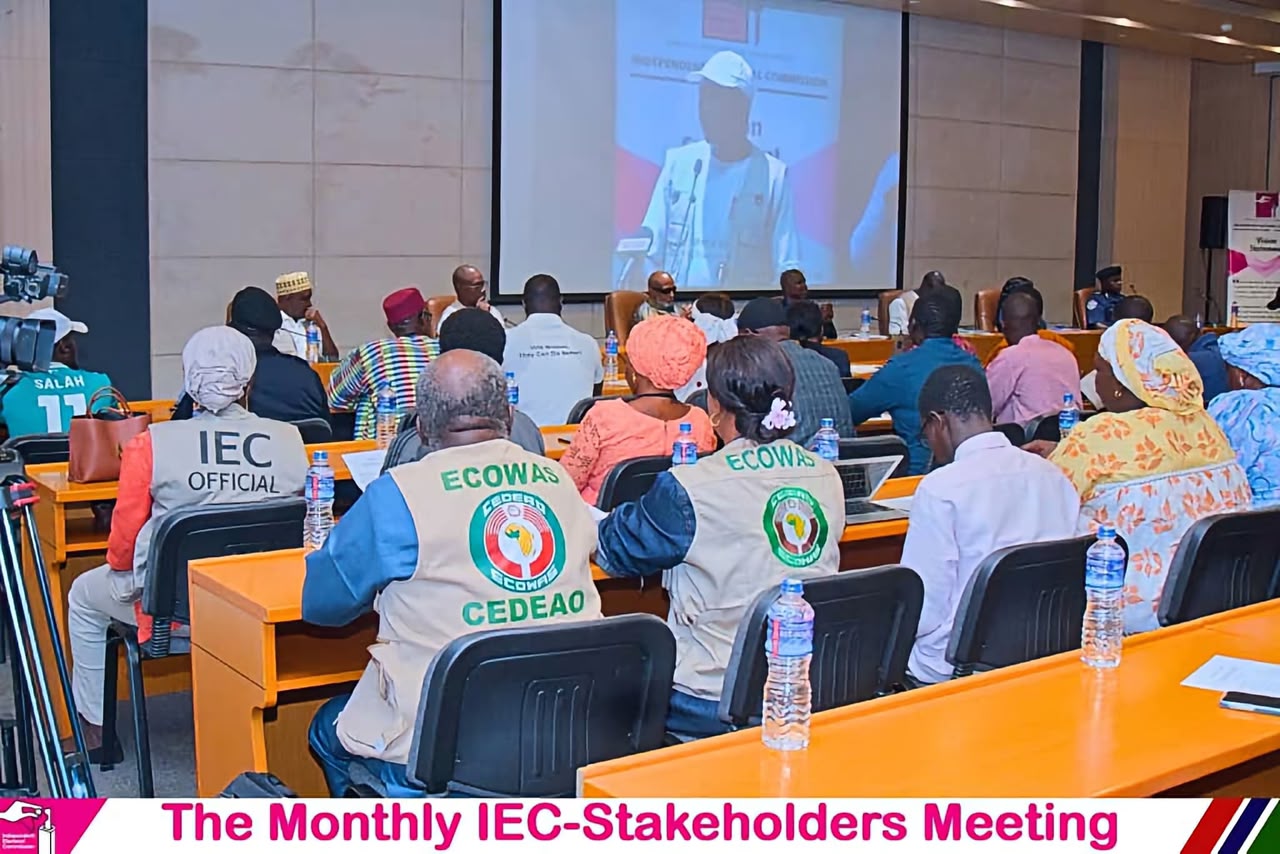
IEC Chairman Joseph Colley announced this at the commission’s monthly stakeholders meeting at the Sir Dawda Kairaba Jawara Conference Center in Bijilo. Political parties, media representatives, civil society groups, government agencies, development partners, and international observers attended.
Colley said nominations closed on November 14 with nine candidates formally endorsed. “As provided by law, he was issued with an acceptance of withdrawal form,” he stated regarding Sanneh’s exit.
Chief Electoral Officer Sambujang Njie provided a detailed account of the nomination process. Between September 24 and October 27, the IEC issued 27 nomination papers—12 to political parties and 15 to independent aspirants. Eleven aspirants formally withdrew before filing, leaving 16 who submitted papers. Of those, seven were rejected for failing to meet requirements, including paying the nomination deposit, submitting 5,000 registered voters nationally with at least 200 from each administrative area, and completing senior secondary school.
The official campaign period began on November 16 and will run until December 3. Njie reported that the IEC has received no reports of violence three days into the campaign. “Today marks day three of the campaign. We still have time to go, and all the candidates have started canvassing for votes,” he said.
November 16, the IEC, International IDEA, and the eight approved candidates signed a peace pact at the same venue, following a campaign reconciliation and harmonization exercise. Colley welcomed the candidates’ commitment to peace and urged them to uphold it throughout the process.
He also highlighted misinformation and fake news as a continuing threat. “It is unfortunate that the prevalence of misinformation or fake news continues to be a dent in the country’s socio-political development. This is potentially a critical threat to the electoral process,” Colley said. He called on political leaders and candidates to support efforts to counter false information and warned that incitement to violence has no place in the election. “All stakeholders must condemn any such incidents, especially during the campaign and beyond.”
Colley reaffirmed that the Commission will maintain its independence and that its decisions remain guided by existing electoral laws, stressing that compliance with those laws is essential for credible elections.
Njie further updated stakeholders on logistical preparations. Two hundred Assistant Returning Officers began work on November 10 and are currently preparing election materials while visiting polling stations. Election offices published the list of presiding officers, assistant presiding officers, polling officers, polling assistants, and data officers on Monday evening; applicants can verify their names at the offices where they applied.
Training of Trainers is scheduled for November 20–22, with regional step-down training to follow from November 27–29. IEC officials are also conducting countrywide visits to confirm polling stations’ suitability and readiness.
International observation missions from the European Union, ECOWAS, and the African Union have already arrived and begun their work, with the Commonwealth expected shortly. Njie noted that one domestic observer group has requested accreditation for more than 2,000 observers. “We have no issue with that. We will accredit as they apply,” he said.
Opening the forum, Director of Communications, Training, and Public Affairs Pa Makan Khan said the IEC operates under the philosophy of “leaving no one behind” and convenes the stakeholder meeting every month.