By Fatou Dahaba
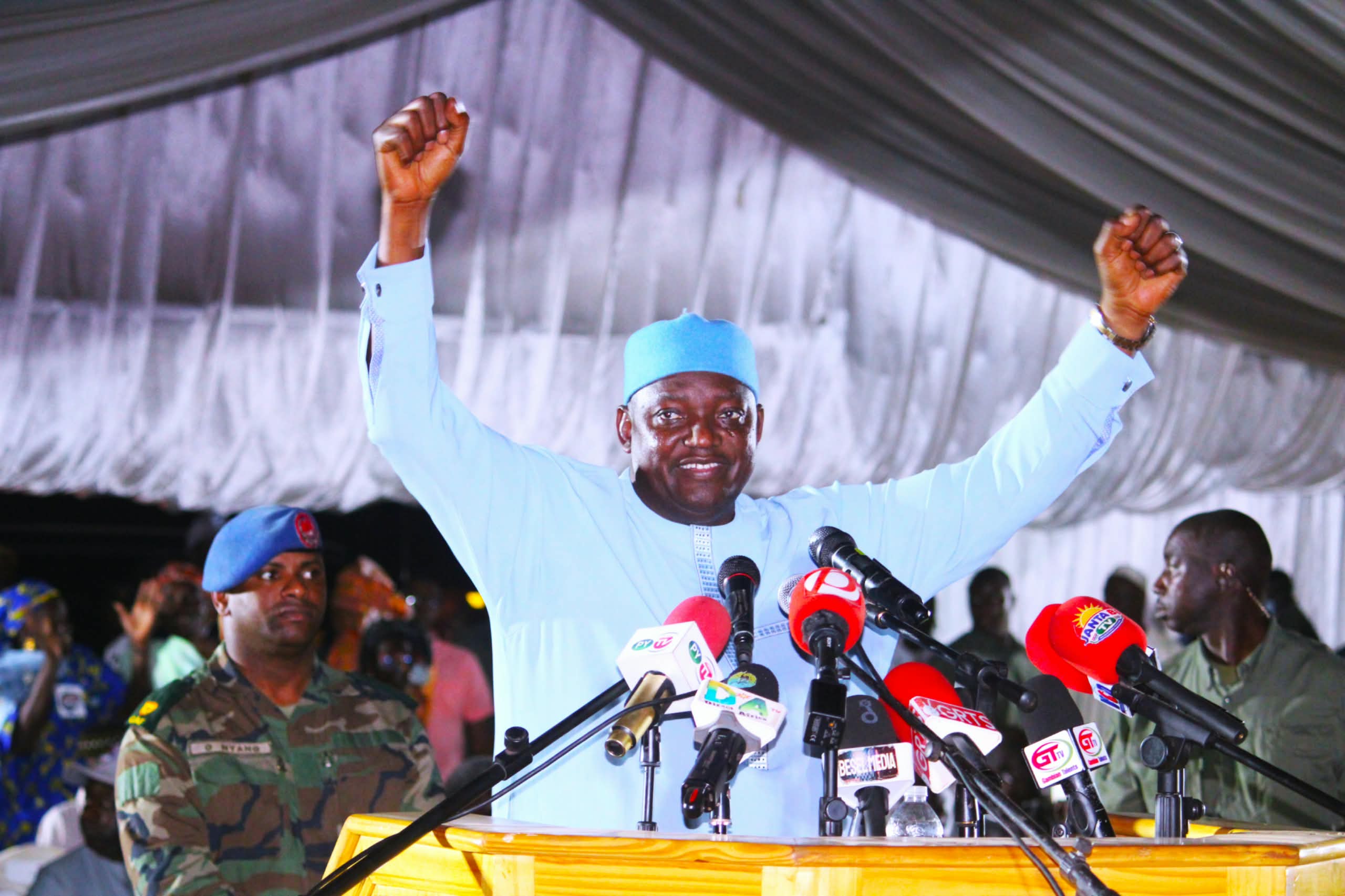
President Adama Barrow on Wednesday appealed to residents of Kiang to “pay back” his government’s development efforts with their votes in the December 5 presidential election, insisting that his administration has fulfilled key promises made to the region and needs another term to sustain progress.
Addressing supporters at campaign meetings in Njolfen, Kiang East, and later in Jali, Kiang West, Barrow pointed to roads, electricity, water supply, and other community services as concrete evidence of delivery since he took office. He reminded the crowds of his 2021 pledge that their problems would be solved if they backed him.
“I came here in 2021 and told you all your problems would be solved if you voted for me, and we have delivered on those promises,” Barrow said. He added that the new road network has changed lives in Kiang by making travel easier and opening the area to greater business opportunities.
The president argued that communities now enjoy access to electricity, water, roads, community ambulances, and gardens, transforming a region he said had long suffered neglect. He urged voters not to be swayed by the opposition and linked further development directly to his re-election.
At the Njolfen rally, several speakers endorsed the call. Imam Wandifa Sanneh said Kiang had been neglected for years until Barrow’s administration brought what he described as historic development, including the area’s first access to electricity. He praised the rapid infrastructural improvement in Kabada and called for support for another term.
Dikko Bah, identified as an NPP sympathizer, noted that no previous Gambian leader had visited Njolfen. He credited Barrow with responding to community needs by delivering both requested and unrequested projects, and he appealed specifically to women and young people not to be influenced by rival messages.
Interior Minister Abdoulie Sanyang told supporters they backed Barrow because they had seen tangible development under his leadership. He described the president as a man of his word who had kept promises from the last election.
In Jali, Barrow said Kiang had once suffered political marginalization and been denied basic services, but that his government had reversed that situation. He framed the election as a choice between sustaining development or risking its slowdown under the opposition.
With the December 5 vote drawing closer, Barrow’s message in Kiang centered on continuity and visible projects as the basis for renewed support.