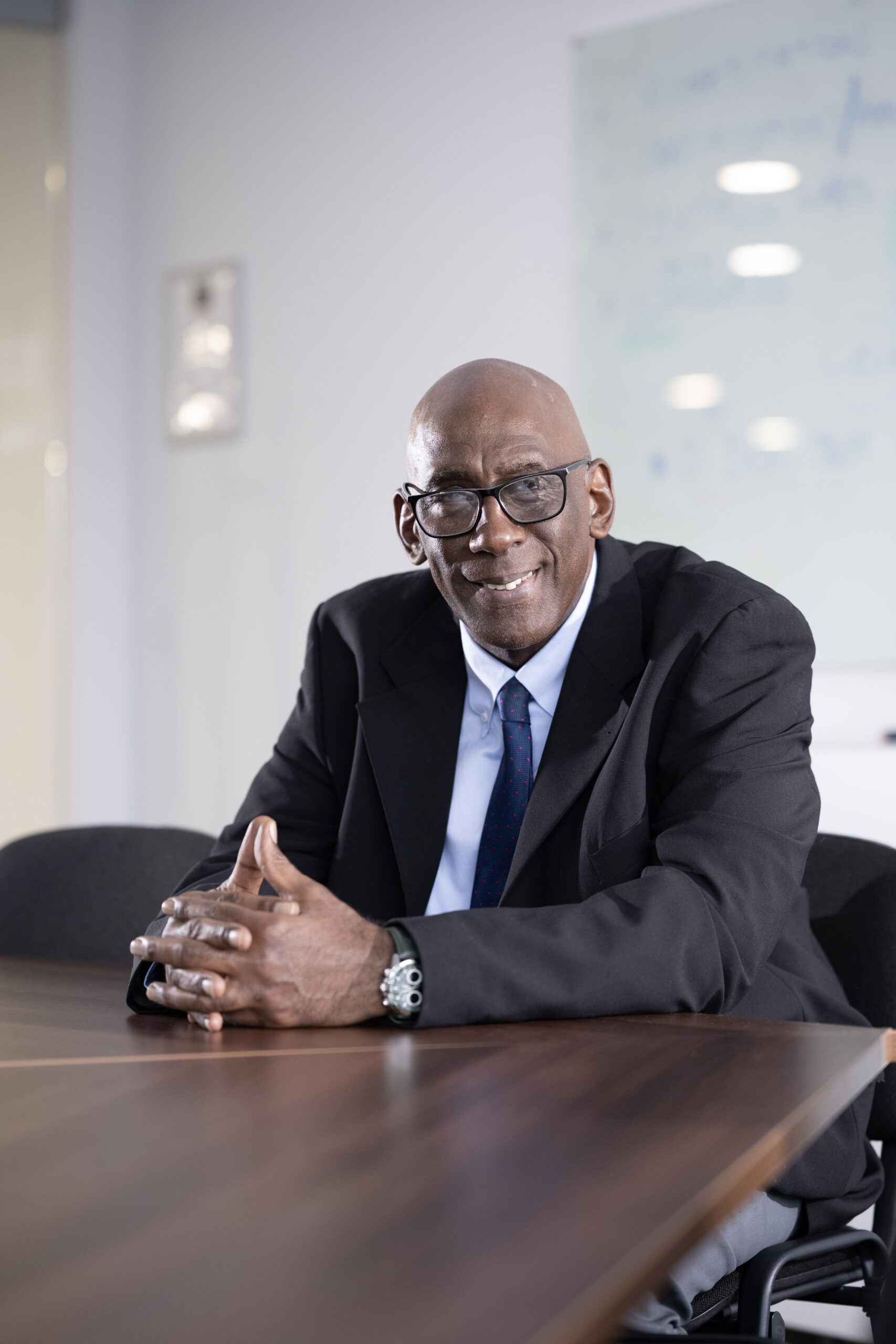
By: Dr Perry Stanislas
One encouraging thing I have noted in the current lead-up to the December election is a growing consensus among opposition candidates, civil society organizations, and many informed Gambians, who have published thoughtful articles on social media on the pressing issue of security sector reform. This is to be commended.
The issue that, in many ways, has forced my hand in wanting to address police reform, in the first instance, is the lack of appreciation among many advocates for security-sector reform of what it actually involves at the nuts-and-bolts level. There appears to be some confusion between political and technical leadership, and the different roles they play in bringing about security reform.
A recent article in Hello Gambia (13/8/26) reported that Madi Jobarteh has called for a transitional government of no more than three years, which would focus on constitutional and institutional reform, a very novel and interesting idea.
But I am afraid to say that drafting the relevant constitutional amendments and policy documents to inform the reform process could probably take most of the time Madi Jobarteh cites. Not to mention actually gaining agreement among political leaders about the proposed changes. Actually implementing change in the police, which is only one institution within the security sector, requires a much longer and different set of processes.
Extensive research on police reform shows that the police are the most difficult public institution to reform, particularly in developing countries. Any public institution can be transformed, but we need a clear understanding of what we are getting into.
It would be absurd for any individual with no experience leading large, complex construction projects to estimate the duration of a major construction project without first consulting the architect, engineers, and a host of other technical specialists involved in such work. Security sector reform is no different. Understanding the different kinds of activities involved in this process also educates decision-makers about the resources, costs, and expertise required, which is crucial for planning and implementing a police reform strategy/programme. You cannot rush into major police reform; it requires a lot of data, planning, and thinking, and, of course, money.
Just as in medicine, a patient’s basic health will affect the doctor’s diagnosis, the chosen course of treatment, and the expected recovery time. Institutions are no different. Unless we have a sound, evidence-based understanding of the workings and issues within the Gambia Police Service, nobody can say how long effective change will take, what is achievable, or by when.
The Institutional Weaknesses of Small Former Colonial Police Organizations
While we still don’t know much about the police in Gambia to inform an effective reform process, here is what we do know for a fact. Gambia police share many of the key features and problems experienced by small Caribbean and African countries. These former colonial countries historically enjoyed low crime rates and were known worldwide as peaceful, law-abiding societies. The lack of crime or major security threats at the time lulled the founders of these new independent nations into complacency, resulting in them failing to start the process of modernizing
their police organizations.
Nepotism, although disliked by most people in public service, became an accepted practice in these countries. Apart from disgruntled police officers, the public was not harmed by such practices, owing to the low crime rate and the general honesty in public administration at the time. However, the traditional ways of doing things collided with the postmodern world of crime, corruption, and the large sums of money associated with these activities.
As the Caribbean experience shows, their police organizations could not effectively respond to the new reality of postmodern crime and insecurity, which transformed those countries in very damaging ways. These countries went from having some of the lowest crime rates in the world to having the highest homicide and lowest detection rates in the world, with a damaging impact on their international reputations and tourism-based economies.
Crime also had a devastating impact on the Caribbean diaspora who injected tens of millions annually into Caribbean economies. Many returnees abandoned their brand new Caribbean homes to flee back to the UK or North America, because of the levels of crime and woeful police response. Governments who encouraged their people to return home could not protect them.
Gambia, please take note. The tourism industry and remittances from the Gambian diaspora are critical sources of foreign revenue that keep the country afloat. Crime can threaten the very survival of small countries with weak economies. Countries like Jamaica and Trinidad and Tobago have spent over a decade and large sums of money to reduce and stabilize their violent crime rates. Gambia still has a chance to avoid such deep-rooted complex problems.
Weaknesses and problems within a police organization that are hidden in a low-crime environment are exposed in a high-crime environment. Failing to develop and improve the police organization comes at an extremely high cost. It is much more expensive, financially and otherwise, than incrementally improving the police over time. Either way, the poor public always pays the price for government complacency and negligence.
So, given what we know about certain types of police organizations and systems around the world, it is not difficult to understand the changes taking place in Gambia in terms of crime and public dissatisfaction with the police’s performance and organizational behavior.
Following news stories about policing in Gambia, it is not difficult to make some educated guesses about the core institutional and cultural problems affecting the police’s operations.
Many of these institutional problems will require a slow, steady change to the police organization to create a new organizational culture that is fit for purpose. It will require Gambians who have been educated and trained to carry out this long-term project of developing and maintaining strong institutions in the security and criminal justice sectors.
To begin changing key aspects of the police organization’s functioning, some basic steps must be taken.
Priority Areas of Action: Selecting the Best Individual for the Job. It goes without saying that the police and security services require some of the best people in any country (especially at the leadership level), and that police systems and practices must produce that outcome and ensure the right people are in the right roles.
Job design review. To establish a professional benchmark and set of standards, we must know, for each rank and role within the police, what the job involves and what skills, attributes, and experience it requires.
Job design data allows us to determine whether police officers are doing the work they should be doing and can perform those tasks well. It is not uncommon to find officers performing work they should not be doing, or senior officers failing to fulfill the full responsibilities and duties associated with their rank.
Job design data helps us create written person specifications for each role, so it is clear what the job entails and who can apply and be selected. It also helps those who fail promotion or selection for a role to know exactly why they failed and what they must do to be more successful in the future. This approach is also important for job appraisal and evaluation, ensuring individuals are evaluated against role-specific criteria and reducing bias and discrimination in the process.
Introduction of a new evidence-based selection system and training of senior officers in how to use it, and their responsibilities in ensuring compliance with the new system. Teaching rank and file officers about evidence-based selection processes and how they work and their rights under such systems.
Introduce monitoring and evaluation systems to ensure compliance with the new selection process. Implement a staff grievance procedure that protects the rights of officers who feel they have been treated unfairly under the new selection process. Effective reform not only protects citizens’ rights but also protects the rights of citizens in uniform and how they are treated by their employers, in this instance, the police service. No police officer or soldier should have to flee the country to inform the public that leaders of their organizations are blatantly abusing or failing to comply with important policies. The victimization of individuals exercising their right to challenge bad practice must be treated with zero tolerance.
Public and stakeholder research. Police officer research. Effective police reform strategies require baseline data on the public’s experience and perceptions of the police, on professionals who work with the police, such as lawyers, and on how police officers themselves see their organization, the work they do, and the problems they encounter. This data gives us a fuller picture of the police organization’s problems and strengths. This data alone can take up to three years to collect and use, depending on the size of the research team, but without it no real reforms can take place.
Some examples of why police research is a fundamental element of the change process are drawn from my work in several Caribbean countries. It was police officers who informed us that a large number of police officers did not come to work while drawing police salaries. These individuals were doing other jobs in the private security sector, with the knowledge of superior officers. In one interview, an officer told me that when he reported for duty, only three officers were present in the largest division in the country (consisting of hundreds of officers), serving the nation’s capital, which had the highest crime rate.
Officers told us about large sums of money obtained during a drugs raid, which was stolen and replaced with counterfeit money by a senior officer. Despite the detective leading the drugs investigation complaining to his senior officer about the missing money, no action was taken. Women police officers informed us about the unhealthy, sexist, predatory culture within the organisation, with senior officers using their power to punish and reward women officers for sexual access. See article by A. B. Cessay about the allegation against Sub Inspector Malamg Jamada from the police training school, and his reportedly brazen conduct with junior female officers (Open Gambia 5/8/26)
These are a few examples of the type of data which police research can bring to light. We cannot seriously reform the police without access to the views of the people who do the actual work and know their organization’s workings better than anyone else.
Operational Performance Reviews. This work involves evaluating the police’s performance in high-priority areas. In small developing countries like Gambia, issues such as the police response to violent crime or their effectiveness in the area of organized and transnational crime, like drugs and weapons trafficking, are some examples.
Other areas that directly affect the quality of operational policing, which I am particularly concerned about, include the Professional Standards Department of the Gambia Police, whose work needs close examination and review, as well as the force’s disciplinary procedures and processes.
Once we have a clear view of how policing is carried out in high-priority areas, we can make appropriate support or changes if required.
Increase Resources. I read an excellent article by Madou Gaye on Sulayman Ben Suwareh’s page (21/8/26) that made a strong case for the government to make a significant investment in the police service to equip it for modern policing.
However, the author omitted a defining characteristic of small former colonial-type police organizations (and a core leadership requirement at any level): the ability to manage resources effectively and efficiently. Simply giving the police more taxpayers’ money is no solution to many of the issues affecting police performance.
One reason small developing countries are so poor is the caliber of the individuals entrusted with managing critical public resources. Take a recent example from a story I read in What’s On Gambia 4/8/26). Two police officers arrested a well-known ‘drifting’ offender, Kaba Nije. They took him to the station and charged him, only for the desk sergeant (I presume) to discharge him after receiving a call from a senior officer instructing him to do so.
Consider the two police officers’ time, the others at the station involved in the charging and booking process, and how much that cost the Gambian taxpayer. Then factor in the fact that Kaba Nije, according to the article, is a serial offender who clearly has no fear of the law, and how much police time and taxpayers’ money has been wasted on this individual. It appears the senior officer in question, and others like him, are happy to waste taxpayers’ money (never mind their disregard for the law) by granting personal favors to special individuals, with no fear of being held to account.
One of the things Madou Gaye stressed was the need for the government to significantly increase the number of vehicles available to Gambia police officers. The assumption being this would lead to a major improvement in police response. The Eastern Caribbean country of St Lucia bought a new fleet of police vehicles for the 2010 Cricket World Cup, which it hosted, at a cost of millions of US dollars. This was one of the largest single budget expenditures in the history of the St Lucian police.
After the tournament, the majority of the new vehicles disappeared from the police fleet. The police were still telling the public, in the middle of a national crime crisis, that there were insufficient police vehicles to respond to calls. What happened to the new vehicles? Police officers were using them for personal use, leaving their private cars at home and driving their wives and girlfriends around in the new vehicles, all under the watch of senior officers. It’s very hard to hide things in a small country, and it’s not difficult to stop such abuse of public money if senior police management were serious about their jobs or faced the possibility of losing them.
So, simply increasing police resources does not naturally lead to better policing outcomes, given the institutional culture of the organizations in question.
Immediate Short Term Reform Activities.
For those who hold the view that effective security sector reform is some quick fix, my observations thus far may be somewhat depressing. I intend to educate Gambians about the serious work that lies ahead.
There are some important actions that a new government can take immediately to lay the groundwork and structures for a new approach to democratic and accountable policing in Gambia.
The mandatory publishing of an annual written Inspector General’s police report, covering the key areas of: the size and strength of the police establishment, numbers and distribution of police personnel, extraction rates, sickness rates, time off work not related to sickness, etc, budget and expenditure, crime rates, and police performance, emerging issues and trends, etc. The police report must be distributed to the independent police authority for its consideration and comments, and published online shortly after.
Establish a mandatory independent police authority: a non-partisan body consisting of senior elected representatives from both major and smaller political parties, the Bar Association, and key civil society and community organizations.
The public must be allowed to attend police authority meetings and participate within a clearly defined process. The police authority is responsible for police policy, performance, and related issues of public concern. The police authority must have the legal powers to obtain information relevant to its role and effective functioning, and to instruct police leaders to attend meetings to respond to matters of public concern. Constitutional mechanisms can prevent the government from disregarding the views of the police authority.
Police reform in organisations in developing countries with limited ongoing development requires considerable effort. More importantly, despite the technical challenges, reform requires maturity and consensus across political party lines, along with a clear understanding and a long-term commitment to improve the Gambian police organization significantly.
This consensus must be rooted in the belief that the police are a key pillar of the national security infrastructure and the State and, alongside the courts, the backbone of the criminal justice system in any strong, healthy democratic nation.
About the author: Dr Perry Stanislas specializes in policing and security in Caribbean and African countries. He has over 40 years’ experience in his field, starting his career as a security and intelligence officer for a major pan-African political organization, before going on to become the policy and strategic advisor at Bedfordshire Police (UK), where he spent 13 years leading the largest organizational change programme in the organisation’s history. He has worked in the Netherlands and several African, Caribbean, and Latin American countries, and was an Associate Professor in policing and security in Abu Dhabi, where he was Program Director for Rabdan Academy’s policing and security leadership programs.
Perry is the territory lead for Africa for the Forensic Certificate in the Public Accountants Society, where he teaches and consults on financial crime, procurement fraud, corruption and related matters. He is an External Examiner for Nottingham Trent University’s MSc in International Crime and Law Enforcement. Dr Stanislas resides in The Gambia and is a founding member of the Center for Democracy and Conflict Studies, which is registered there.