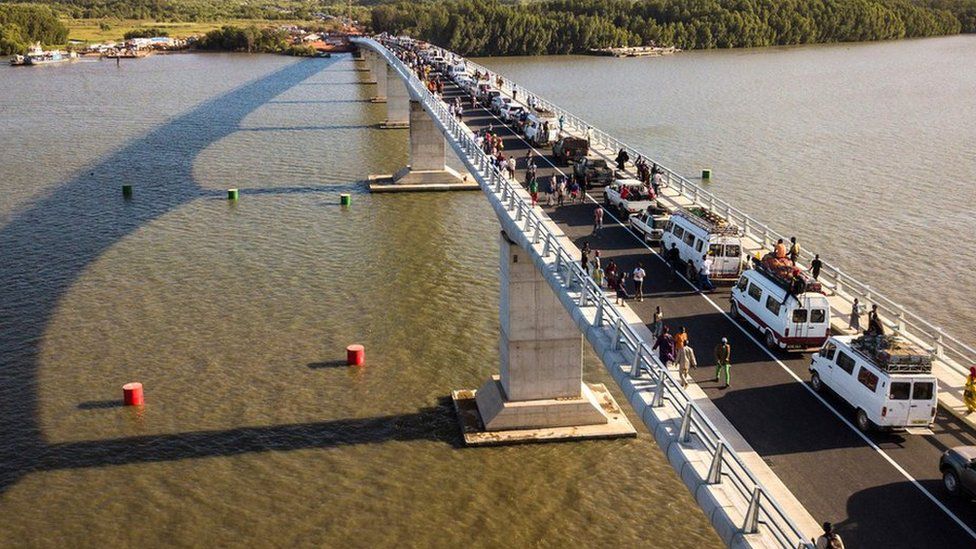
Opposition leader and economist Dr. Ousman Gajigo has renewed his attack on the Barrow government’s Senegambia Bridge concession, describing the Africa50 “asset recycling” agreement as a massive financial and strategic loss that undervalued a vital national asset and locked The Gambia into damaging restrictions for a quarter-century.
Two years after the deal was signed, Gajigo said the arrangement was sold as an opportunity when it was, in reality, a costly blunder. Under the terms, Africa50 pays at most $100 million upfront for a 25-year concession. Infrastructure works around the bridge are deducted from that sum so that the government will receive far less. All toll revenues go to Africa50, which is also tax-exempt. The government is barred from building another bridge within a 50-kilometer radius—roughly between Kerewan and Kuntaur—or operating competing ferry services for 25 years.
Gajigo argued the deal does not meet the definition of asset recycling. That concept involves monetizing an existing asset to finance new infrastructure. Instead, the relatively small proceeds went into the general budget and were spent on recurrent expenditure.
The most serious flaw, he said, was undervaluation. Historic and projected traffic suggest the bridge is worth around $500 million. The lump-sum payment therefore underpriced the asset by about $400 million. That figure exceeds the value of all the roads the Barrow government has built—most of them with borrowed money. With even half that lost amount, Gajigo claimed, The Gambia could have constructed enough power plants to end chronic outages and export electricity to Senegal and Guinea-Conakry.
He singled out Finance Minister Seedy Keita for “gross incompetence,” saying the minister repeatedly confused the bridge’s original construction cost of about $100 million with its present economic value. Gajigo also accused the government of concealing a key restriction until he publicized it: the ban on competing crossings designed to protect Africa50’s profits.
Negotiations were conducted in secret without independent legal or transaction advisers, even though development partners could have supplied such expertise at no cost. Gajigo said he had previously helped the government secure similar support that generated more than a billion dalasi. Keita, he charged, lacked the experience to lead such talks.
“In short, the Africa50 deal was economically unfavorable, procedurally opaque, improperly branded, and a demonstration of profound incompetence,” Gajigo wrote. “It was a betrayal of trust and a failure of duty. It cost The Gambia both revenue and long-term strategic flexibility over a vital piece of national infrastructure.”
For this single blunder, he added, President Adama Barrow should be removed from office.