Human rights advocate Madi Jobarteh has publicly called a all Gambian citizens to demand that President Adama Barrow immediately publish the full report of the Local Government Commission of Inquiry, along with the government’s White Paper and a costed implementation plan.
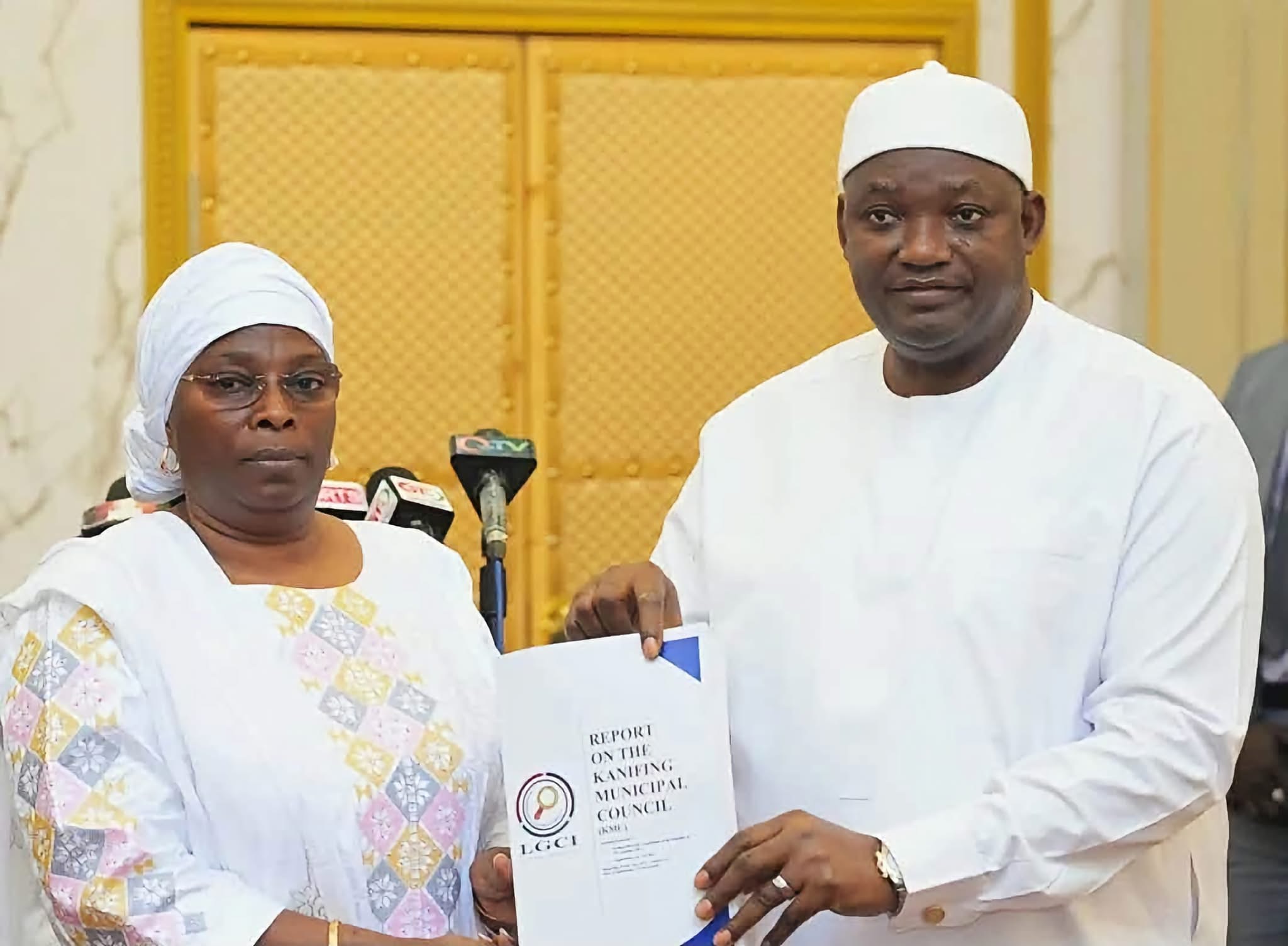
In a statement released this week, Jobarteh described the demand as a civic duty grounded in the Constitution’s requirements of transparency, accountability, and the rule of law. He noted that the commission submitted its final report to the president in May 2026. Local Government Minister Hamat Bah later told National Assembly Members that the commission would release both the report and the White Paper by August. That deadline has now passed by about two months, with no publication.
Jobarteh characterized the continued silence as “an active affront to the people of The Gambia.” Instead of the promised public documents, he said, certain mayors and chairpersons have received letters concerning the commission’s findings. He argued that this development “smacks of weaponization and selective justice,” reinforcing concerns that the inquiry, established in 2023, was “never a genuine fact-finding mission but a targeted attempt to malign and punish specific local government leaders, most notably Mayor Talib Bensouda and others.”
The advocate highlighted the inquiry’s cost. A budget of D50 million was approved, yet the commission ultimately spent more than D150 million in public funds over three years of hearings. Despite the expenditure, he said, “nothing meaningful has been presented to the public.”
Jobarteh acknowledged that the hearings themselves revealed serious irregularities, institutional weaknesses, systemic corruption, and abuses of power. He maintained that these findings presented an opportunity for reform that a government committed to good governance would have acted on promptly.
He placed the current delay in historical context, arguing that The Gambia’s local government system has long suffered from legal constraints and political interference. He noted that Section 193 of the Constitution envisages autonomous councils rooted in grassroots democracy. In practice, the 2002 Local Government Act and subsequent amendments imposed central control, while both the previous administration of Yahya Jammeh and the Barrow government have restricted council revenue and mandates.
Jobarteh specifically alleged that since 2017 the Barrow administration has targeted opposition-held councils, particularly the Kanifing Municipal Council and Brikama Area Council.
He further contended that the commission itself was established “purposely to target and discredit Talib Bensouda in particular and the opposition mayors and chairpersons in general.” He said the recent issuance of letters, without publishing the full report and White Paper, confirms those intentions.
Jobarteh insisted that publication is a constitutional obligation under Section 203, which requires such reports to be made public. He said failure to do so constitutes “a direct violation of our supreme law.” He also pointed to what he described as a double standard: other inquiries—including the Janneh Commission, the Russian oil inquiry, the GTBoard petition, and the Jammeh assets parliamentary committee—produced adverse findings against ministers and directors, including Hamat Bah, Abdoulie Jobe, and Abdoulie Sanyang.
Yet, he said, the president has ignored or reversed many of those recommendations, even reinstating officials previously recommended for bans from public office.
“What justification is there to target certain local government leaders such as Mayor Talib Bensouda and Mayor Rohey Malick Lowe because of an inquiry whose report is not published?” Jobarteh asked. He called the approach “disingenuous, selective, autocratic,” and evidence that the commission was created for political purposes rather than accountability.
Until the report and White Paper appear, he urged affected mayors to ignore the letters, arguing that such communications are illegal under Sections 200 and 203 of the Constitution. He accused President Barrow, Minister Bah, and Justice Minister Dawda Jallow of demonstrating “total disdain for our Constitution, democratic processes, and good governance principles.”
Jobarteh concluded that the continued suppression of the documents is “a stain on the Barrow administration and a betrayal of the trust placed in it by the citizens.” He reiterated the core demand: “Publish the commission report and the White Paper now.” Until then, he said, government claims of fighting corruption and promoting good governance “will remain hollow and unbelievable.”