By: Alieu Ceesay
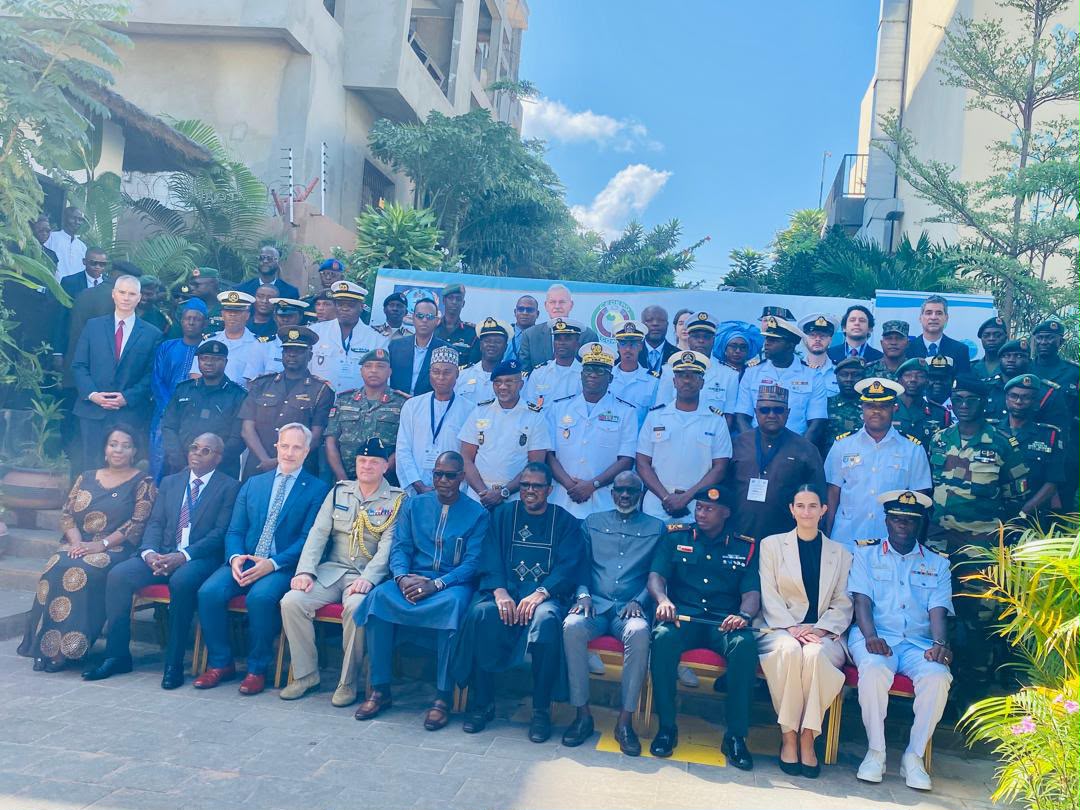
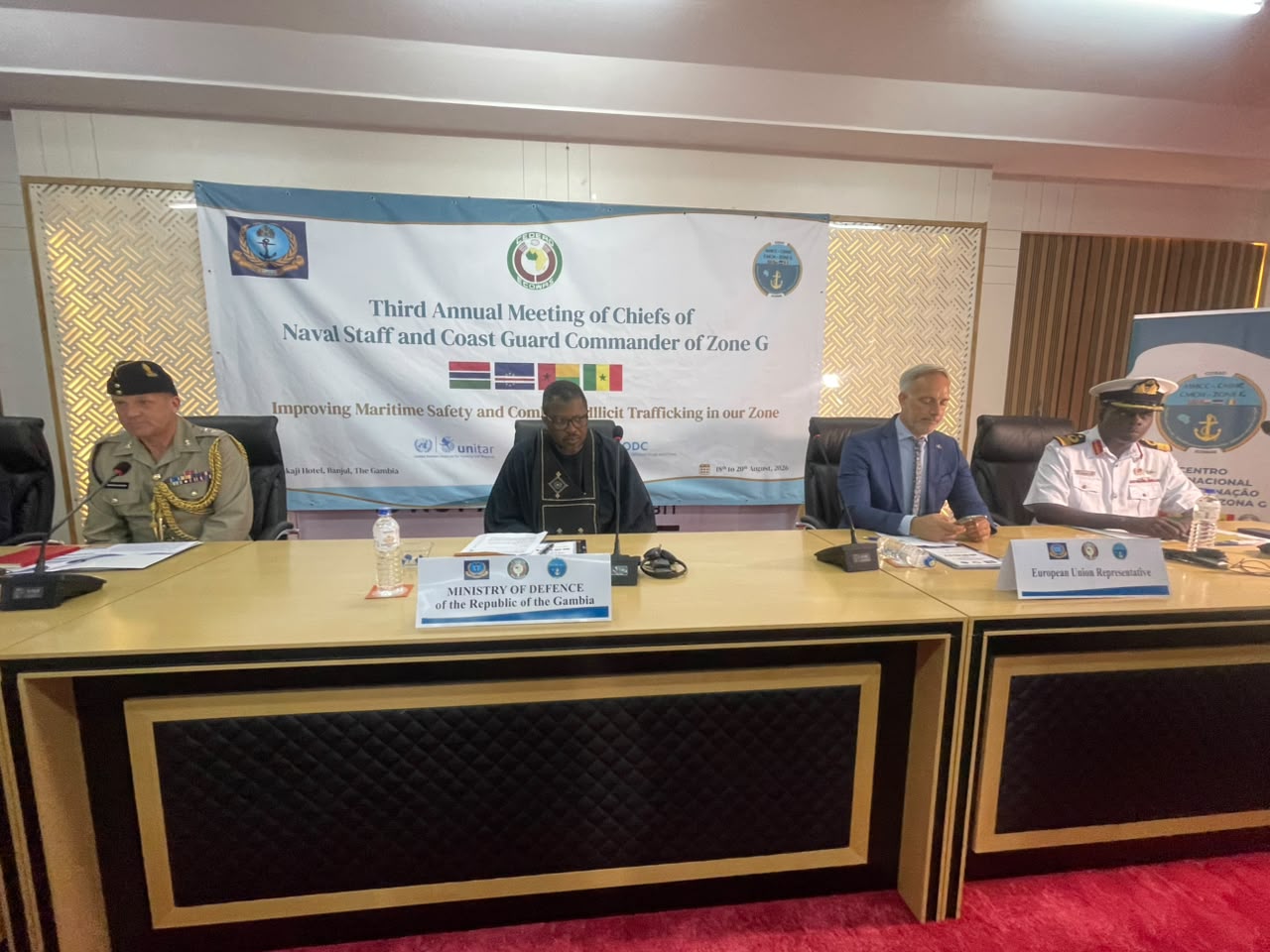
Commanders from The Gambia, Senegal, Guinea-Bissau and Cape Verde have gathered in Banjul for the third annual conference of Heads of Naval Staff and Coast Guard Commanders to tackle shared maritime security challenges across the region.
The meeting provides a platform for frank discussions, the exchange of experiences and the development of practical measures to protect the continent’s maritime spaces. Participants reaffirmed their collective commitment to keeping the shared waters safe, secure and supportive of sustainable economic development.
Commodore Sambou Barrow, Chief of Naval Staff of the Gambia Navy, underscored the importance of the gathering. “This year’s theme is both timely and significant. Our maritime domain is fundamental to the economic and social well-being of our nations,” he said.
The waters provide access to international markets, support fisheries and other economic activities, facilitate the movement of people and goods, and sustain millions of livelihoods. Yet the same environment remains vulnerable to drug trafficking, human trafficking, irregular migration, maritime pollution, armed robbery at sea and other forms of transnational organized crime that undermine effective governance and security.
Lieutenant-Colonel Andrew Carroll, the United Kingdom’s Defense Attaché, encouraged participants to engage fully. “This is the Zone G Members’ Conference, and it is only successful if you, the members, can achieve the objectives you want, ultimately aiming to reinforce maritime security across the region which is in everyone’s interest,” he stated.
Dr Simene Koff, representing the Economic Community of West African States (ECOWAS), highlighted the scale of the drug threat.
He noted that around 30 percent of the cocaine sold and consumed in Europe now travels through West African routes, including those of the Zone G countries.
Mr Raphael Brigandi of the European Union outlined ongoing support for the region. He explained that the EU is contributing to maritime security in the Gulf of Guinea through the Safe Seas for Africa program, with a budget of 20 million euros for 2024 to 2027. “With this program, our aim is to reinforce and support regional ownership by assisting all the relevant regional organizations in implementing their mandates, strengthening coordination, and enhancing long-term sustainability of the Yaoundé architecture,” he said.
The framework that enables countries to cooperate, share information, and respond jointly to common challenges remains strategically important and a shared priority.
Gambia’s Defense Minister Babucarr Joof stressed that regional maritime security cannot rest on the strength of individual navies alone. “It must be founded upon shared situational awareness, timely intelligence, interoperable capabilities, coordinated operations, effective legal frameworks and sustained political commitment,” he declared. Joof called for a progressive shift from largely national responses toward a more integrated regional architecture in which information is shared, capabilities complement one another, and threats are addressed as close as possible to their point of origin.
He added that the ambition must go beyond reacting to threats. “We must develop the capacity to anticipate them, prevent them and, where necessary, decisively contain them. This requires us to look beyond platforms and equipment. Naval power is not measured only by the number of vessels a country possesses. It is ultimately measured by the ability of a state to generate awareness, make sound decisions, deploy appropriate capabilities, sustain operations and achieve strategic outcomes.”
Joof reminded West African naval forces of the need to remain professional, technologically relevant, operationally interoperable and strategically oriented. They must stay responsive to the security needs of their people while remaining faithful to the principles of national sovereignty, regional solidarity, international law and responsible statecraft.
The conference continues as participants work to translate these shared commitments into concrete cooperation across Zone G waters.