By: Alieu Ceesay
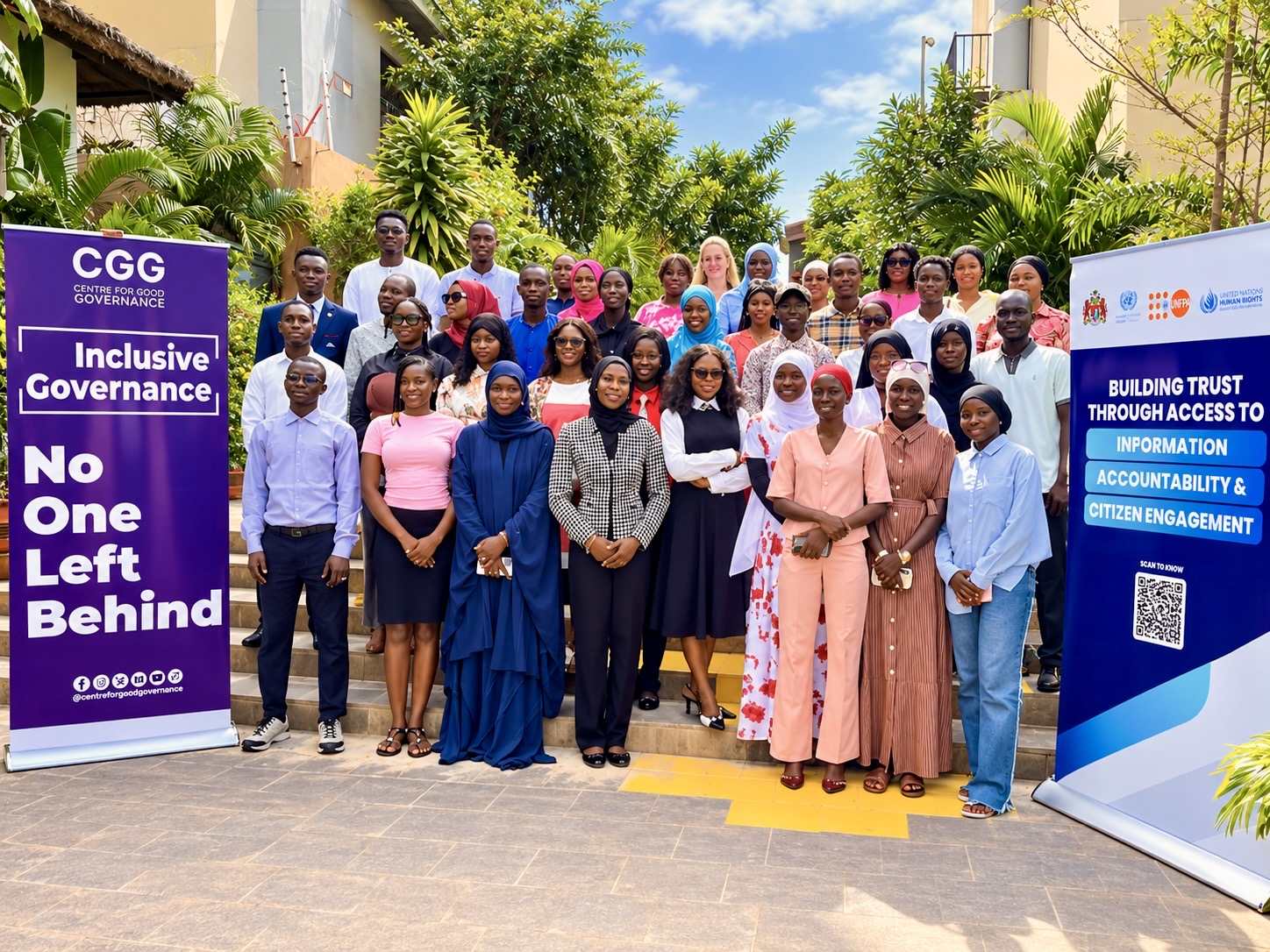
The Center for Good Governance (CGG) has launched a two-day training on The Gambia’s Access to Information Act, 2021, for students from the Media Academy for Journalism and Communication (MAJaC), the University of The Gambia (UTG), and Supdeco. The program aims to advance transparency, accountability, and good governance by equipping young people with practical knowledge of the law.
Over the two days, participants will move beyond theory. Sessions will cover how to identify the correct public institution, prepare effective information requests, and pursue the formal steps available when information is withheld. Organizers say the training is intended to give students tools they can apply immediately in academic work, civic engagement, and future professional roles.
Yahya Sowe, Coordinator of the Center for Good Governance, told participants that access to information is more than a legal right; it is a research tool. “Imagine conducting research on a government policy and accessing the actual official records rather than relying on assumptions,” he said. “Imagine investigating how public funds are used or obtaining credible information to support your academic work. That is the power of access to information. It strengthens research, promotes informed public debate and gives citizens the evidence they need to hold public institutions accountable.”
Commissioner Emil Touray of the Access to Information Commission described access to information as a fundamental right essential to a democratic society. “We cannot consolidate our country’s democratisation process if we do not have a basic understanding of the concept of rights,” he said, noting that this position is consistent with the UN Human Rights Committee.
He stressed that freedom of expression and access to information are essential pillars of that right, adding that the Act must empower citizens to hold public institutions to account.
Awa Jaiteh, Students’ President at MAJaC, said young people require reliable information to understand their rights, engage decision-makers, challenge misinformation and contribute constructively to national development. “We also recognize that with this right comes responsibility,” she said. “We must use information responsibly, verify what we receive, respect the rights of others, and ensure that our voices contribute to peace, tolerance and constructive dialogue.” She reaffirmed student leaders’ commitment to promoting transparency, accountability, responsible citizenship, and meaningful youth participation.
The training brings together student leaders and young people from different institutions to learn together, share experiences, and help build a stronger culture of civic participation. The United Nations Development Program (UNDP) The Gambia, UNFPA The Gambia, and the United Nations Peacebuilding Fund support it.