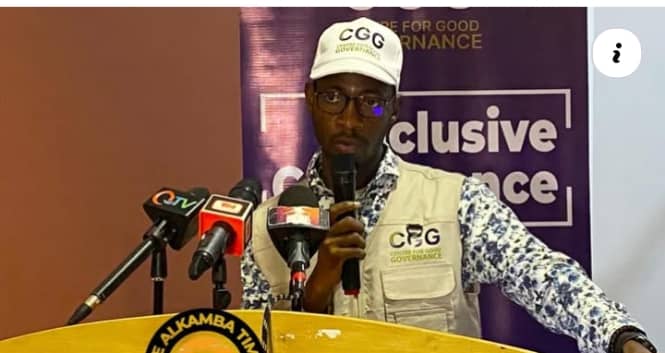
As Africa commemorates African Anti-Corruption Day 2026 under the theme, “African Resources for African People: Fighting Corruption for Sustainable Development,” the Centre for Good Governance (CGG) calls on all Gambians to reflect on a fundamental truth: sustainable development cannot be achieved where corruption is tolerated, and democratic progress cannot be measured solely by electoral outcomes.
Corruption remains one of the greatest obstacles to development across Africa. It diverts public resources away from essential services, weakens institutions, undermines public trust, discourages investment, and denies citizens equal opportunities. Every act of corruption has real consequences, it is the classroom that is never built, the medicine that never reaches a health facility, the road left unfinished, the qualified young person denied employment because merit gives way to favouritism, and the public funds that fail to improve the lives of ordinary Gambians.
As The Gambia prepares for the 2026 Presidential Election, our national conversation must go beyond who becomes President. Elections are a cornerstone of democracy, but changing a President without changing the systems that enable corruption will not deliver the accountable governance that Gambians deserve.
The fight against corruption is not the responsibility of one individual or one institution alone. It requires strong and independent public institutions, transparent procurement systems, effective parliamentary oversight, an independent judiciary, responsible public officials, an active media, vibrant civil society, and informed citizens who demand accountability at every level of government.
The Centre for Good Governance therefore calls on all presidential candidates and political parties to clearly state how they intend to:
- Strengthen transparency and accountability in public financial management;
- Ensure merit-based appointments and protect public institutions from political interference;
- Improve transparency in public procurement and government contracting;
- Strengthen oversight institutions and ensure that audit findings are acted upon;
- Protect whistleblowers and encourage the reporting of corruption; and
- Uphold the rule of law by ensuring that corruption cases are investigated and prosecuted fairly, impartially, and without political influence.
We also call upon citizens, civil society organisations, the media, religious leaders, traditional leaders, and the private sector to play their part in promoting integrity and rejecting corruption in all its forms. Democracy does not end on election day. Holding leaders accountable must continue long after the ballots have been counted.
This year’s African Anti-Corruption Day reminds us that Africa’s resources belong to its people and must be managed with transparency, integrity, and accountability. Public office is a public trust, and every dalasi lost to corruption is a lost opportunity for national development.
The greatest challenge facing The Gambia is not simply changing a President; it is changing the culture of corruption and impunity that has hindered our national progress for far too long. Real change will come when our institutions are stronger than individuals, when public resources are managed in the public interest, and when integrity becomes the foundation of governance.
Our vote chooses leaders. Our integrity builds the nation.
Signed
Alasan Sowe
Executive Director
Centre for Good Governance (CGG)