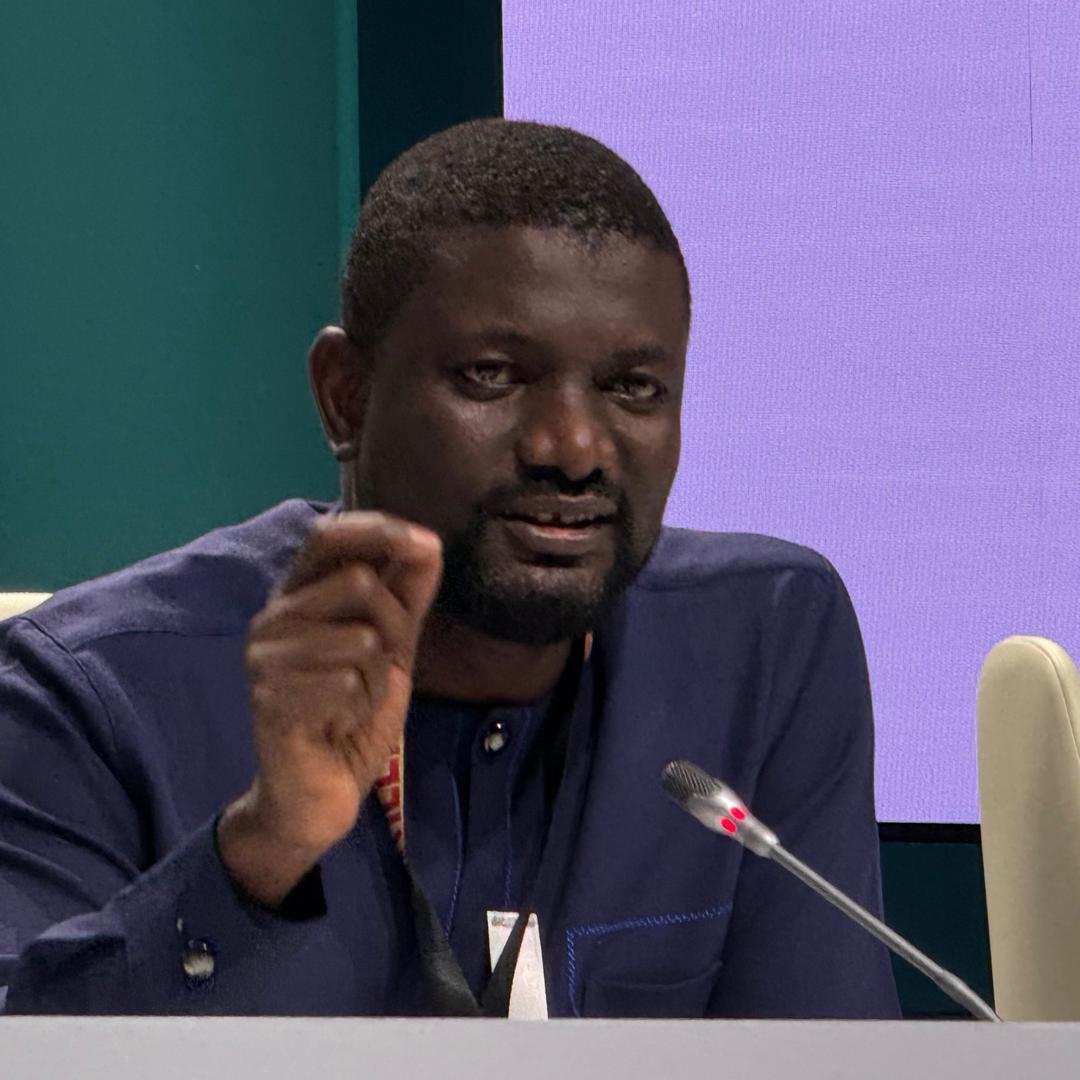
Muhammed Lamin Saidykhan, Gambian-born Head of Movement Building, National and Regional Coordination, Campaigns and Members Engagement at Climate Action Network (CAN) International – representing civil society in over 150 countries – has described COP30 in Belém do Pará, Brazil, as a conference of stark contrasts.
In a strongly worded reflection released today, Saidykhan hailed the adoption of the “Belém Action Mechanism” (BAM) – the new Just Transition work programme – as “one of the strongest rights-based outcomes in the history of UN climate negotiations.”
“The BAM opens promising discussions on support for Just Transition pathways, including clear references to additional, grant-based finance and the removal of barriers that block workers and communities from a fair shift,” he said. Activists inside the conference halls repeatedly chanted “BAM! BAM!” in celebration of the breakthrough.
Yet Saidykhan was scathing about the summit’s broader failures, declaring that COP30 “leaves little hope for impacted communities in the Global South.”
“Rich countries once again refused to put new money on the table for adaptation, loss and damage, or the just transition itself,” he said. “There is no new pledge to compensate for the destruction they continue to cause. This is not charity we are asking for – it is about rebuilding dignity, rights and justice that polluting nations and corporations have shattered.”
The conference also failed to deliver a concrete global plan to close the gaping emissions ambition gap or a clear roadmap for a just, equitable and orderly phase-out of fossil fuels. Saidykhan stressed that any transition “must be funded, and the Global North – which bears historical responsibility – must lead and pay first.”
“We go home with almost nothing on adaptation finance, loss and damage funding, mitigation ambition, or a funded fossil fuel phase-out,” he concluded. “The overall outcome has been severely weakened, and frontline communities will bear the cost.”