By: Kebba Ansu Manneh
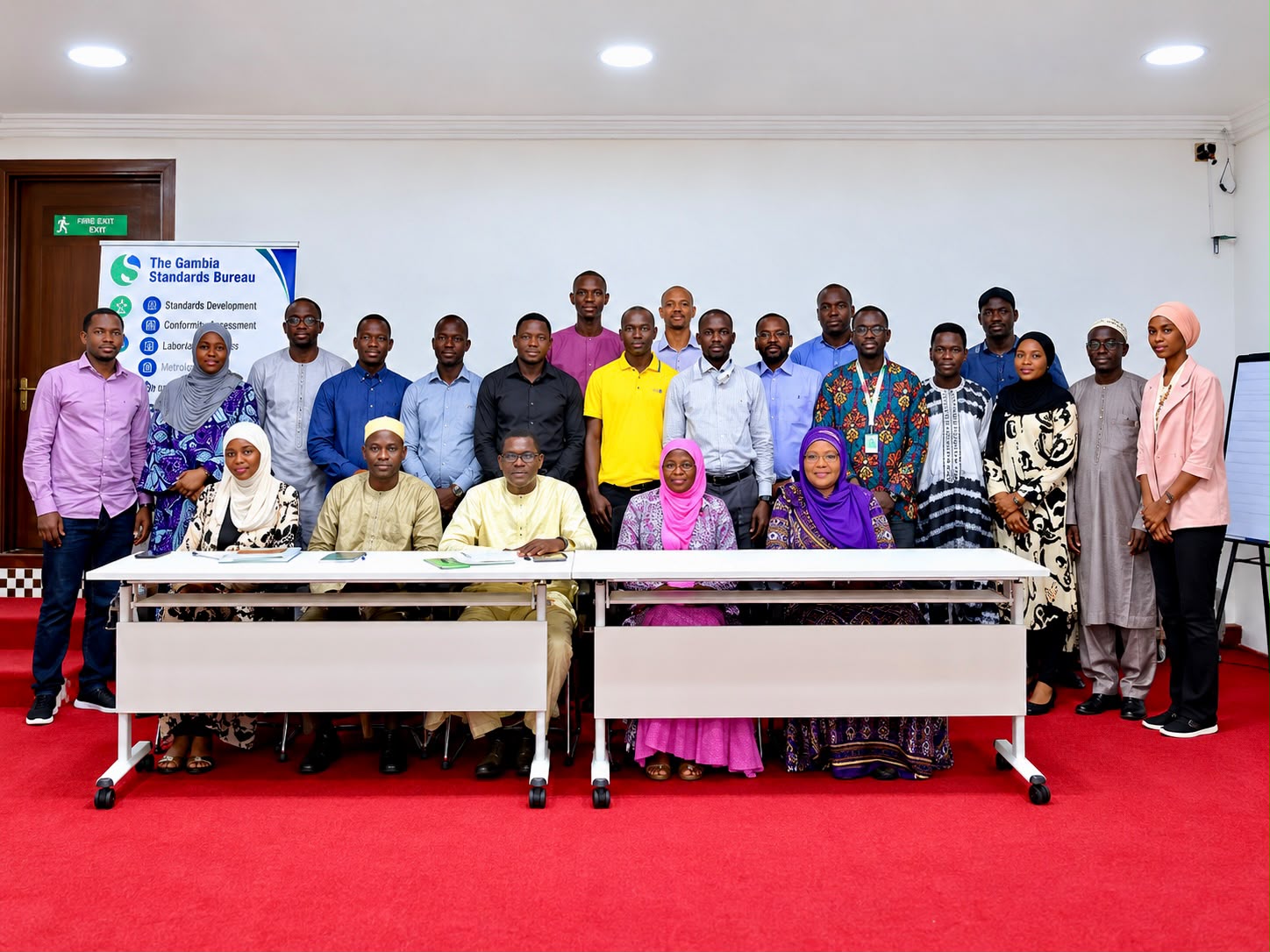
The Gambia Standards Bureau on Wednesday inaugurated a set of national standards covering maize, horticulture, cashew, poultry, and their related value chains, aimed a strengthening the country’s agricultural quality and safety systems and expanding access to regional and international markets.
The initiative forms part of subcomponent 1.3 of the Gambia Inclusive and Resilient Agricultural Value Chain Development Project (GIRAV), which seeks to strengthen quality, sanitary and phytosanitary control systems. The World Bank funds the project, and the Ministry of Agriculture implements it. Its broader goal is to establish a coherent food-safety and quality-control framework that will enhance the competitiveness of Gambian agricultural products in export markets while protecting domestic consumers from food-safety risks.
Speaking at the inauguration, the Chairperson of the Technical Committee, Dr. Faye Manneh, described the new standards and the formal establishment of the poultry and processed-food subcommittees under the Food and Agriculture Committee as a significant step forward. He acknowledged the Standards Bureau, the Agriculture Committee, and the wide range of stakeholders whose commitment made the process possible.
“Their presence demonstrates a collective determination to strengthen agricultural development, improve quality and food safety, and promote the production of high-quality products in The Gambia,” Dr. Manneh said. He noted that agriculture remains a vital pillar of the national economy, supporting employment, livelihoods and food security. The newly formed subcommittees, he added, will provide a structured platform for technical experts, producers, processors, regulators, researchers, consumers, and other stakeholders to develop, review, and recommend standards that meet the sector’s practical needs.
Dr. Manneh emphasized that maximizing agriculture’s benefits requires equal attention to quality, safety, processing, preservation, and standardization. He said creating the poultry and processed-food subcommittee is a timely, strategic step toward achieving these objectives.
Deputy Permanent Secretary at the Ministry of Agriculture, Fatou Janneh Touray, underscored the dual importance of the standards for public health and farmer incomes. “They have to access markets. Markets are accessed not based on prices, but on science-based standards. These facts are globally recognized,” she stated. She affirmed that the Ministry views the standards for horticulture, maize and poultry as instruments that will add value across the entire chain—from production and processing to storage, marketing and consumption.
Touray further noted that the standards should help reopen and expand markets beyond The Gambia’s borders. She recalled that the country previously lost access to European Union markets because of phytosanitary-related problems, and argued that standardization must begin at the seed stage to reverse those losses. “It is high time for us to definitely standardize, and not only the products, but standardize right from the seeds to achieve the objective,” she said.
Officials described the development of the standards as an important milestone in efforts to improve agricultural product quality, strengthen food-safety systems, ensure compliance with established requirements, and support sustainable growth across the country’s agricultural value chains. By aligning Gambian production more closely with internationally recognized norms, the initiative is expected to reduce rejection rates at borders, increase farmer confidence, and contribute to longer-term food security and export earnings.