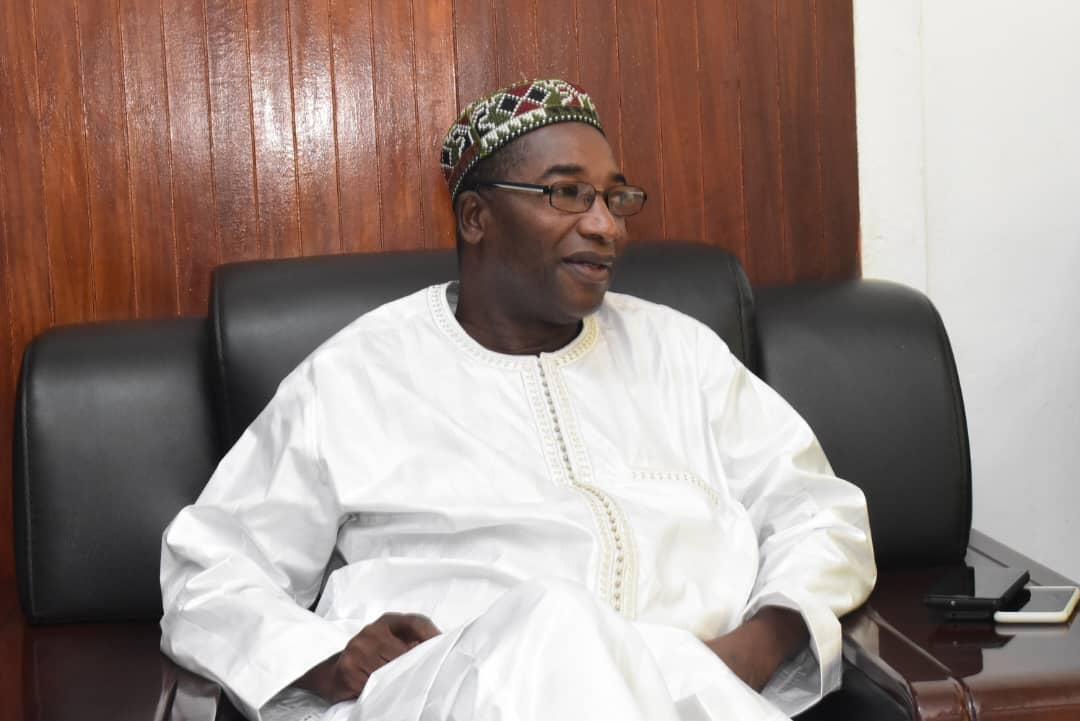
Lamin Camara, a distinguished Gambian public servant and Deputy Head of Mission at the Gambian Embassy in Bissau has been forced into compulsory retirement by the Public Service Commission (PSC). He brands the move a witch hunt masterminded by Ambassador Amie Fabureh. The decision, detailed in a May 1, 2025, letter from the Ministry of Foreign Affairs, has ignited controversy, with Camara alleging a concerted effort to end his 35-year career due to his principled stance and transformative work.
The letter, signed by Kemo Jawara on behalf of the Permanent Secretary, cited an investigation into allegations involving Fabureh and embassy staff. It accused Camara of poor leadership and a demeaning attitude toward colleagues, claiming his actions undermined the “organizational health” of the diplomatic mission.
Camara, however, dismisses these charges as “bogus” and a deliberate attempt to tarnish his legacy. “This is all geared toward ending my career because of my honesty,” he told Alkamba Times.
Significant achievements marked Camara’s tenure in Bissau. He spearheaded renovations to elevate the chancery to international standards, collaborating with the Bissau government to furnish it. He digitized the embassy’s payment system, ensuring transparent financial transactions, and secured a minimum salary increase of D3,000 for local staff—a historic first. Beyond infrastructure, Camara prioritized the welfare of Gambians, repatriating deceased citizens and aiding those in distress. “I served to the best of my ability, considering their welfare a priority,” he said.
Camara claims the investigation that led to his retirement was a farce. Six PSC commissioners visited Bissau for a weekend, interviewing only Fabureh, her allies, and two of the embassy’s 15 local staff.
“They collected taxpayers’ money as per diem just to spend a weekend and return,” he said, questioning the inquiry’s credibility. Camara pointed to a letter allegedly written by Fabureh to the Secretary-General, which he claims revealed her motives: “As you knew, he is on the other side of the aisle and does not deserve to work for the government.” This, he argues, reveals a personal vendetta aimed at ousting him due to political differences.
Born in Buniadu and raised in Essau, Camara’s career is a testament to dedication. A standout student, he won prizes in geography and health science at Nusrat High School and was the top A-level economics student at Gambia High School in 1990. With degrees from Gambia College, Saint Mary’s University, and a master’s in Economic Policy Management from the University of Ghana, he taught at the University of The Gambia, served at the NGO Affairs Agency, and rose to Permanent Secretary at the Ministry of Finance in 2016. There, he played a pivotal role in stabilizing Gambia’s economy, notably refusing cash allocations under pressure in 2016. “We were doing a jihad,” he recalled, a decision that forced him to flee to Dakar for safety after being pursued.
In a reflective yet defiant response, Camara likened his detractors to flawed econometric models— “insignificant” and “Pareto inefficient.” He expressed no resentment toward President Adama Barrow, whom he believes is unaware of the “scam.” “I have no hatred for him,” he said, urging the president to safeguard his legacy from such schemes. Camara remains unbroken, declaring, “If there is life and good health, this is not the end of my journey.” He acknowledged human error, seeking forgiveness for his missteps, but vowed to remain a loyal citizen and support The Gambia’s progress.
The controversy raises serious questions about the PSC’s process and fairness. The selective nature of the investigation, coupled with Fabureh’s alleged letter, suggests internal rivalries may have driven the decision.
As Camara bids farewell “with distinction,” his ousting leaves a bitter aftertaste, prompting debate over whether this was a justified retirement or a calculated move to silence a dedicated servant. His story highlights the fragility of public service in the face of personal agendas, leaving Gambians to ponder the true cost of such decisions.