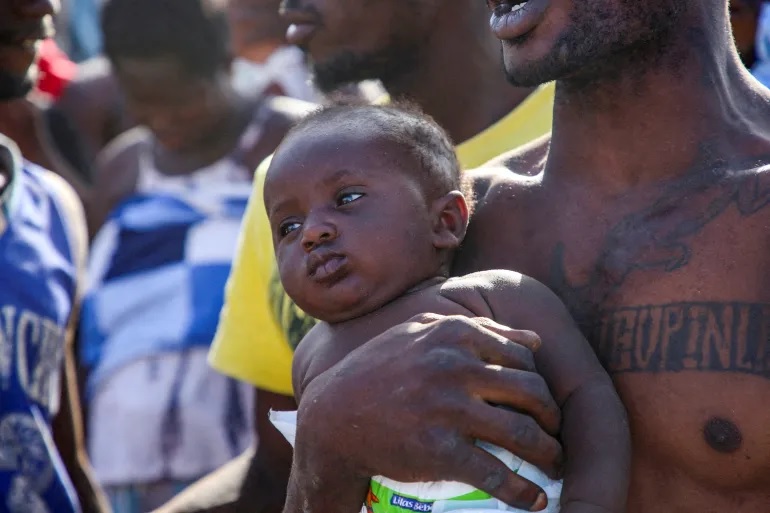
Nigerian embassy official in Tripoli says they are happy to be returning to their home country.
Libya has returned 161 Nigerians to their country as part of a United Nations-backed voluntary repatriation scheme amid a spike in irregular migration in North Africa.
Reports indicate that the group, about half of whom were women and also included six children, was assisted at an airport in Tripoli by the United Nations’ International Organization for Migration (IOM) and arrived in Lagos on Monday night.
KEEP READING
list of 4 items
Five dead as boat carrying refugees sinks off Tunisia
Niger coup leader agrees to hold direct talks with ECOWAS: Nigerian scholar
What does Libya’s political future hold?
Syria to Libya, then Europe: How people smugglers operate
end of list
Libyan and Nigerian representatives met the people before their departure, which is one of about a dozen transports taking place this year.
Imed Trabelsi, the interior minister of the UN-recognised government based in war-torn Libya’s west, was quoted as telling reporters that “we cannot bear the burden of clandestine migration alone”.
The Nigerians who were repatriated were taken out of prisons across Libya, with the minister saying 102 were intercepted at the border crossing between Libya and Tunisia – where many are headed in the hope that they can reach Europe.
The North African neighbours on August 10 agreed to share responsibility for providing shelter for hundreds of people stranded at their border, potentially signalling an end to a crisis triggered by mass expulsions of refugees by Tunis.
Many refugees had been driven to the desert border by Tunisia last month and abandoned without food, water or shelter after violence erupted in the port city of Sfax and left one Tunisian dead.
Refugees in Tunisia said they were subjected to racist attacks, especially with Tunisian President Kais Saied targeting them in a speech in February in which he said they bring with them “violence, crime, and unacceptable practices”.
Libyan authorities said earlier this month that at least 27 people from sub-Saharan Africa have been found dead after being abandoned in the desert in temperatures over 40 degrees Celcius (104 degrees Fahrenheit).
Tunisia is also being pressured to stop refugees departing from Sfax to Europe as the European Union offers the economically suffering country a prospective 1-billion-euro ($1.1bn) aid package with major allocations for “migration control”.