Dr. Alieu SK Manjang
As The Gambia marked the 77th anniversary of the invention of the N’Ko writing system, created by Solomana Kanté, the celebration stood out not only for its historical significance, but for the energy and diversity of those who participated. Advocates, professionals, and citizens from various backgrounds gathered in a moment that many described as long overdue. Yet for those who could not attend, one question continues to surface: what is the real importance of N’Ko in the Gambian context?
At its core, N’Ko challenges a deeply rooted assumption, that meaningful education must come through foreign languages. Around the world, countries that prioritize native-language instruction often produce students capable of innovation at a young age. When people see children in countries like China building robots or designing complex systems, it is often perceived as extraordinary. What is less acknowledged is the role of language: these children learn, think, and create in languages they fully understand.
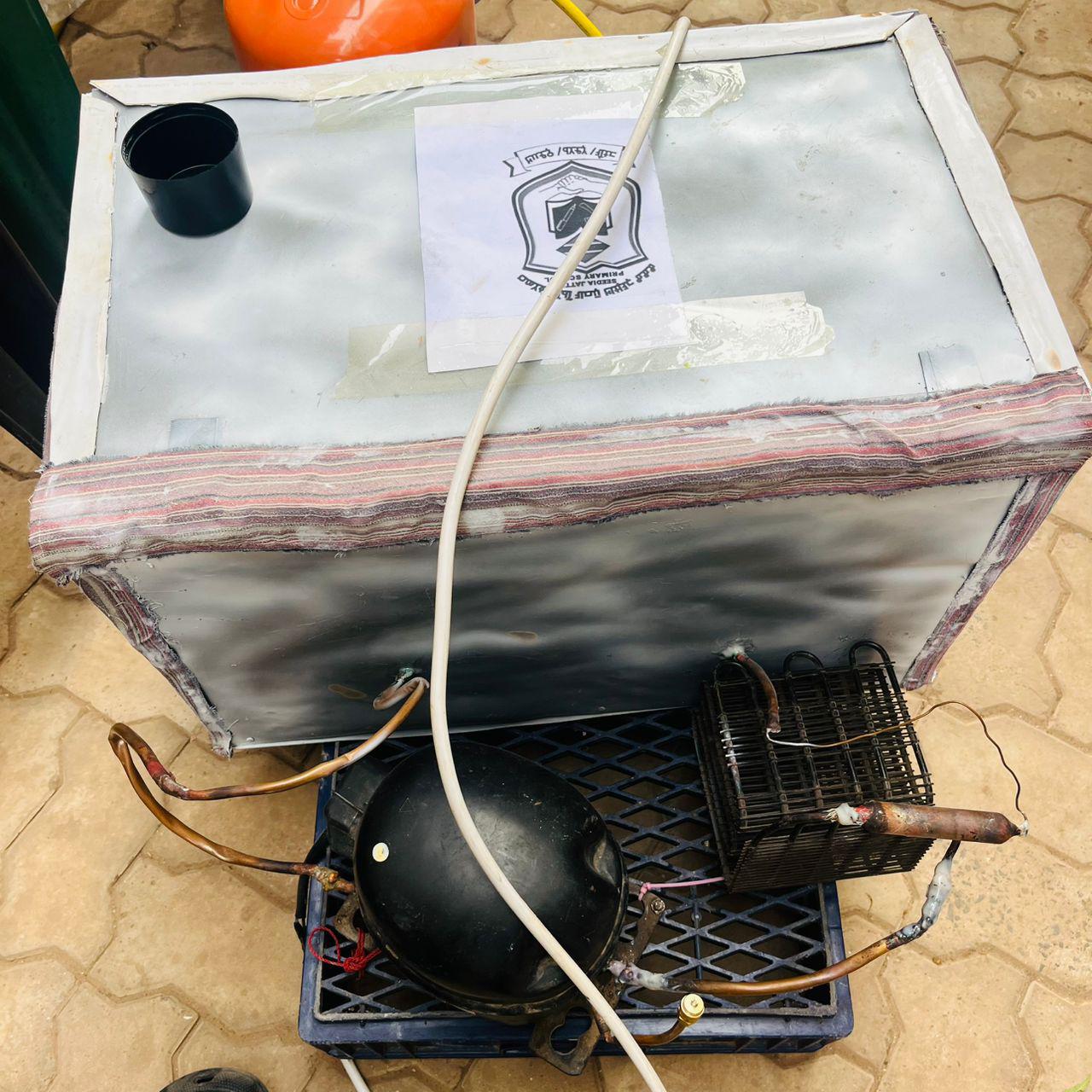
A similar transformation is quietly taking place in The Gambia through N’Ko schools. Children as young as six are engaging in practical, hands-on projects—building refrigerators, air conditioners, soap, fertilizers, and water heaters using locally available materials. This is more than creativity; it is empowerment. N’Ko education does not stop at literacy. It fosters independence, self-reliance, and entrepreneurship from an early age. One can only imagine the national impact if every region had dozens of such schools.
In contrast, the conventional education system often places a heavy burden on students. Years are spent trying to master foreign languages before accessing the knowledge embedded within them. A child may already understand concepts such as body parts, plants, animals, or social interactions in their native language, yet is deemed uneducated if they cannot express this knowledge in English or another external language. This disconnect creates unnecessary barriers.
In N’Ko classrooms, that barrier disappears. After learning the alphabet and basic grammar, students quickly move on to reading and acquiring knowledge. The process is smoother, more intuitive, and far less frustrating. Teachers, too, are more effective when they teach in a language they fully command. In many conventional settings, both teachers and students struggle simultaneously with the language of instruction, often resorting to rote memorization rather than genuine understanding. The result is widespread frustration, low academic performance, and high dropout rates, symptoms of an education system that feels increasingly irrelevant to learners.
N’Ko offers a different path. It is not merely a writing system; it is a framework for intellectual freedom and cultural confidence. It equips learners to become economically productive, socially grounded, and emotionally resilient. Importantly, N’Ko is not limited to Mandinka. Like the Latin alphabet, it can be adapted to write other African languages. This vision, central to Kanté’s mission, is already being realized in countries such as Guinea and Mali, where books in subjects ranging from science to philosophy are being written in N’Ko for languages like Fula and Soninke.
Advocating for N’Ko and other national languages in education does not mean rejecting global or religious languages such as English or Arabic. Rather, it calls for a balanced approach, one already adopted by countries like Finland, Italy, Turkey, India, Pakistan, China, the Republic of Korea, Indonesia, Malaysia and Iran, where native languages serve as the foundation of learning, while other languages are embraced for global communication and specialized purposes.
This moment, therefore, is not just about celebration; it is about reflection. Those already educated in English, Arabic, or other languages, across fields such as science, humanities, and religion, have an opportunity to reconnect with their linguistic roots. By learning N’Ko, they can share their knowledge more effectively with their communities, making education more accessible and meaningful.
In countries like Guinea and Mali, this shift is already visible. Libraries are increasingly filled with works on chemistry, physics, mathematics, sociology, history, medicine, and literature, authored by individuals who once never imagined writing in their own language. Their example offers a powerful lesson: when language barriers fall, intellectual potential rises.
As The Gambia reflects on the legacy of N’Ko at 77, the question is no longer just about its importance. It is about its possibilities, and whether the nation is ready to fully embrace them.