By Sainabou Sambou
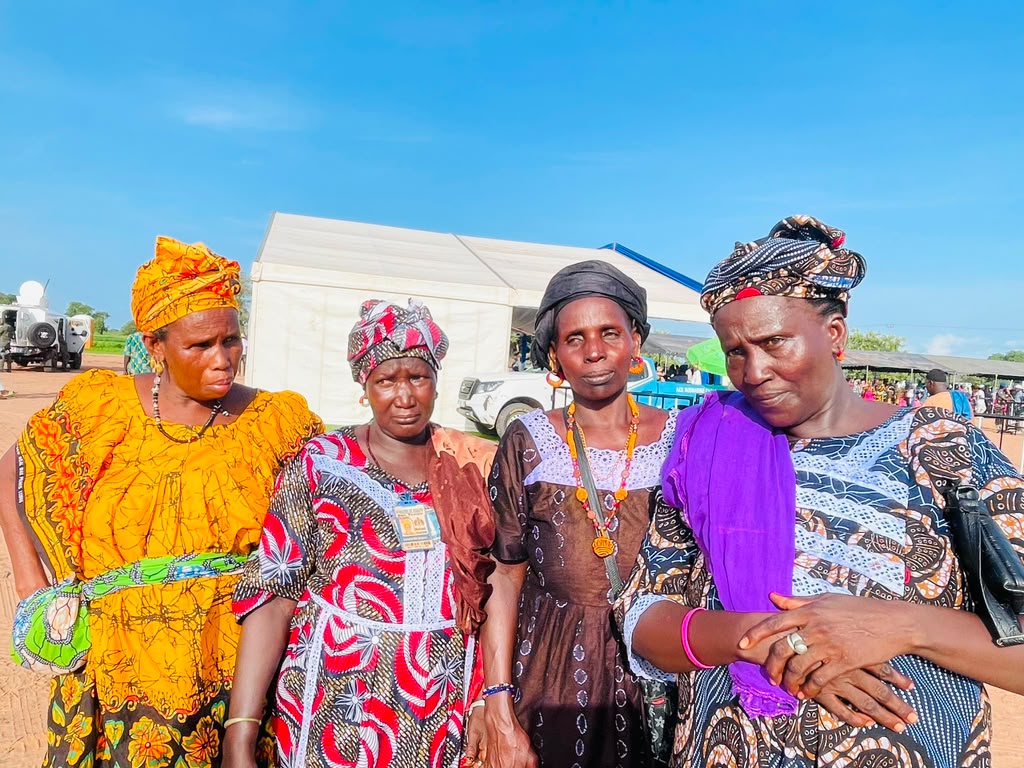
Residents of Kerr Galo, Drujidoyah, Kerr Maila, Gibareh Kerr Malick and Sarah Maila in The Gambia’s North Bank Region say crumbling roads and scarce basic services are turning everyday life into a daily ordeal, especially for pregnant women, farmers and families living near the border with Senegal.
In interviews with The Alkamba Times, villagers described how poor roads block access to hospitals, prevent the transport of farm produce and isolate communities during the rainy season. They also reported shortages of medicines, electricity, schools and clean drinking water.
For Isatou Bah of Drujidoyah in Nokunda District, the danger became personal when her daughter-in-law nearly gave birth on a donkey cart en route to Illiassa Hospital. “Our roads are very bad,” Bah said. “Just recently, my daughter-in-law nearly gave birth on a donkey cart while we were on our way to Illiassa Hospital. When we reached the hospital, she gave birth just five minutes later. This happened because we do not have a good road.” She appealed to the government for better infrastructure.
Aminata Bah of Kerr Galo said the same roads hinder almost every aspect of village life. “When it rains, we find it very difficult to leave the village because vehicles cannot use the roads,” she explained. Even in the dry season, donkey carts remain the main form of transport. Farmers struggle to move harvested crops, and pregnant women must travel the rough route to Badibu Elisia Hospital. Bah noted the road also links the area to Senegal and urged the government to upgrade it and build a local hospital. She added that even at Illiassa Hospital, patients often buy medicines themselves because stocks run low.
Mariama Bah of Kerr Maila described similar transport problems. Residents struggle to find vehicles for neighboring clinics, pay 100 dalasis in fares, and frequently leave empty-handed only to purchase expensive drugs at private pharmacies. “We buy it at the pharmacy, and that is very expensive, and we are tired,” she said.
In Gibareh Kerr Malick, Awa Jallow said her community has a road but lacks electricity and a hospital. Villagers travel to Kaur Hospital, where they again face medicine shortages. Without power, the border village becomes vulnerable at night. “At night thieves come to our compounds and steal our things. We can’t stop them. We are scared because our community is dark,” Jallow said.
The village also has no school or reliable clean water. Wurry Bah of Sarah Maila said residents have petitioned successive governments for a road without success. “We have been begging the two former presidents to construct a road for us, but they did not. Now we are appealing to President Barrow to construct a road for us,” she said.
Responding to the complaints, Minister of Transport, Works and Infrastructure Ebrima Sillah said the government is rolling out a major road program across the North Bank. Speaking at the inauguration of the completed 17-kilometer Bani-Sali-Kenye Tunjabakunda Road, which was locally funded and built by Gambian contractor Mrs Senghor Bajan, Sillah noted that the stretch had previously been extremely difficult to traverse. The new road features a wide carriageway, pedestrian walkway, strong base and double-surface finish. He said plans cover 355.6 kilometers of roads in the region—potentially rising to 360 kilometers as more requests arrive—and include projects such as the Kaur-Karolwath and Karantaba-Fidufula roads.
Further inaugurations are scheduled between August and December. On quality concerns, Sillah said communities would judge the work: “Facts are sacred. We deal with facts.”
Health Minister Dr Ahmadou Lamin Samateh said the government is constructing health posts to bring basic services closer to rural women for immunization and antenatal care under hygienic conditions. Six posts are underway, and an ambulance is being supplied. The long-term goal is that no one travels more than three kilometers to a facility, supported by an expanding network and the forthcoming Gambia Emergency Medical Services.
Samateh rejected claims of empty shelves, saying facilities stock essential medicines for local needs, though not every drug is available everywhere. The government is investing in bulk procurement and a new Central Medical Stores in Kotu, in partnership with the Global Fund, to improve supply reliability.
Residents continue to press for faster progress as they navigate the dual burdens of isolation and limited care.