By: Yankuba Manneh
Storytelling is an art mastered by a few people. You, the readers, may be thinking I am gloating, but far from it. Whenever I say this, the thought of Famara Fofana comes to mind, the foremost teller of tales of our time. To be clear, I am Famara’s protégée in this discipline; he is definitely in his own league. I am going a bit of a tangent. Famz and I are not the subject here. However, this story features one of our daring and uncelebrated living journalists, Sainey MK Marenah, the CEO and Founding Editor of one of Gambia’s leading digital online newspapers, The Alkamba Times. His story is not only inspiring but also worth sharing with the world as a mark of celebration of his hard-earned achievements.
How I Came To Know About Sainey?
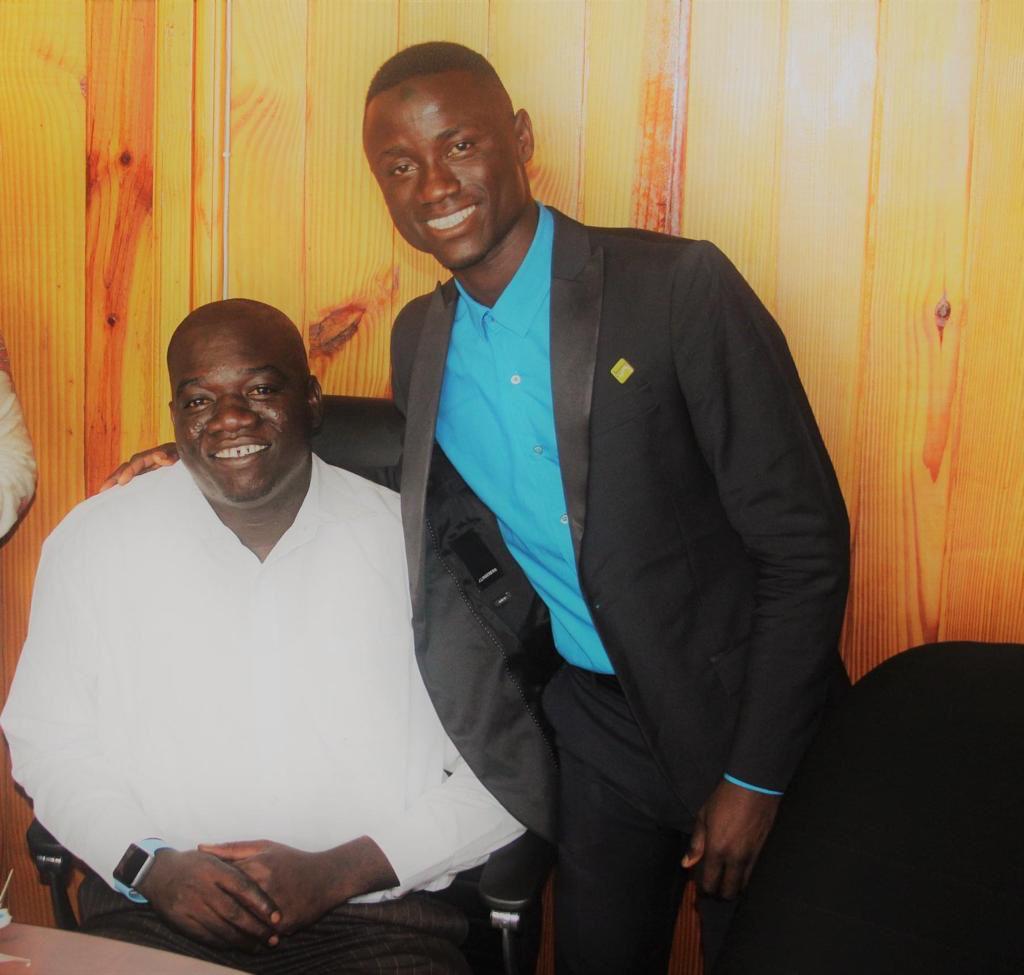
It is important to note that Sainey and I forged a relationship that still thrives on mutual trust and respect for each other’s potential. It came into being in 2018 at the then-defunct Constitutional Review Commission, where he was my Director at the Department of Media and Communications, the largest Unit in CRC’s organogram. Fortunately, I served till the end of the Commission’s mandate in September 2020. The CRC ended, but our relationship refuses to be bound by the tragic fate of the 2020 Draft Constitution. But I just have to be honest, the last time I cried was that year. For a three-month stint (October to December 2020), Sainey served as a Communications PR Consultant for a 10 million Euro project (GPP) under GAMWORKS. I collaborated with him on this project along with my colleague-friend Yahya B. Baldeh. Before all these, like many of you, I only knew him by name, when he would sign off with a baritone voice on the news file at the state broadcaster – GRTS. He is from Kudang, and I am from Essau. Zilch!
Where Does His Passion for Journalism Begin?
Like so many rural kids, Sainey attended Armitage High School in the Central River Region of The Gambia, the country’s first-ever public boarding school since British rule. At Artmitage, Sainey was described by friends as stubborn but driven and ambitious. Due to his alluring personality and kind demeanor, he was liked by almost all who knew him on campus. He has had a deep passion for Literature-in-English; thus, he earned himself a nickname, Siwze Banzi, because of his immense love for the South African anti-apartheid play Swize Banzi Is Dead.
It was then and there that Sainey’s passion for writing began, and his aspiration for journalism exploded. As an active member of the school’s press club, Sainey’s first newsroom was a classroom at Armitage, where curiosity competed with scarcity and notebooks mattered more than equipment. Born into an underprivileged home, he learned early that questions were a kind of currency he could leverage to solve societal problems. He spent them carefully, listening harder than he spoke, convinced that telling the truth could be a way out for humanity.
Dawn of His Journalism Career, Arrest
That belief carried him beyond school corridors and into Gambian newsrooms. Sainey cut his teeth at Point in 2008 as a junior reporter, where he rose through the ranks to become Chief Correspondent. He sharpened his reporting at The Standard Newspaper, where he served as an Editorial Assistant and Head of News, respectively. And later, from 2008 to 2012, he worked for The Point Newspaper, reporting on critical stories, including high-profile treason cases involving former military chiefs. Risky during this era, but his passion to tell stories and enlighten the public about these cases never died down. His bylines came with long hours, low pay, and the constant pressure of working in an authoritarian climate and under self-censorship. Still, he chased stories with the urgency of someone who knew journalism could be both shield and spotlight.
A turning point came in 2013; the risks became real for the young, enthusiastic journalist. While working at the Voice, Sainey was nabbed together with his Editor-in-Chief, Musa Sheriff, by agents of the infamous erstwhile NIA, on allegations of false publication during the reign of a military-backed strongman – Yahya Jammeh. His only crime was reporting a political defection from the ruling APRC to the opposition United Democratic Party. Such reporting was an aberration at the time. He spent months navigating a justice system tilted against independent reporters. After nine solid months of persecution, enmeshed in a back-and-forth in court, the then Magistrate Lamin Mbaye finally granted him bail. Later, Sainey and Musa were acquitted and discharged after thier defense lawyer, Lamin Camara, filed a no-case-to-answer submission, which the court upheld, freeing the two journalists. A decision that was unexpected at the time. Following his acquittal, State agents attempt to rearrest marenah, who ran for his life in 2014. He sought sanctuary in Dakar, Senegal.
Life In Exile
While in Senegal, Sainey carried little more than his resolve and a reporter’s instinct to document what power sought to hide. Exile became a newsroom without walls. From Dakar, he turned to advocacy journalism, amplifying stories of repression and human rights abuses in The Gambia—international news outlets took notice of him and his powerful storytelling. To reach a wider audience, he freelanced and contributed to global news media organizations such as Voice of America, the BBC, Al Jazeera, and ZDF TV in Germany, lending a clear, measured voice to a country struggling to be freed from the brutal dictatorship.
Then came 2016. A historic election ended over two decades of autocratic rule. The selfless role played by the Gambian diasporans cannot and must not be overlooked in this symbolic change of government that has seen a semblance of democracy. Sainey was an integral part of that diasporic struggle. He gave a voice to the voiceless at home and amplified their daily struggles and plights to the world through various means at his disposal. With a new government promising reform, Sainey, like so many Gambians, returned home. The welcome was cautious optimism.
Return To Banjul
Back to the smiling coast of Africa in flesh and renewed energy to serve the country and people with distinction in 2017. What a wealth of happiness for any exiled person. I, personally, can only imagine it. But family and friends had the lion’s share of the joy. The feeling of uniting with a loved one you miss for years is indescribable. For him, returning was not only a victory; it was a responsibility.
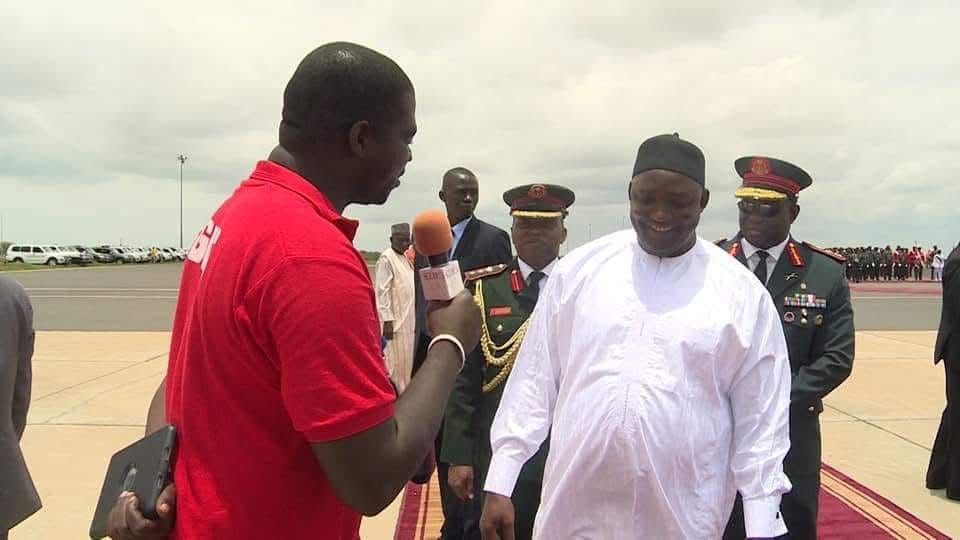
Sainey got his first job offer in the new dispensation at the Gambia Radio and Television Services. Determined to help rebuild public trust in media long bent by fear and terror, he started as a Social Media Strategist for the state broadcaster and later became a news reporter, a position he absolutely merited and served with distinction.
His performance at the national broadcaster made him distinguishable. Assigned to report on the newly established CRC in 2018, Sainey was appointed Director of Media and Communications at the Commission, documenting debates and public discourse on constitutional matters that would shape the nation’s future. The work demanded precision and patience, translating complex legal arguments into language ordinary citizens could understand to enhance greater public participation and ownership of the process.
As the CRC ended in September 2020, as a co-founder of Banjul-based Center for Media and Development, a media consultancy firm, Sainey served as the lead consultant for a 10 million Euro grant project dubbed Gambia Pilot Program, continuing to focus on accountability and civic education. A service has been implemented successfully with a team of five.
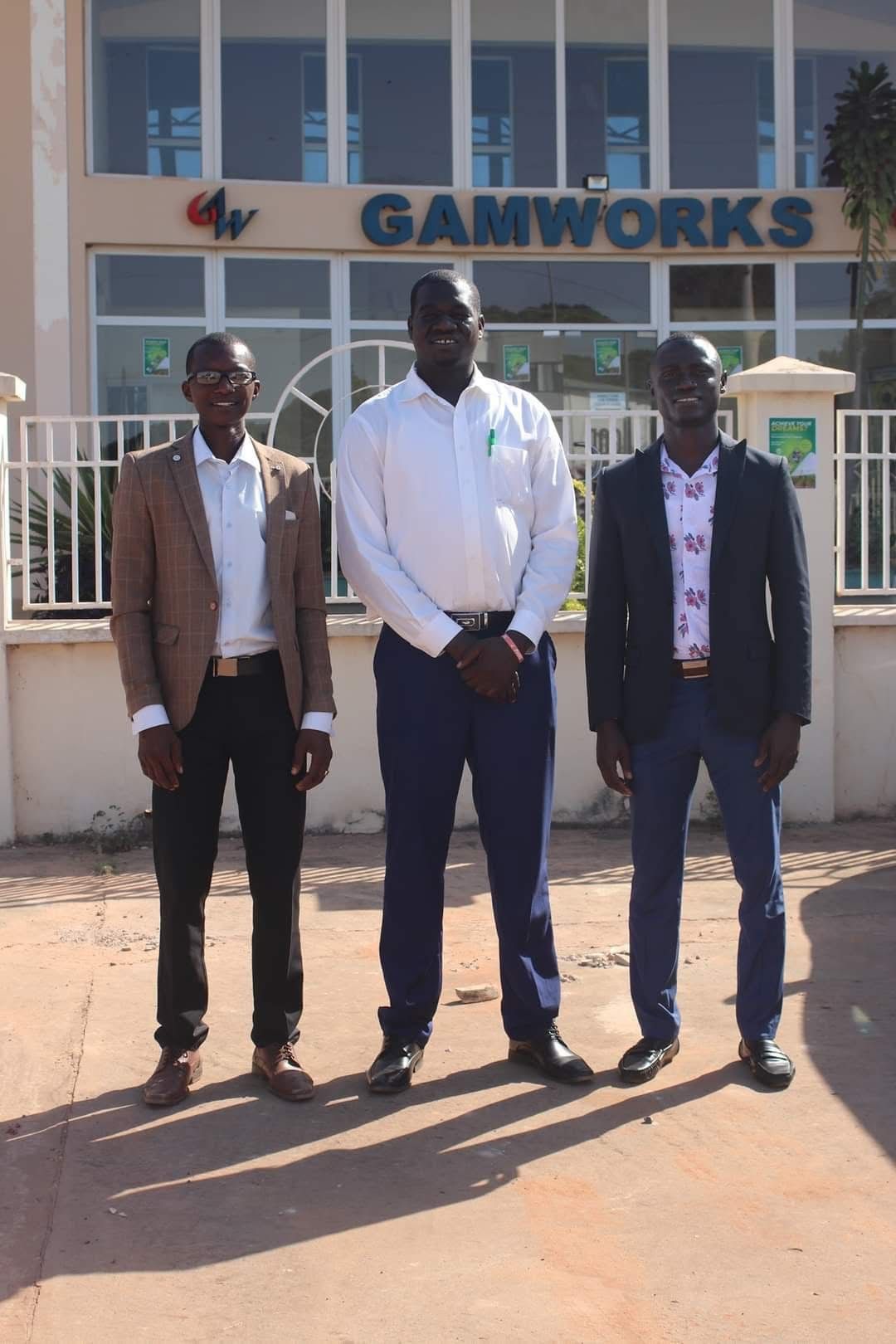
His Flight To the United States
By the turn of the year, Sainey graciously left for the United States, carrying with him over a decade of reporting forged under pressure and dexterity. The move was never an escape but an extension of his journey, a chance to learn, to broaden his craft, and to remind himself why he started what he was so passionately doing.
After a year in Seattle, Washington State, Sainey found his feet and chose to resume his calling: journalism. In 2021, he founded The Alkamba Times, an online news medium poised to uncover the truth for its diverse, global audiences. The icing on the cake was when he gleefully married the Queen of his life, Kristina, in March of 2022.
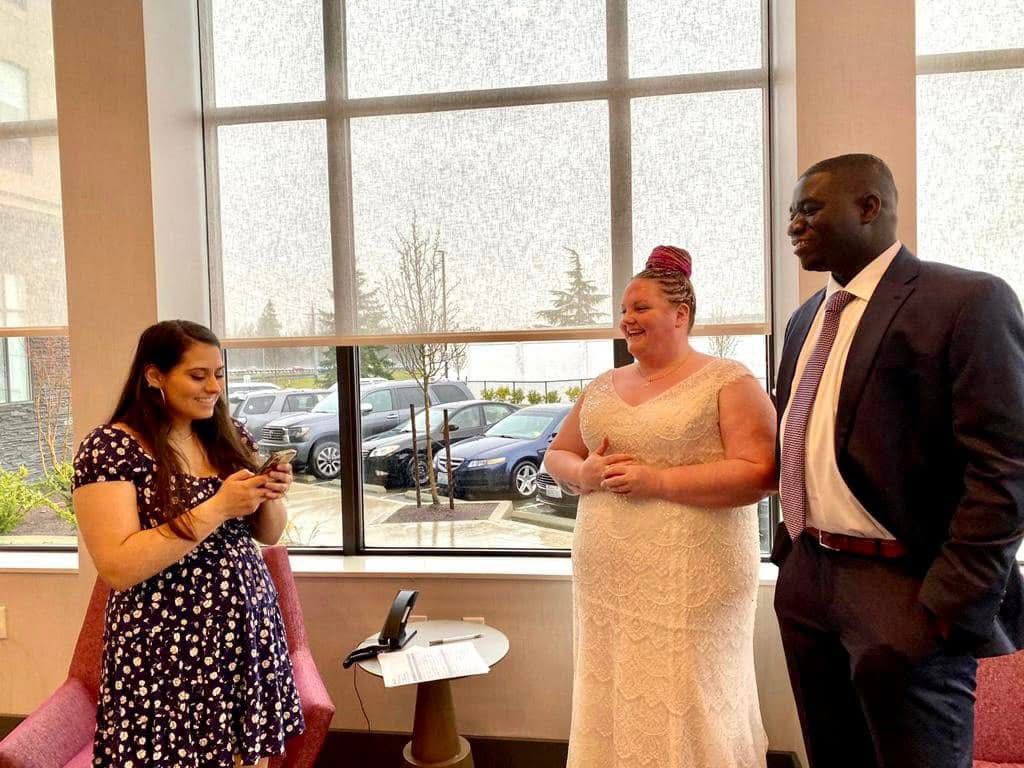
Both Sainey and his well-chosen better half are happily married and collaborating for the sustainable growth and development of TAT. The Paper currently has 17 staffers, all of whom are on paid offer and equipped with brand-new work tools, including digital cameras with tripods, laptops, and other necessary gadgets for operations. This significant staff motivation technique has translated into TAT’s increased dominance of Gambia’s digital news ecosystem.
In conclusion, Sainey’s story is not a straight line. Like a rhizome, it bends through classrooms and courtrooms, through exile, return, and a journey to the US. It is marked by risk, resilience, and the quiet discipline of showing up to write again. For young aspiring journalists, especially those from underprivileged homes starting with little more than a pen and a question, his path offers a simple lesson: Journalism is not just a job. It is a commitment to truth that may cost you comfort but can give you purpose and meaning in life. This profession is highly challenging, so I am encouraging you to be bold, tell the immediate story, and use your platform to reveal reality and drive change and impact.
I really appreciate your company, and I hope you get inspired by the impressive story and journalism career of Mr. Sainey MK Marenah, Founder and CEO of The Alkamba Times. Be assured of another interesting rendezvous with a more interesting story. Thanks!