By Momo Bah
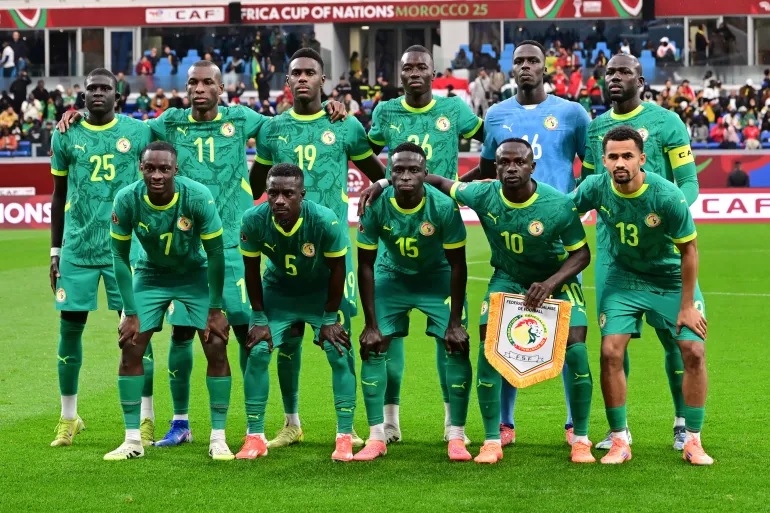
Senegal’s success at the 2025 Africa Cup of Nations did not come from tactics alone, nor from individual brilliance. It was the product of something rarer in modern football: perfect harmony between youth and experience.
With an average squad age of approximately 26.4 years, Senegal struck the ideal balance between physical energy and mental maturity. At the core of this balance stood four senior figures, all in their thirties: Édouard Mendy (33), Kalidou Koulibaly (34), Idrissa Gana Gueye (36), and Sadio Mané (33). Together, they formed what can best be described as the team’s vertebral column—the spinal cord connecting defence, midfield, and attack, and regulating both offensive and defensive transitions.
From the back, Édouard Mendy offered more than shot-stopping. His calm presence inspired confidence. Small moments captured the spirit of the team: whenever Mendy made a save, left-back El Hadji Malick Diouf was often there to tap him on the back—a simple gesture that symbolised trust, respect, and collective responsibility.
At the heart of defence, captain Kalidou Koulibaly played the role of a sentry. Composed, authoritative, and deeply respected, he commanded the back line with quiet assurance. His partners trusted him completely. In the semifinal against Egypt, after picking up an early yellow card, Koulibaly appeared to make a selfless decision. By withdrawing through injury, he opened the door for the younger Mamadou Sarr, who stepped in seamlessly. Sarr’s performance was faultless, earning him a starting place in the final—especially significant as Koulibaly was suspended. It was leadership through sacrifice.
The team’s leadership structure further illustrates Senegal’s maturity. Sadio Mané was third in command in the captaincy hierarchy, behind Koulibaly and Gana Gueye. Yet hierarchy never translated into ego. In the absence of Koulibaly, Idrissa Gana Gueye captained the final. In a moment that captured the soul of Senegal’s unity, he graciously invited Sadio Mané to lift the trophy—recognising that it was Mané’s final AFCON appearance. It was a gesture of respect, gratitude, and shared legacy, rare at the highest level of competitive sport.
In midfield, Gana Gueye provided the engine, discipline, and balance that only experience can bring. At 36 years old, he was not merely surviving the tournament—he was controlling it with intelligence and positional awareness. Up front, Mané’s influence extended beyond goals and assists. During interviews, teammates consistently described him as the greatest Senegalese player of all time, praise that strengthened his confidence without inflating his ego. He led through humility rather than entitlement.
The case of Cheikh Tidiane Sabaly further illustrates Senegal’s collective mindset. The skilful winger featured in the group-stage opener against Botswana, where he delivered an assist in the 3–0 victory. Many expected him to rotate regularly with Mané. Yet as Mané maintained a high level throughout the tournament, Sabaly did not return to the starting lineup. Crucially, there was no public frustration, no visible tension, and no complaints. Team success came before personal ambition.
This unity sharply contrasted with the struggles of other African heavyweights. Egypt battled internal pressure as Mohamed Salah faced widespread criticism that strained team cohesion. Nigeria suffered visible cracks when Victor Osimhen publicly confronted Ademola Lookman, an episode that appeared to damage morale. Morocco sidelined Hakim Ziyech following the arrival of Brahim Díaz, disrupting established chemistry. Algeria faced similar uncertainty around Riyad Mahrez, while Cameroon controversially left out their most prolific striker, Vincent Aboubakar, opting instead for newer attacking options.
Senegal avoided these pitfalls because it understood a fundamental truth: tournaments are not won by talent alone, but by alchemy. Youth accepted guidance. Experience made room for youth. Leadership was shared, not imposed.
In the end, Senegal’s greatest strength at AFCON 2025 was not just tactical discipline or individual quality—it was unity. And in tournament football, unity often makes the difference between contenders and champions.
Reflecting on the victory over Morocco, Gana Gueye recently said in an interview that the team always sought to foster serenity and positivity within the group. This mentality helped them navigate the tournament’s pressures and emerge victorious.