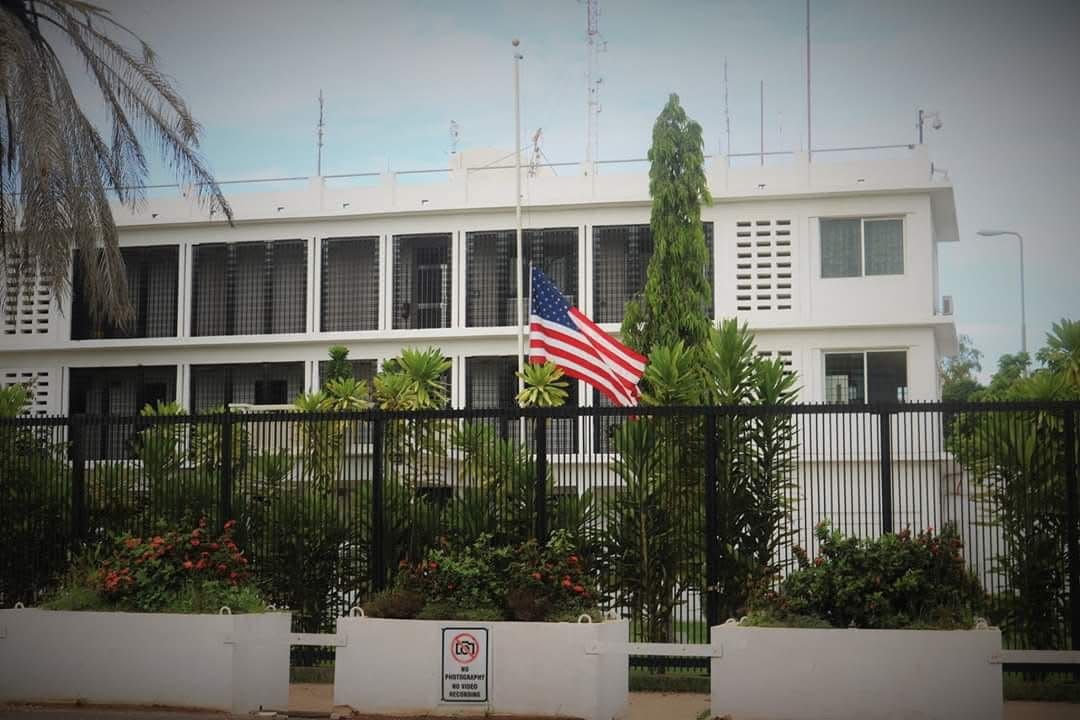
The U.S. government has introduced a new policy requiring all applicants for F, M, and J nonimmigrant visas to set their social media accounts to “public” to facilitate identity and admissibility vetting, effective immediately. The measure, enacted under a Presidential Proclamation on Restricting Entry of Foreign Nationals, also suspends or limits visa issuance and entry for nationals of certain countries, citing national security and public safety concerns. The announcement has ignited fierce criticism in The Gambia, where citizens are decrying the policy as a violation of privacy and an assault on free expression.
The U.S. State Department clarified that applicants from affected countries may still submit visa applications and attend interviews, but may face ineligibility for visa issuance or entry into the United States. The proclamation, which took effect at 12:01 a.m. EDT on June 9, 2025, aims to enhance security screening but has been met with accusations of overreach and discrimination.
In The Gambia, reactions range from disappointment to outright condemnation. Mustapha Manneh, an Environmental Rights Activisit, expressed disillusionment with the U.S., saying, “It’s disappointing to see the U.S. voting for a convicted felon who now speaks about safety after ordering an attack on the Capitol. The U.S. used to command respect, but with this corrupt and incompetent president, many, including myself, have lost that respect.” Manneh voiced hope for a future where the U.S. regains its global standing but lamented the current trajectory.
Prominent Human rights activist Madi Jobarteh called the policy “a blatant violation of international law and human rights,” labeling it as “collective punishment” and an infringement on privacy, free expression, and civil liberties. “This is unethical and illegal,” Jobarteh said. “The African Union and the international community must confront this to prevent the U.S. from descending into fascism.” He urged the policy’s immediate reversal, warning of its broader implications for global rights standards.
Ousman Jah, a web designer, criticized the policy’s lack of clarity and its potential to stifle dissent. “People expressing concerns or being against your ideas doesn’t mean they have hate or grudges,” Jah said. “Take back this statement and let freedom of expression be exercised rightfully.” He emphasized the Gambians’ peaceful nature, urging U.S. authorities to reconsider or provide clearer guidelines on what constitutes unacceptable speech.
Financial concerns also surfaced, with Hamet Touray, a small business owner, highlighting the economic burden of rejected applications. “Visa rejected = money should be retrieved,” Touray said, blaming Gambian leaders for failing to advocate for citizens. “Our inept leaders’ poor and decadent leadership is why we face these humiliations.”
Bankey Grey Johnson, another critic of the move, sarcastically dubbed the policy “Fascism 101,” mocking the U.S. as the “land of freedom of speech” that is now scrutinizing applicants’ online activity. “This is MAGA? They want to check your speech to decide if they like you,” Johnson said. “Kudos to the ‘home of the brave.'”
Muhammed Bah accused the U.S. of exploiting visa applicants financially. “You Americans are only interested in the money from visa applications,” Bah said. “Why allow affected countries to apply if they’ll just be rejected?”
The policy’s implementation has raised questions about its practicality and fairness, particularly for Gambians who rely on U.S. visas for education, work, or family reunification. Many fear the social media requirement will disproportionately affect those with limited digital literacy or access, while others worry about the chilling effect on online discourse.
As Gambians grapple with the new reality, calls for diplomatic action are growing. Activists and citizens alike are urging the Gambian government and regional bodies, such as the African Union, to challenge U.S. policy. For now, the visa process remains fraught with uncertainty, leaving many Gambians feeling caught between aspiration and indignation.
The U.S. Embassy in Banjul has yet to comment on local reactions, directing inquiries to travel.state.gov for further details. As the global community watches, the debate over security, privacy, and human rights intensifies, with The Gambia at the forefront of the outcry.