As the country approaches the December 2026 elections, opposition voices are intensifying scrutiny of The Gambia’s escalating national debt, which has ballooned dramatically in recent years.
According to figures highlighted by the United Democratic Party (UDP), the nation’s debt stood at approximately D3.47 billion in 1994, after three decades of independence. During the 22-year rule of former President Yahya Jammeh, an additional D46.30 billion was added, bringing the total to D49.77 billion by the end of his administration in 2016, 52 years after independence.
In contrast, under President Adama Barrow and the National People’s Party (NPP) government since 2017, the country has reportedly contracted around D101 billion in new debt over just nine years, bringing the total national debt to roughly D150.77 billion—or about D151 billion—as of December 31, 2024. These figures exclude any borrowings incurred in 2025.
Official sources, including recent reports from the Ministry of Finance and international observers, place the debt stock somewhat lower, around D129.5 billion at the end of 2024, with public debt at approximately 72% of GDP according to the Central Bank of The Gambia and Trading Economics data. External debt components were reported at GMD 85.1 billion late last year, amid ongoing IMF-supported programs aimed at fiscal consolidation and debt sustainability.
Critics, including the UDP, argue that the rapid accumulation raises serious questions about the tangible benefits to ordinary Gambians. “The numbers speak for themselves,” the party stated in a recent press statement. “What do Gambians have to show for this level of borrowing?”
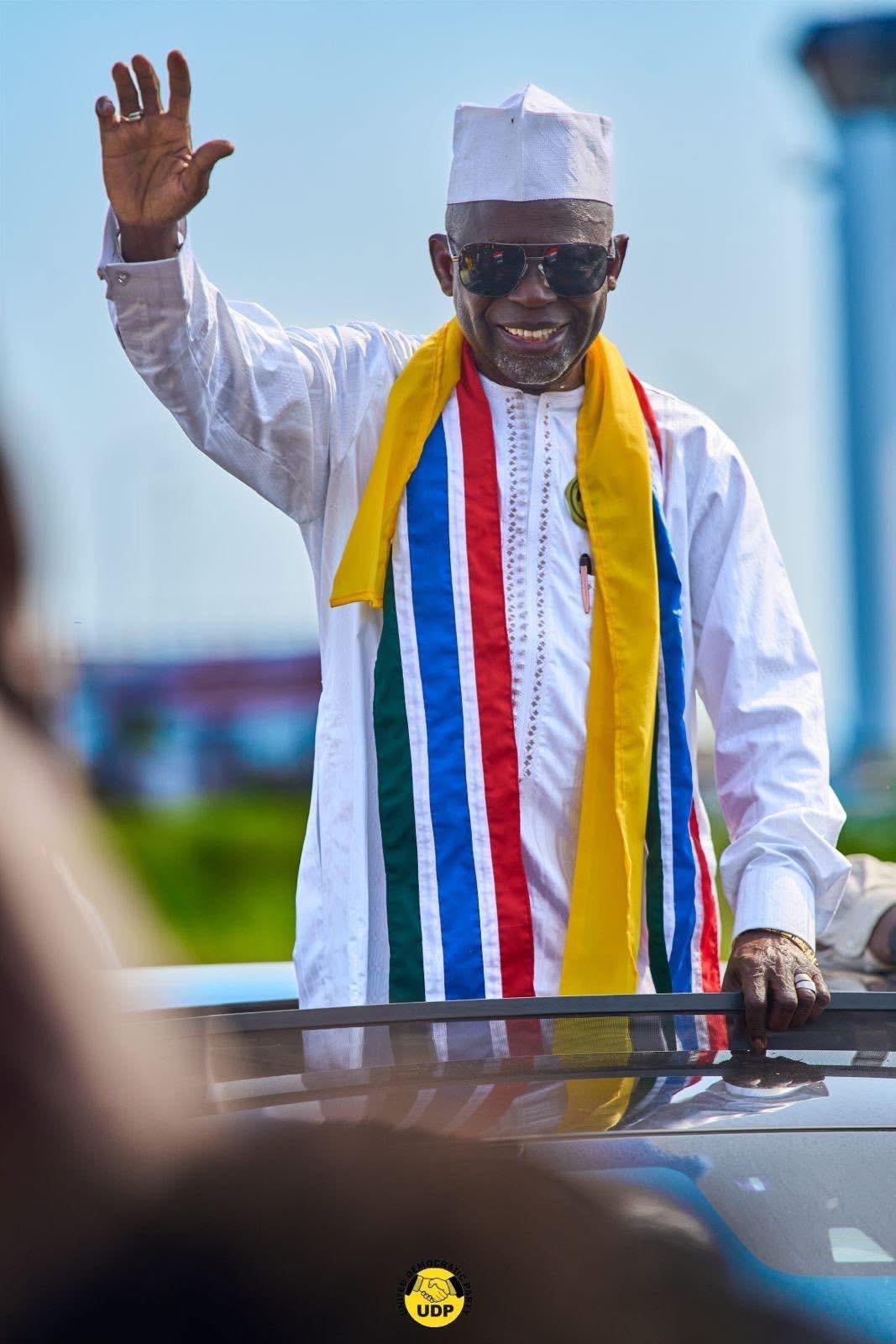
In response, the UDP is positioning itself as a credible alternative ahead of the 2026 polls. The party’s flagbearer, H.E. ANM Ousainu Darboe, has pledged to serve only one term if elected, emphasizing a focused “mission of national renewal.” Key priorities for that single term would include: Adopting a new Constitution, Stabilizing the economy, Implementing comprehensive security sector reform, and Reforming the civil service to restore efficiency and integrity
Darboe’s commitment, the party says, underscores a promise of disciplined, reform-driven leadership rather than prolonged tenure.
As economic pressures persist—including high debt servicing costs and the need for concessional borrowing—the debate over fiscal management and political accountability is set to dominate the campaign trail. Gambians will soon decide whether continuity or a sharp course correction offers the path forward.