By Sainabou Sambou
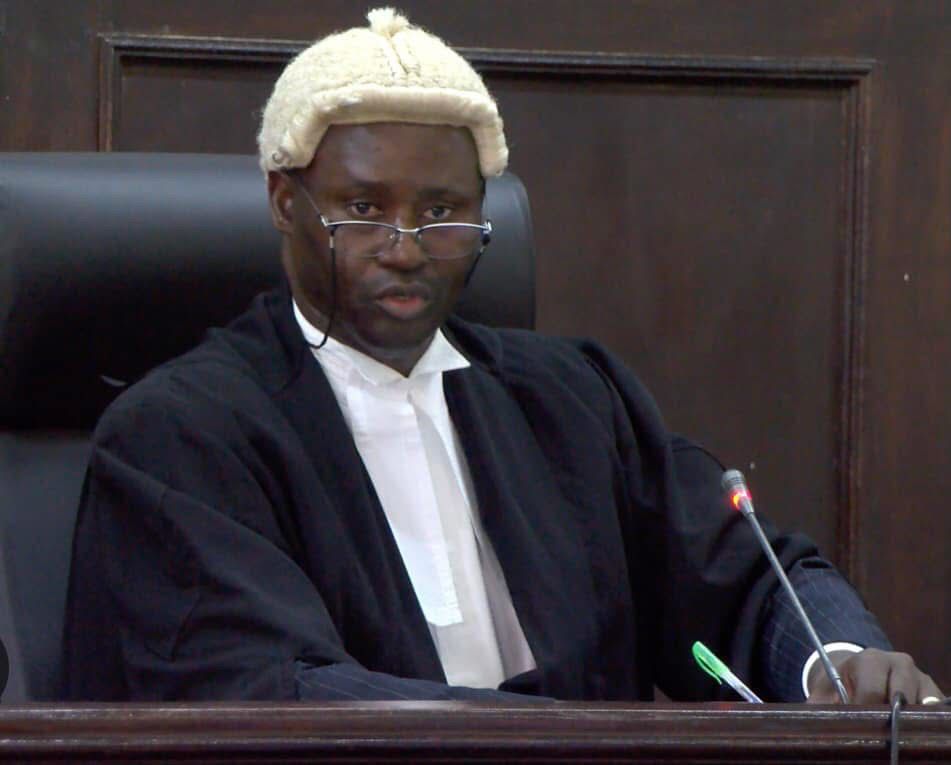
In a strongly worded ruling that underscored the judiciary’s frustration with institutional delays, Justice Ebrima Jaiteh of the High Court in Banjul on Monday, March 16, 2026, summoned the Chief Medical Director of Edward Francis Small Teaching Hospital (EFSTH), Mustapha Bittaye, to appear personally and explain the absence of a critical post-mortem report in a high-profile murder trial.
The order came amid growing concerns that the failure to produce the document—more than two years after the alleged killing—could jeopardize the prosecution of Mariama Jallow, who stands accused of murdering Cherno Touray by stabbing him in the chest.
The case dates back to November 2023 in Brufut, Santa Su, where Jallow is charged under Section 187 of the Criminal Code with murder, an offence carrying severe penalties upon conviction. Central to proving the charge is establishing not only the fact of death but its precise cause and whether it stemmed from the accused’s alleged actions.
During Monday’s hearing, State Counsel Sarr told the court that despite repeated efforts, the prosecution had been unable to secure the post-mortem examination report on the deceased, Cherno Touray. According to the prosecution, police obtained an order from the Banjul Magistrates’ Court and formally requested the autopsy at EFSTH on December 1, 2023. More than two years later, the report remains outstanding.
Invoking Section 221 of the Evidence Act, 1994—which empowers courts to compel third parties and institutions to produce relevant documents—Sarr applied for a summons directing EFSTH management to appear and deliver the missing report.
Defence Counsel Anyanwu vigorously opposed the application. He argued that the defence had never been served with any formal request for a post-mortem and maintained that no such examination had ever taken place. Anyanwu further contended that if the report existed, the prosecution would have tendered it earlier in the proceedings, suggesting the document may never have been generated.
Justice Jaiteh, however, rejected the defence’s position as speculative. He emphasized that only the hospital authorities could definitively confirm whether an autopsy was performed. The judge highlighted the indispensable role of post-mortem reports in murder trials, describing them as the most reliable medical evidence for determining cause of death—whether from stab wounds, poisoning, natural disease, or other factors—as well as estimating time of death.
Accepting the prosecution’s account of the December 2023 request, Jaiteh ruled that the absence of the report from the State Law Office did not prove non-existence. The law, he said, permitted the court to compel production from any custodian.
The judge had previously granted the application and ordered the Chief Medical Director—or an authorised representative—to appear and produce the report. That directive was personally served on the director via EFSTH records officer Kumba Baldeh on February 25, 2026.
Yet when the matter was called on March 16, neither the Chief Medical Director nor any representative attended. No explanation was offered for the non-compliance or the status of the report.
Justice Jaiteh branded the hospital’s disregard “deeply troubling.” He reminded all present that court orders bind public institutions and officials alike. Hospitals, he stressed, form a vital link in the criminal justice chain by supplying objective scientific evidence in death-related cases.
The judge expressed grave concern that, despite the gravity of a murder charge involving the alleged unlawful taking of life, EFSTH had failed to respond to a lawful order issued weeks earlier. Such inaction, he warned, risks undermining serious criminal prosecutions and obstructing justice.
Observing that the apparent defiance prima facie constituted contempt of court, Justice Jaiteh escalated his response. He directed the Chief Medical Director to appear personally at the next hearing to show cause why he should not be cited and punished for contempt.
The director was further ordered to bring the post-mortem report on Cherno Touray or any official record explaining whether the examination occurred, why it has not been produced, and the reasons for ignoring the court’s earlier command.
To ensure compliance, the judge instructed the court registrar to serve the ruling personally on the Chief Medical Director without delay. He also called on the Inspector General of Police to assist—through the investigating officer—if necessary, in securing the director’s attendance.
Justice Jaiteh closed by reaffirming that nothing less than full obedience to judicial orders would suffice, particularly in matters touching the sanctity of human life and the pursuit of truth in criminal proceedings.
The trial was adjourned to May 4, 2026, at 10:00 a.m., when the Chief Medical Director is expected to appear and the court will receive any documents produced or explanations.
Jallow, the defendant, attended the proceedings in person. The state was represented by Counsel M. Sarr, while F. C. Anyanwu appeared for the defence.