By: Abdoulie John
Ministers from seven Sahel and West African countries have reaffirmed a strong regional commitment to combat gender-based violence (GBV) and harmful practices against women and girls, declaring zero tolerance as the only acceptable policy.
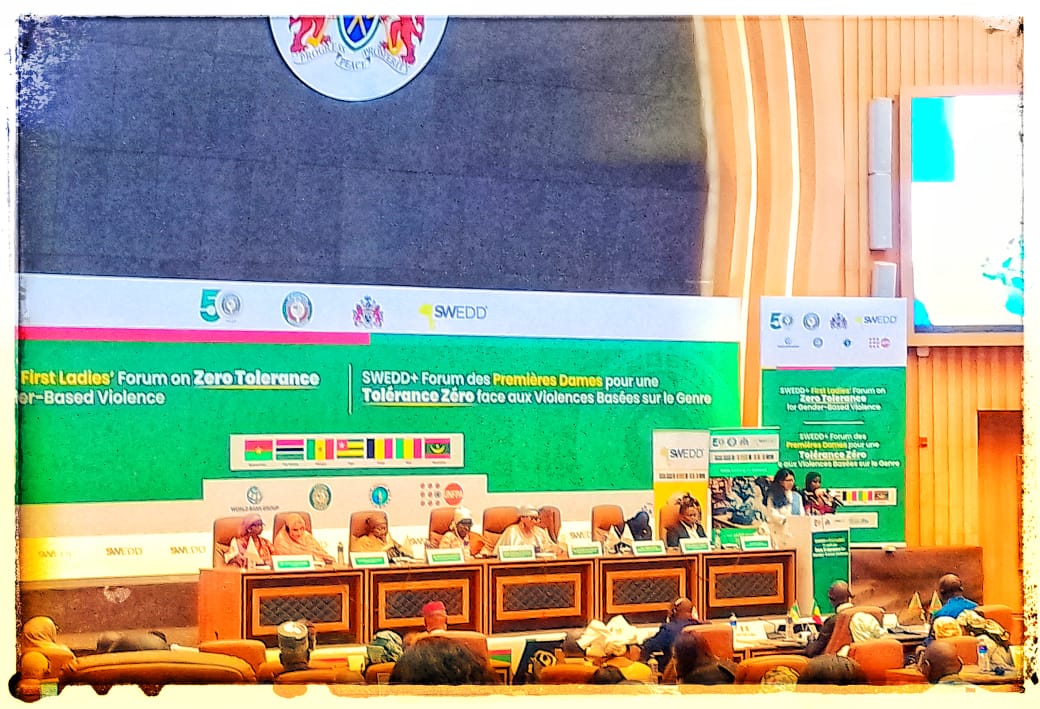
Speaking at a high-level ministerial meeting on Thursday at the Sir Dawda Kairaba Jawara International Conference Center in Bijilo, Gambia’s Minister of Gender, Children, and Social Welfare, Fatou Kinteh, emphasized the gathering’s significance as a demonstration of solidarity across borders.
“Ending gender-based violence remains one of the top priorities of the Gambian government,” Minister Kinteh said. She stressed the urgent need to mobilize resources to meet existing targets and to accelerate the harmonization of GBV policies and strategies at the regional level.
“The fight against GBV requires strong coordination and sustained efforts to address a phenomenon that continues to undermine our societies,” she added.
The three-day forum, which began with an experts’ meeting on Wednesday, is part of the Sub-Saharan Women Empowerment and Demographic Dividend Plus (SWEDD+) project.
Funded by the World Bank and implemented through ECOWAS, the initiative brings together senior officials and experts from The Gambia, Mali, Mauritania, Senegal, Chad, Burkina Faso, and Togo.
Senegal’s Minister for Family, Solidarity and Social Protection, Maïmouna Diéye, echoed the call for decisive action. “Zero tolerance for GBV is the way forward as this regional drive gradually takes shape,” she stated.
The ministerial session builds on technical discussions aimed at laying the groundwork for stronger prevention, protection, and accountability measures. Participants highlighted that tackling GBV is essential not only for human rights but also for achieving broader development goals in the region.
Under the auspices of the Office of the First Lady of The Gambia, the forum will culminate today with the endorsement of the Banjul Declaration. First Ladies from the participating countries are expected to lend their voices to the initiative, reinforcing high-level political will.
The SWEDD+ project seeks to empower girls and women by improving access to education, economic opportunities, and health services, while strengthening institutional capacity for gender equality across participating nations.
Organizers say the Banjul gathering represents a critical step in translating commitments into coordinated regional action.
As violence against women and girls persists as a barrier to progress, officials expressed hope that the renewed pledge and upcoming declaration will translate into tangible results on the ground, including better policy alignment, resource allocation, and community-level interventions.